Review: Duesenberg D-Bass

****

Duesenberg D-Bass – D-badge
German maker Duesenberg is known for its high-quality guitars and basses, that combine seamlessly Art Deco-chic and ingenious improvements in many details, such as the hardware and electronics departments.

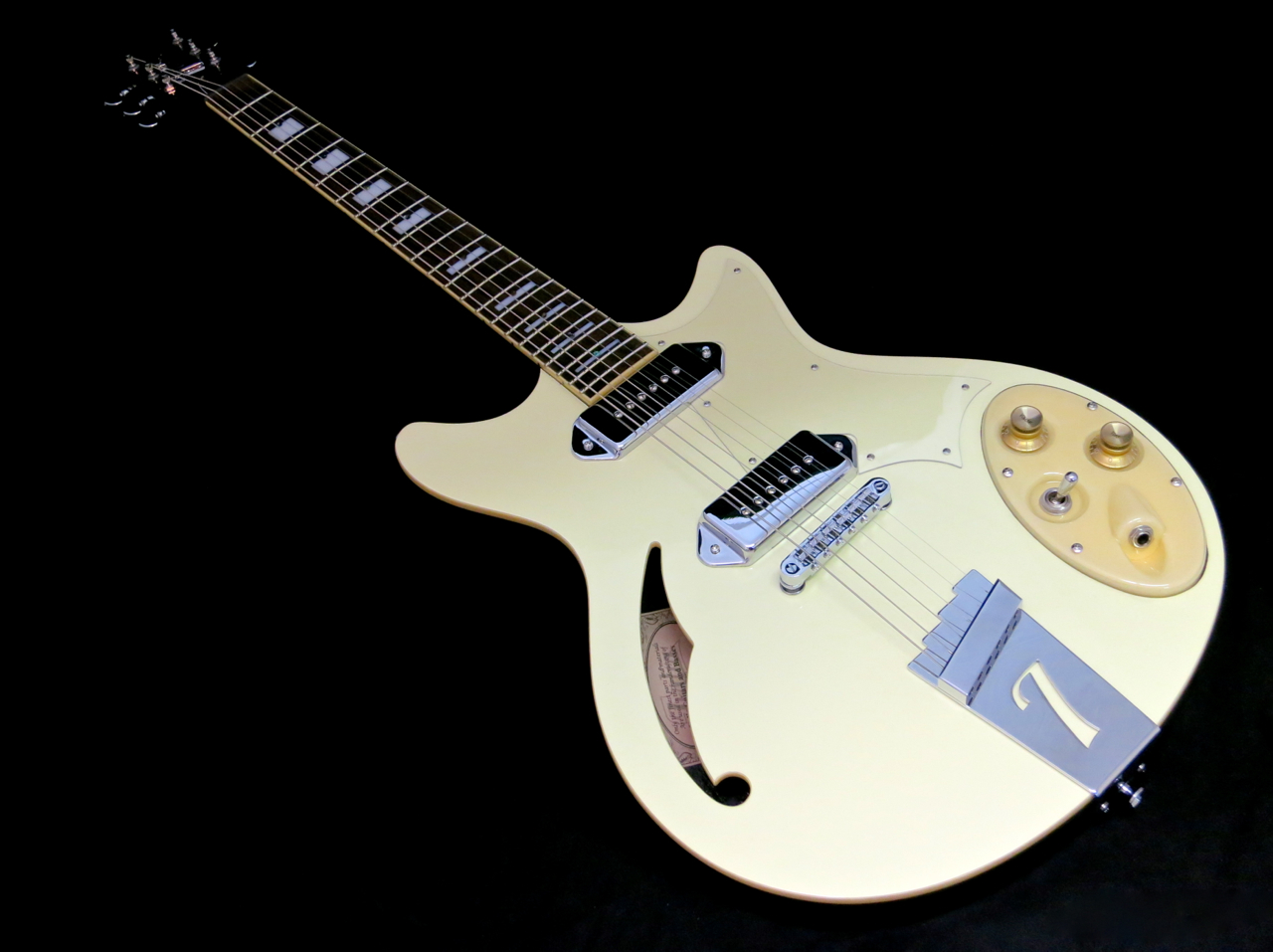
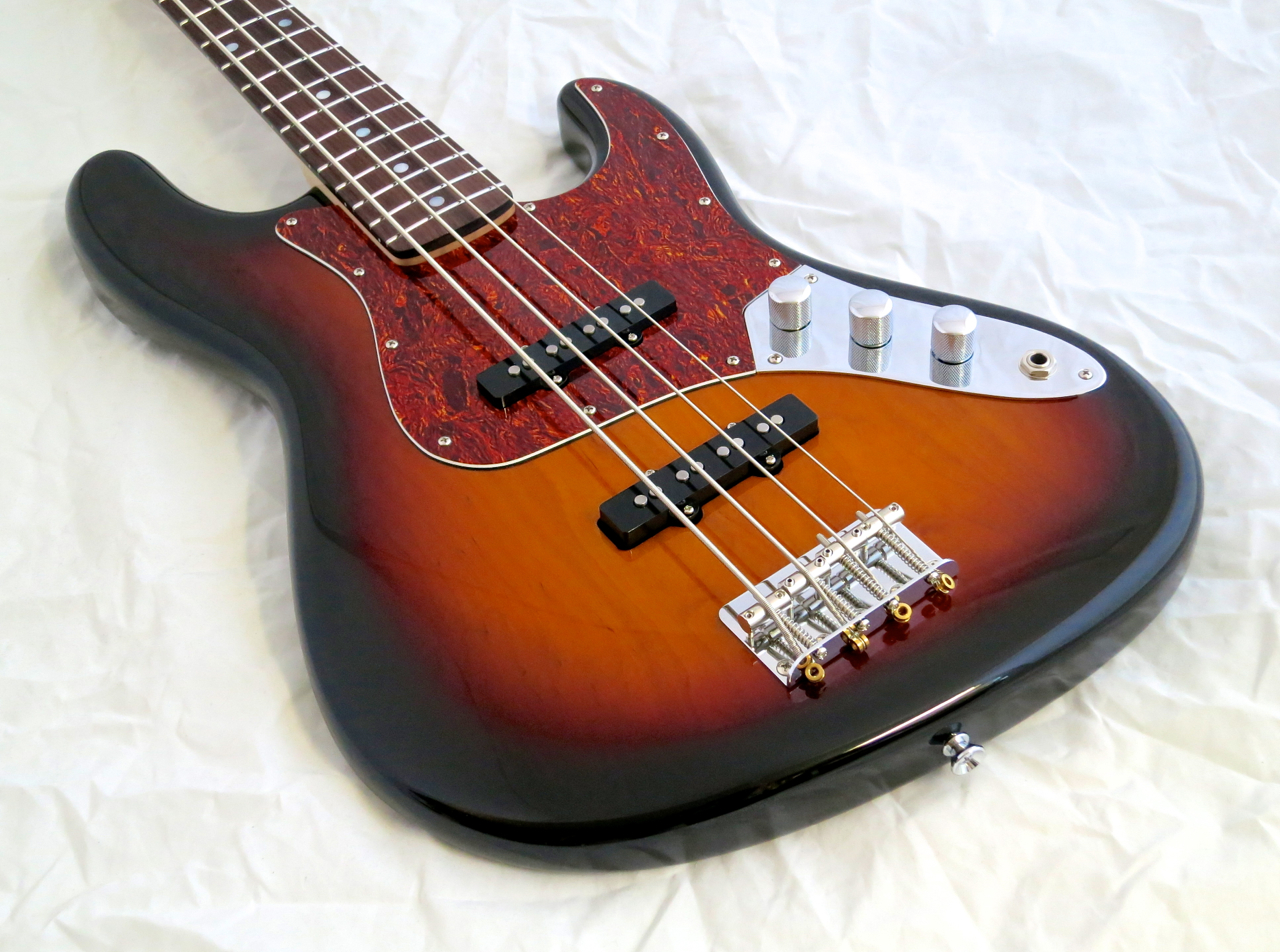
The Duesenberg D-Bass is a good example of this, promising both P- and J-style tones from a passive, one-pickup instrument.

****

Duesenberg D-Bass – full front 2

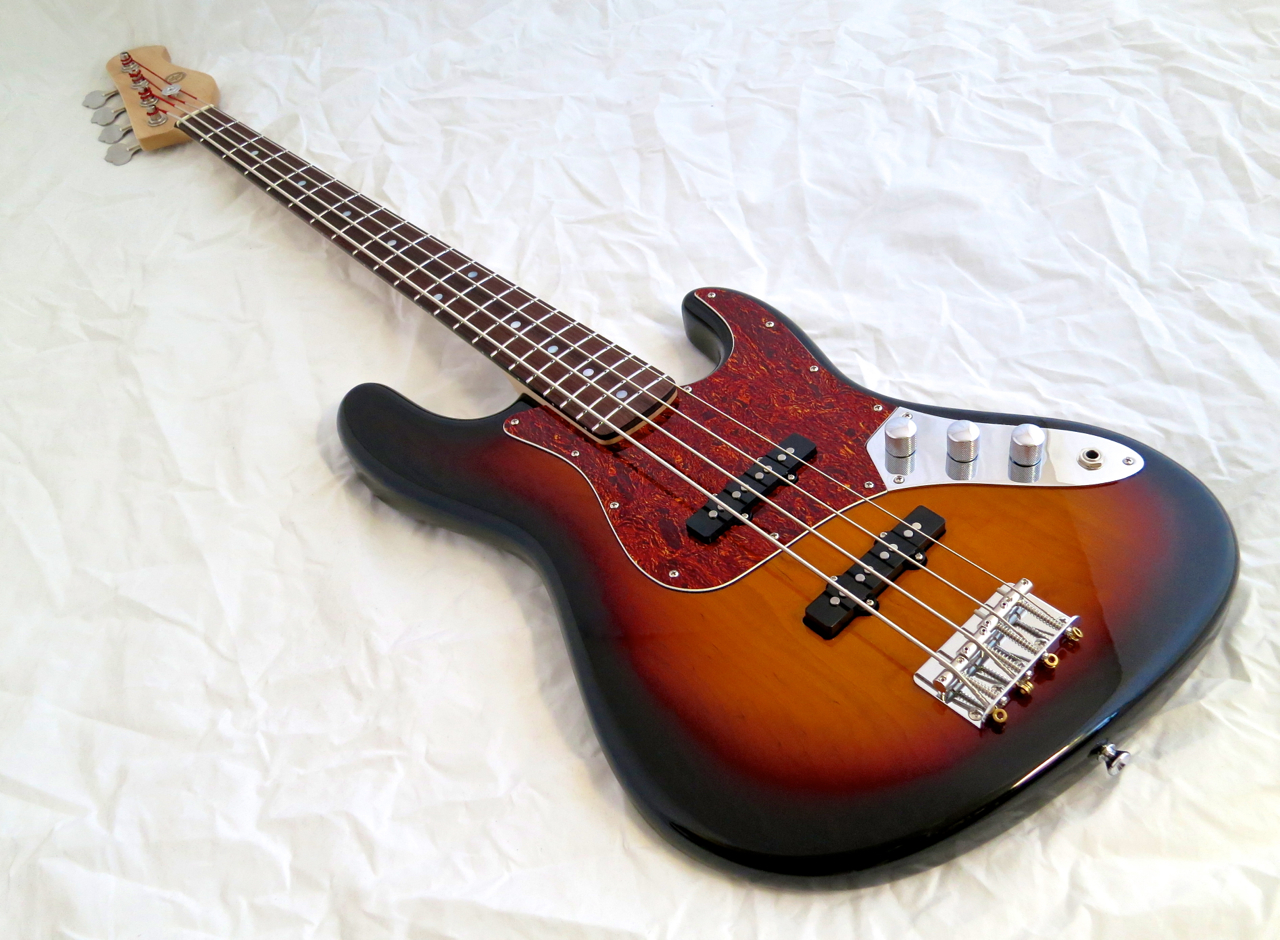
The Duesenberg D-Bass (current price in Finland: 1.729,90 €) proves that you can build a bass from classic tonewoods without having to resort to copying others.

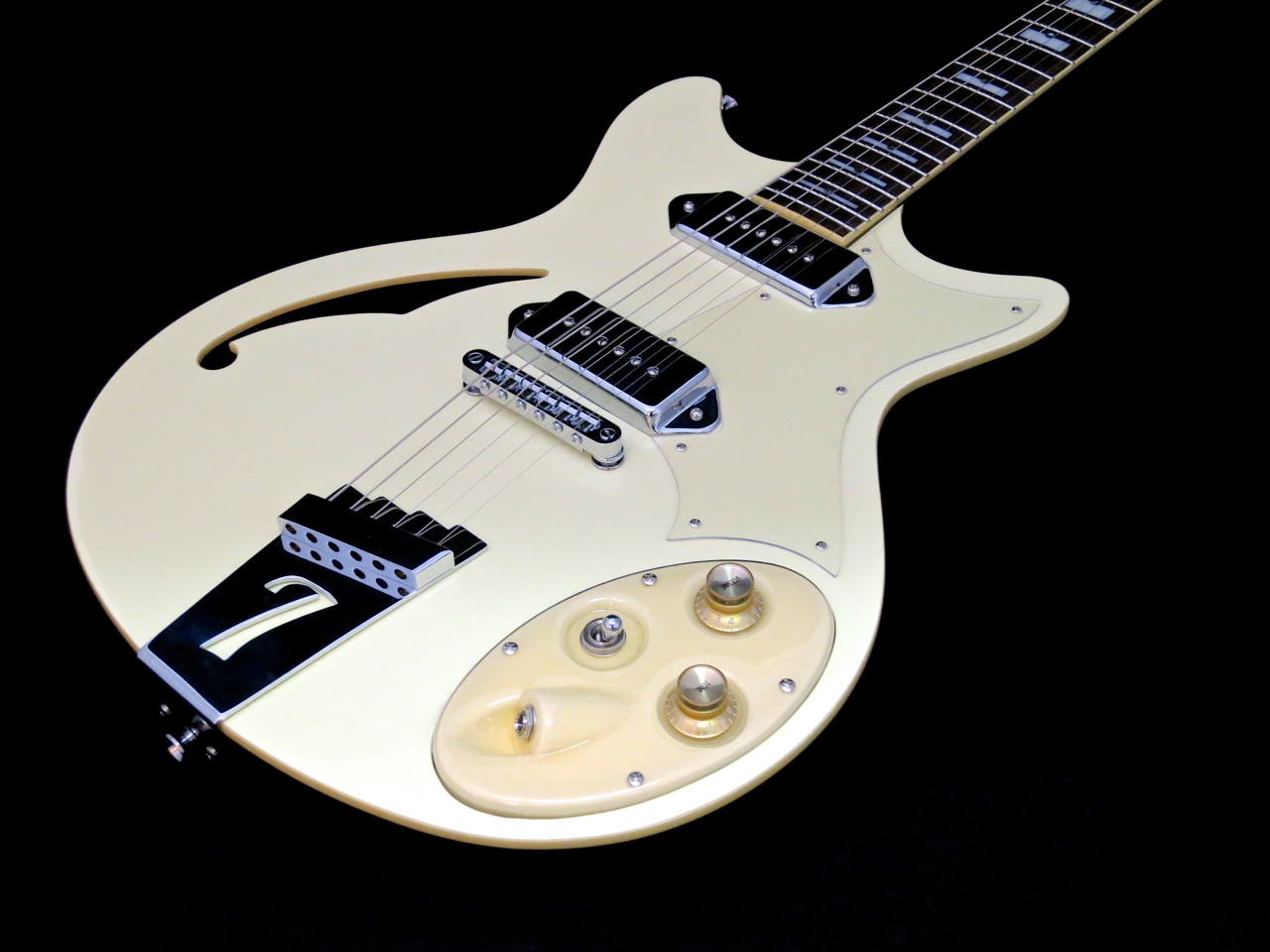
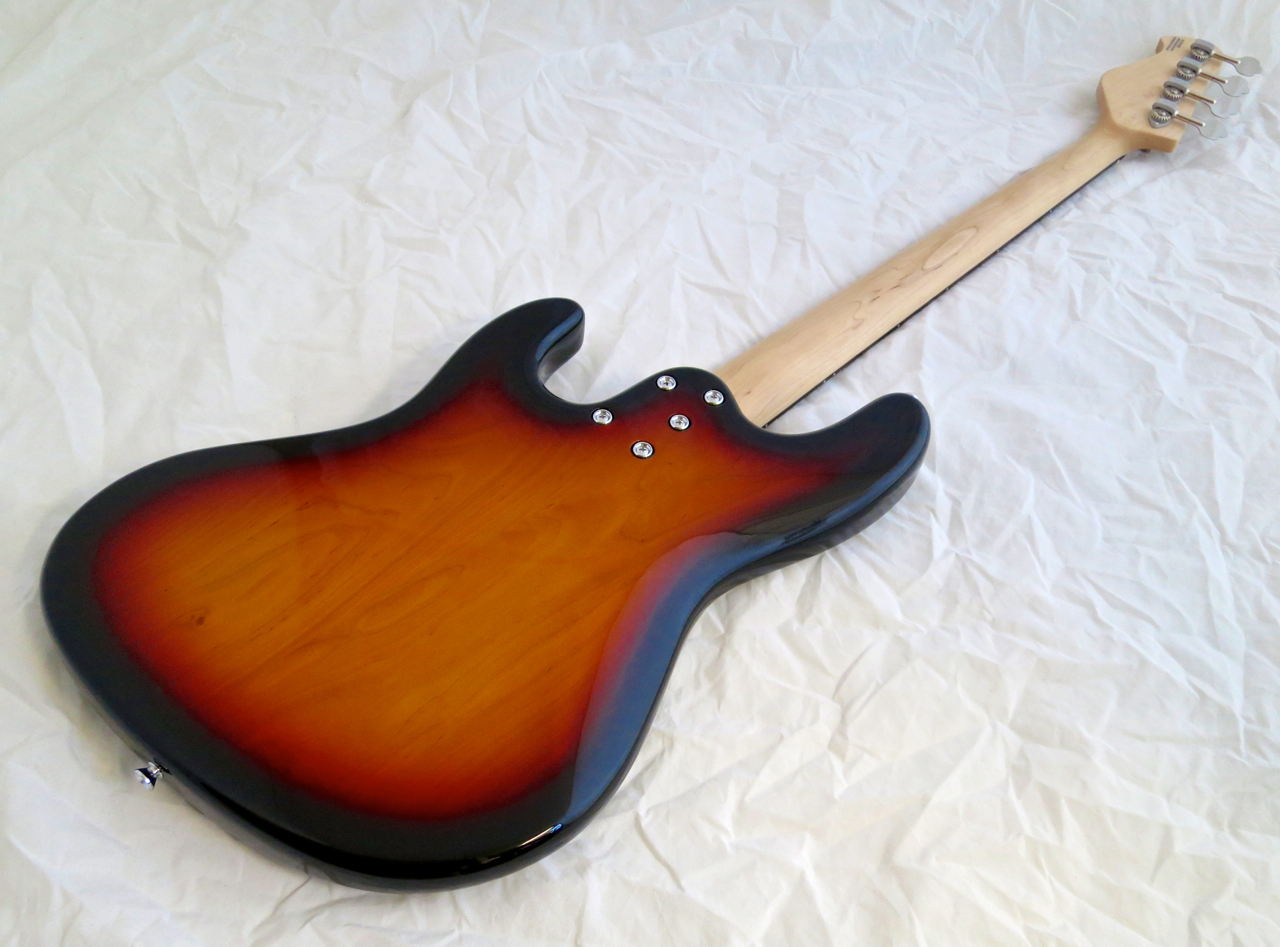
This is a four-string, passive bass, built using a bolt-on maple neck with a rosewood fretboard mated to a bound alder body. The top of the body sports elegant carving.

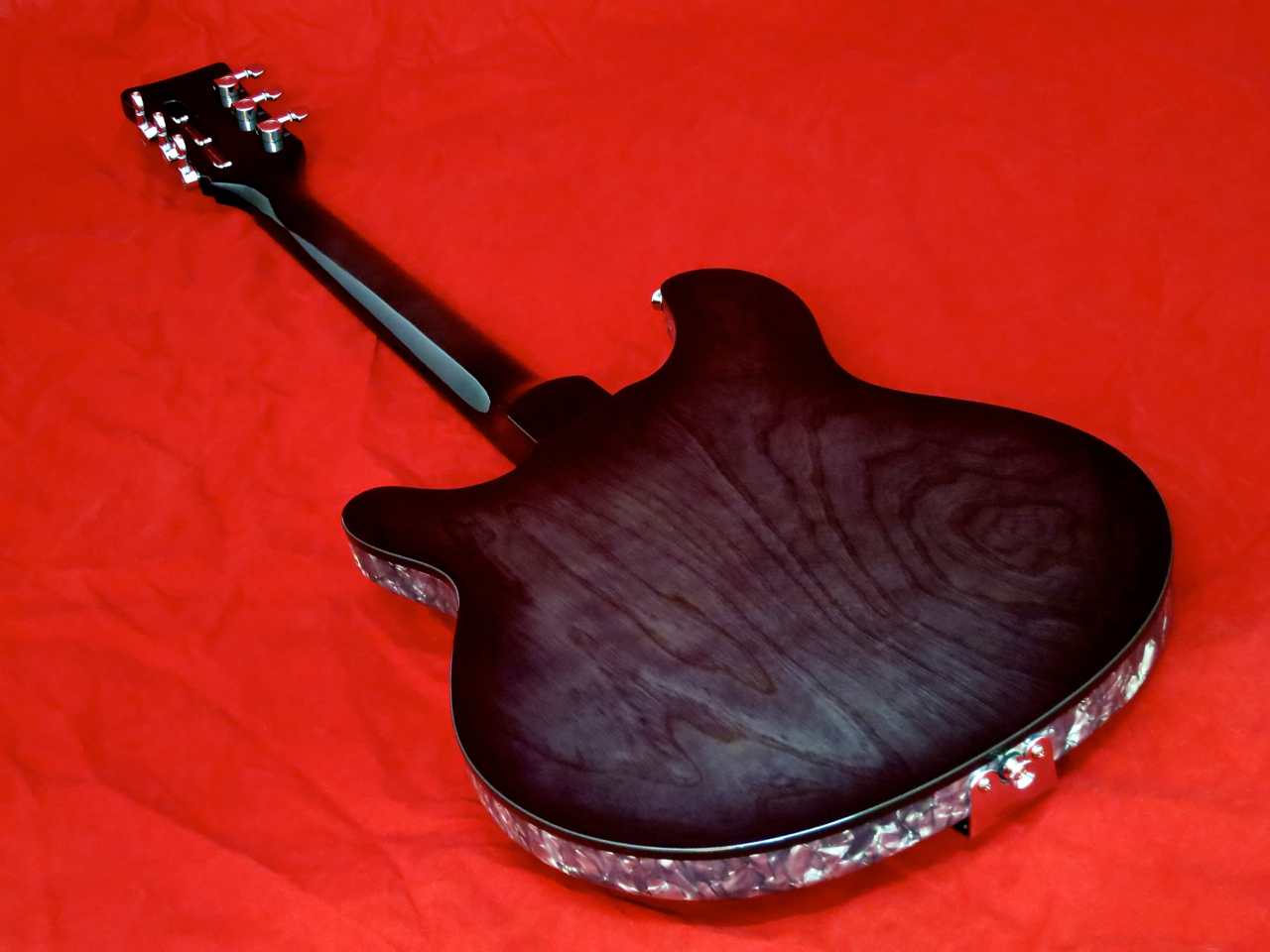
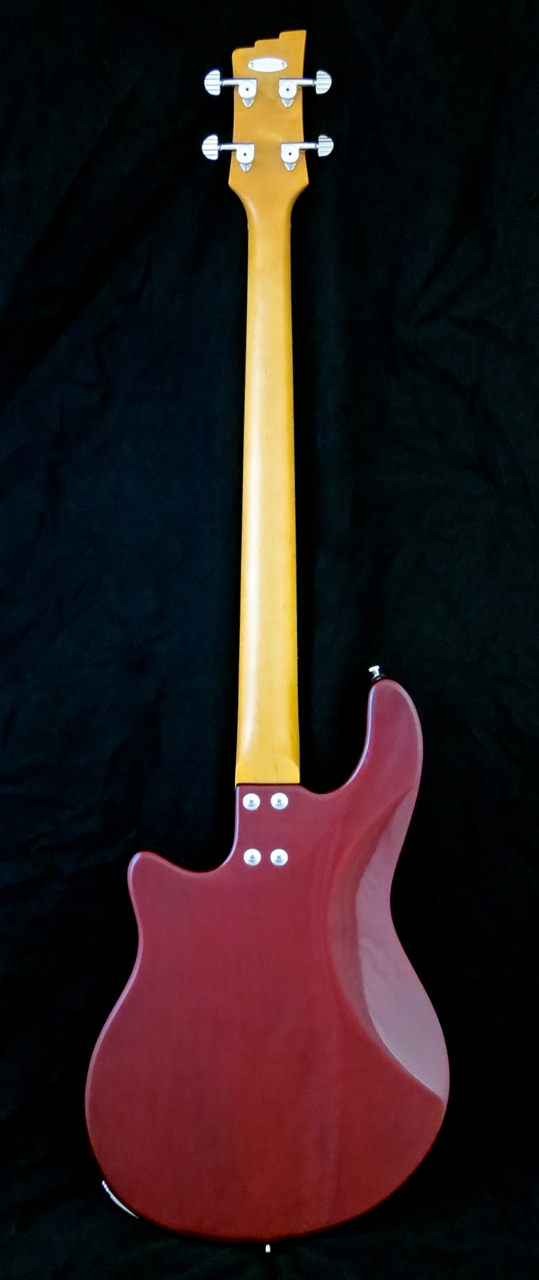
Duesenberg D-Bass – full back 2

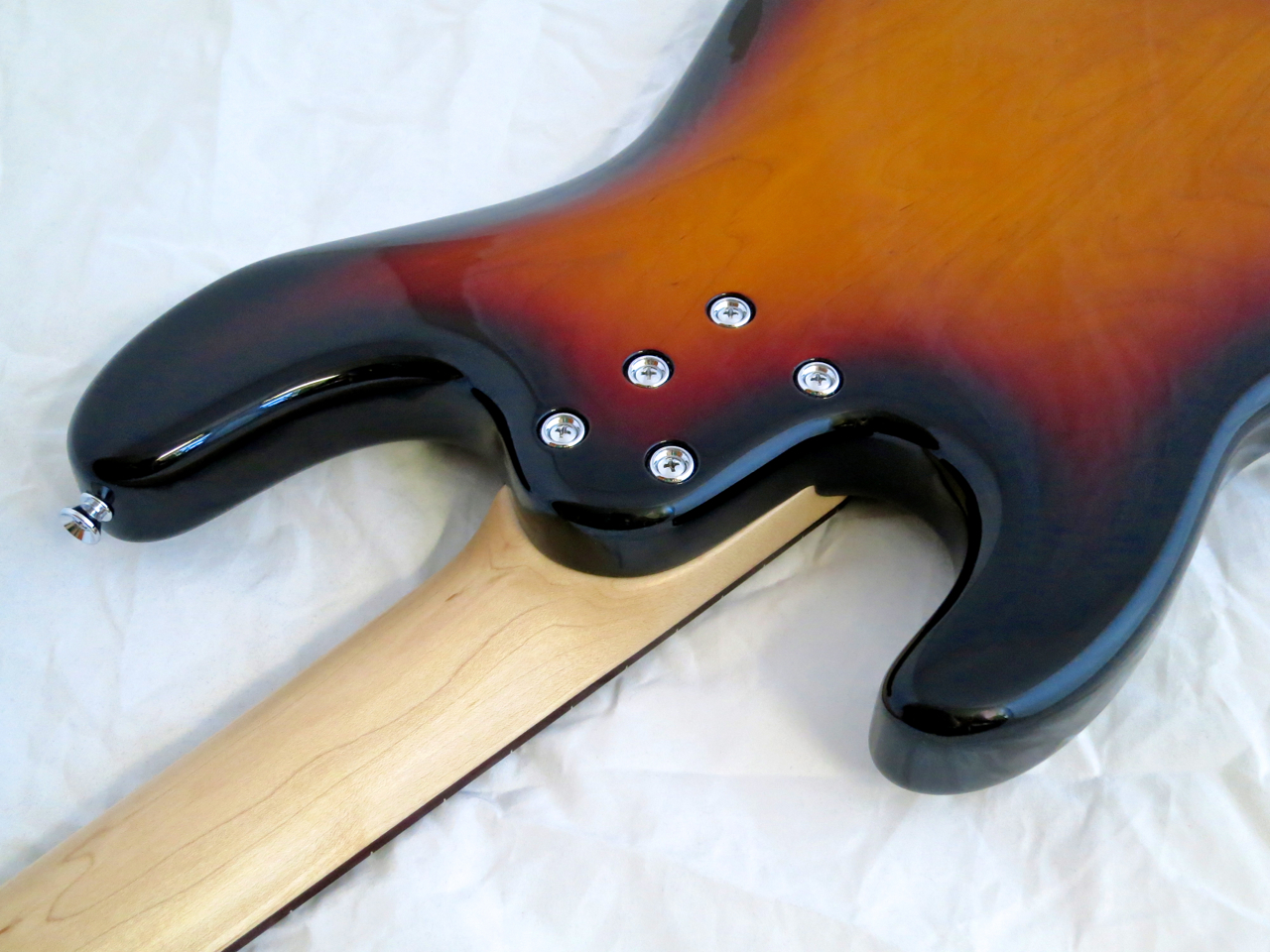
The generous rib cage bevel adds a great deal of comfort to the D-Bass.

The body comes in a fetching gloss finish, while the neck has received a thin, vintage-tinted satin finish.

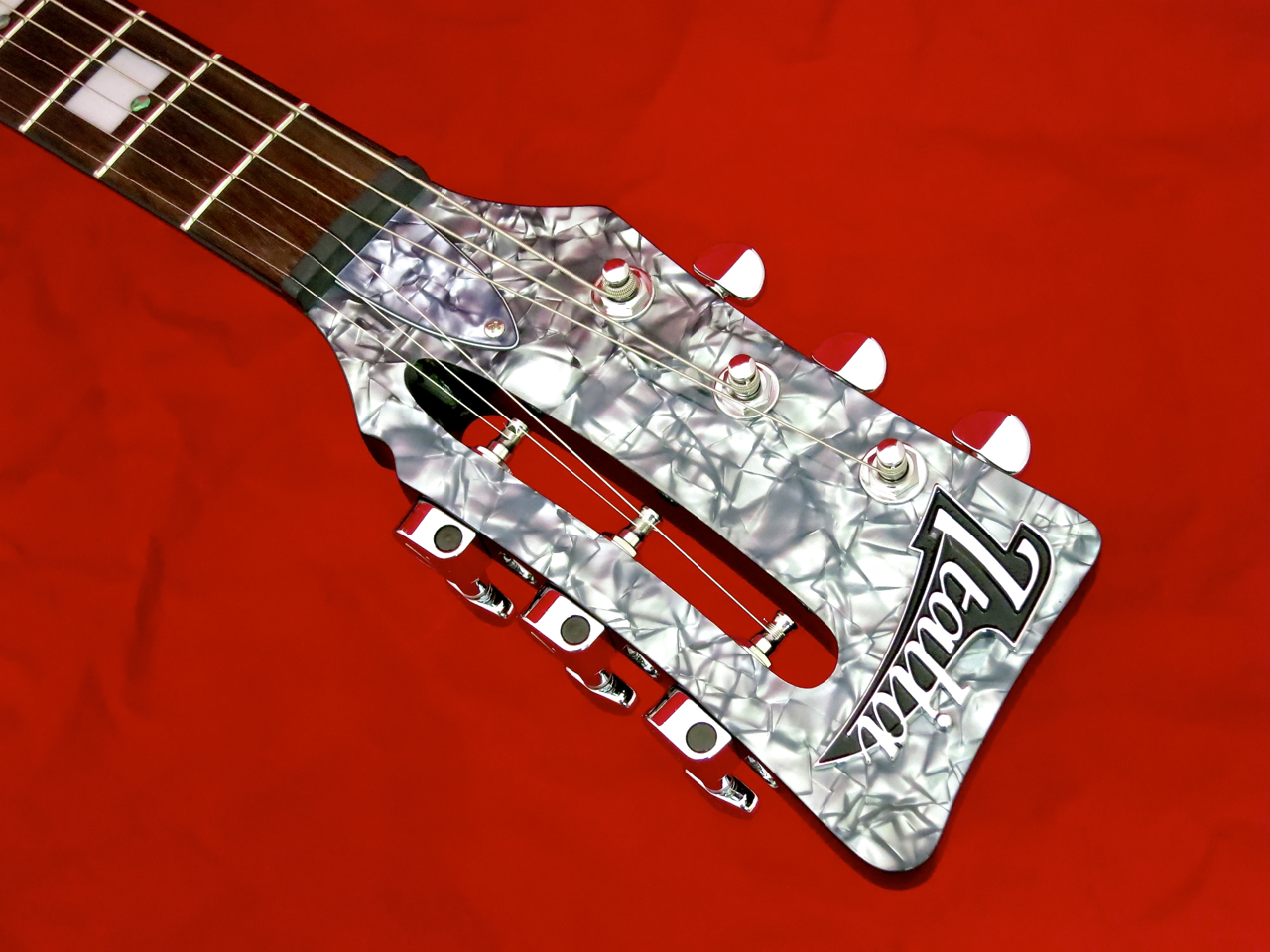
Duesenberg D-Bass – headstock

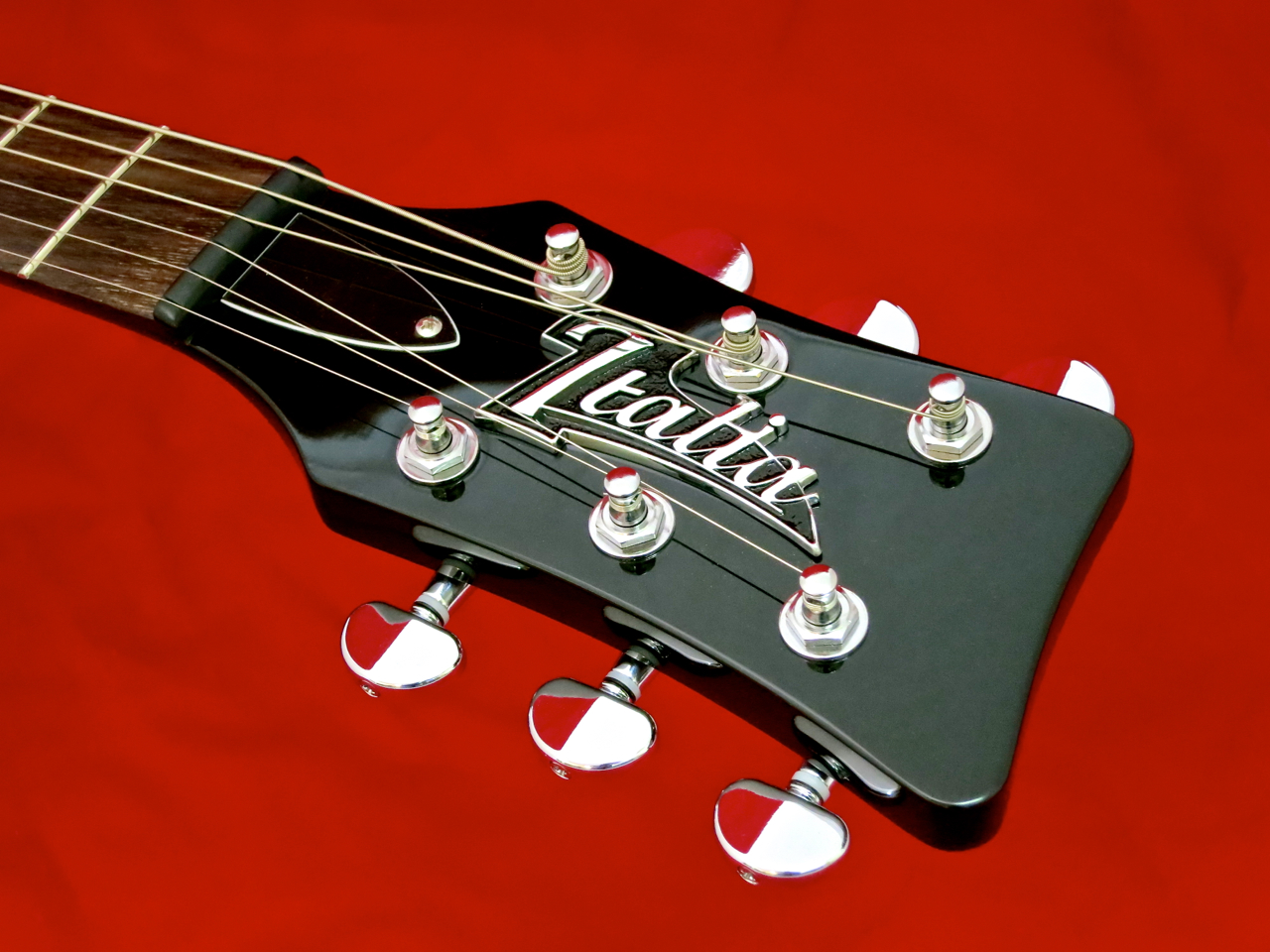
I feel that Duesenberg’s three step headstock looks even better in its bass guise than the smaller guitar version.

Duesenberg D-Bass – tuners

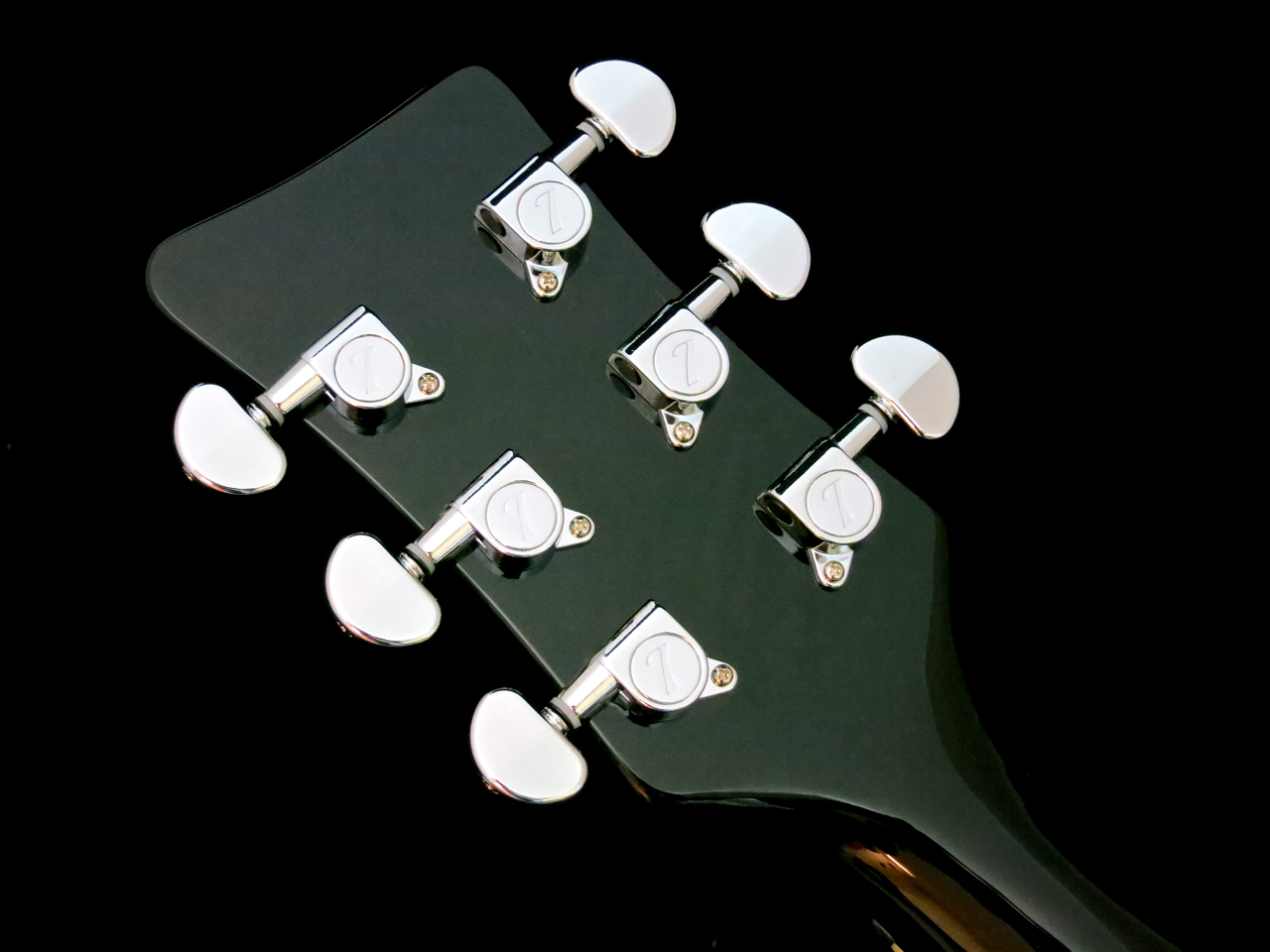
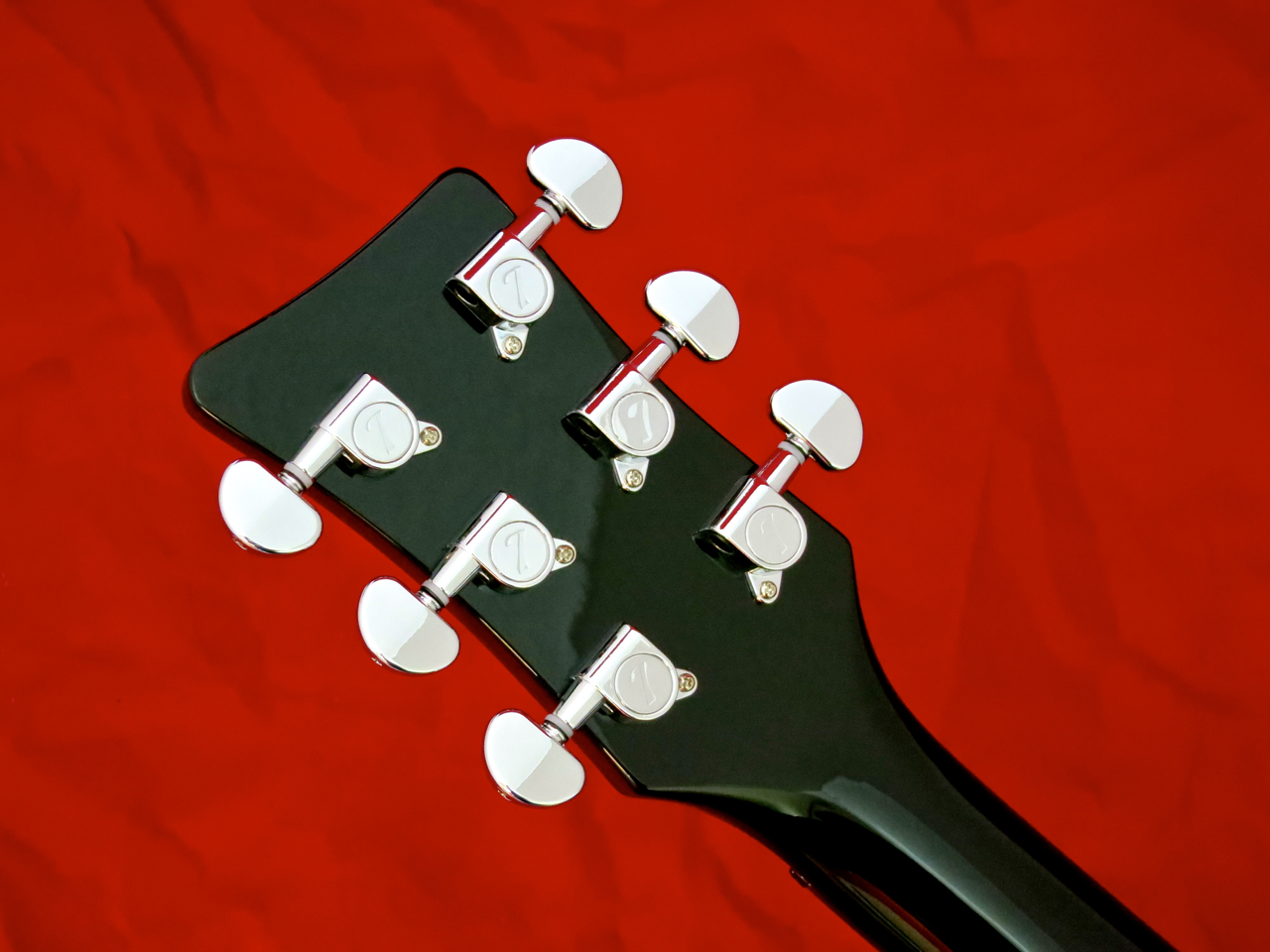
Duesenberg use their own locking Z-Tuners on the D-Bass. The string is first fed into a well in the tuning post until it comes out of a small hole in the tuning machine’s back. You cut off the surplus length of string, pull back the string by a couple of millimetres, lock it in place and tune up. Voila, a clean and uncluttered solution that leaves no sharp string ends.

Duesenberg D-Bass – fretboard

Duesenberg employ a PLEK-robot to give all their instruments a perfect fret job and set-up.

Duesenberg D-Bass – neck joint

Thanks to the angled neck joint an excursion to the dusty end of the fretboard is fast and easy on the D-Bass.

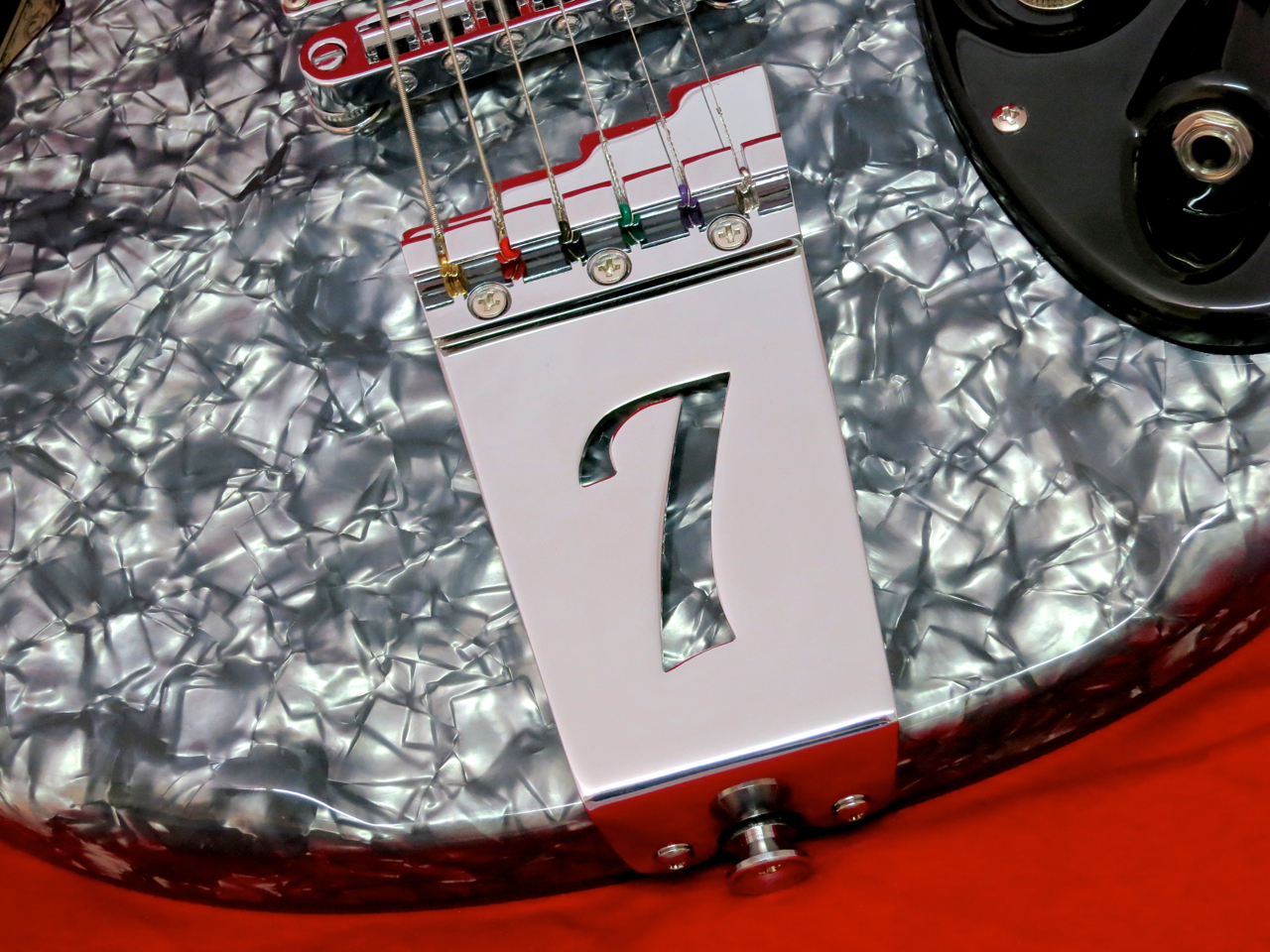
Duesenberg D-Bass – bridge

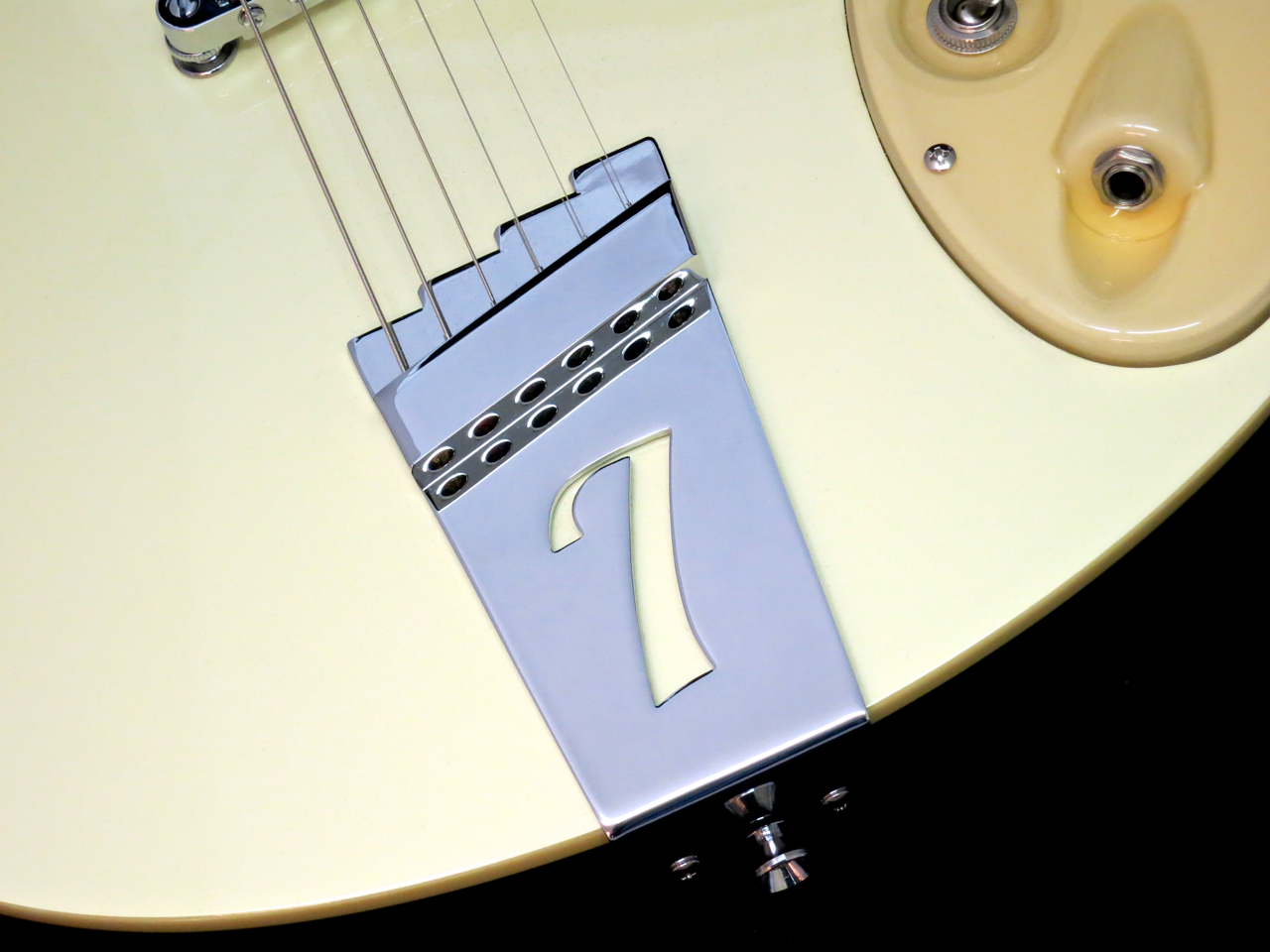
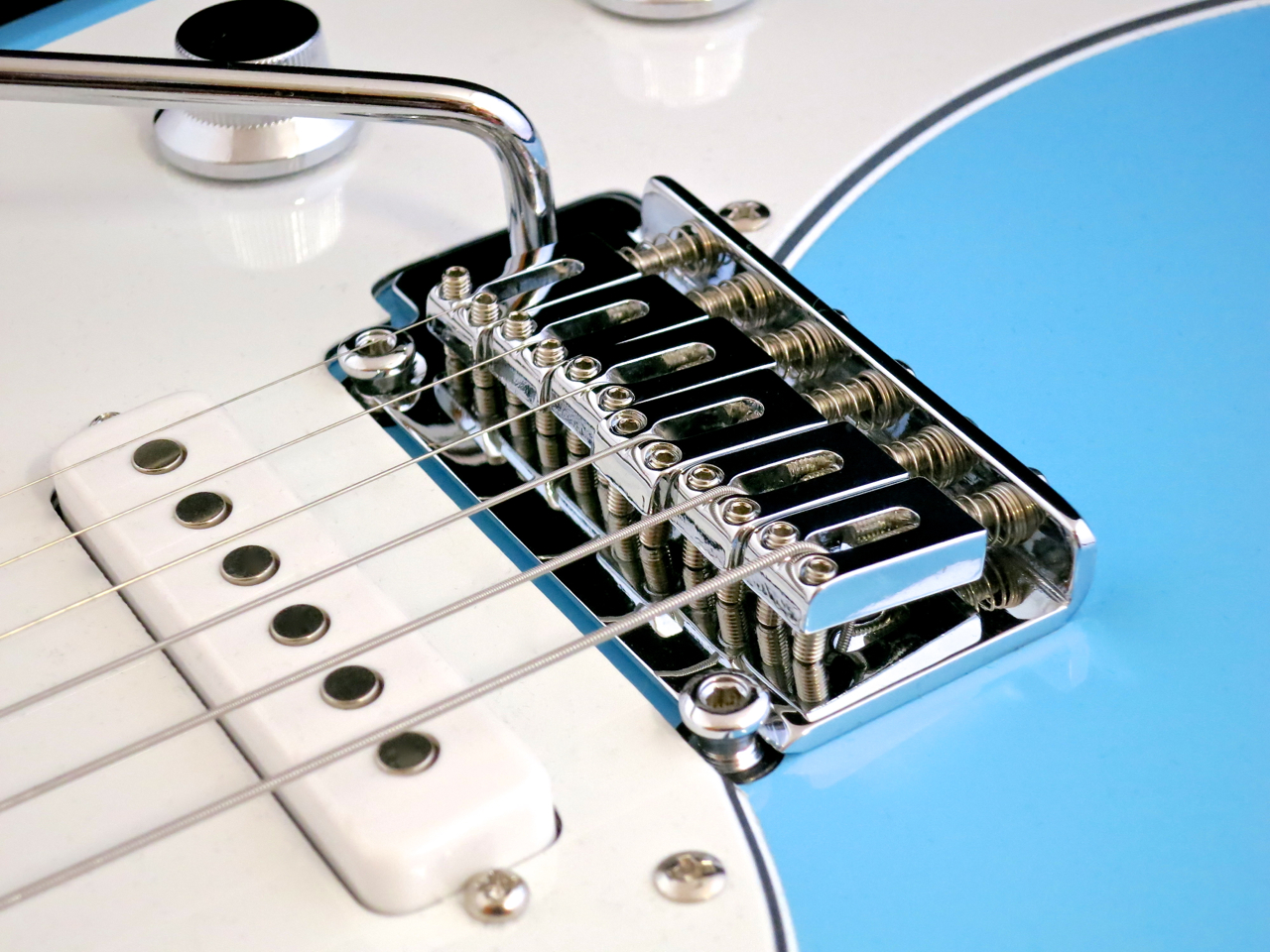
Duesenberg’s bridge and tailpiece combo are made of chunky bits of milled brass.

In addition to action and intonation the bridge also offers the adjustment of string-to-string distance. After adjustment you can lock everything in place with allen grub screws.

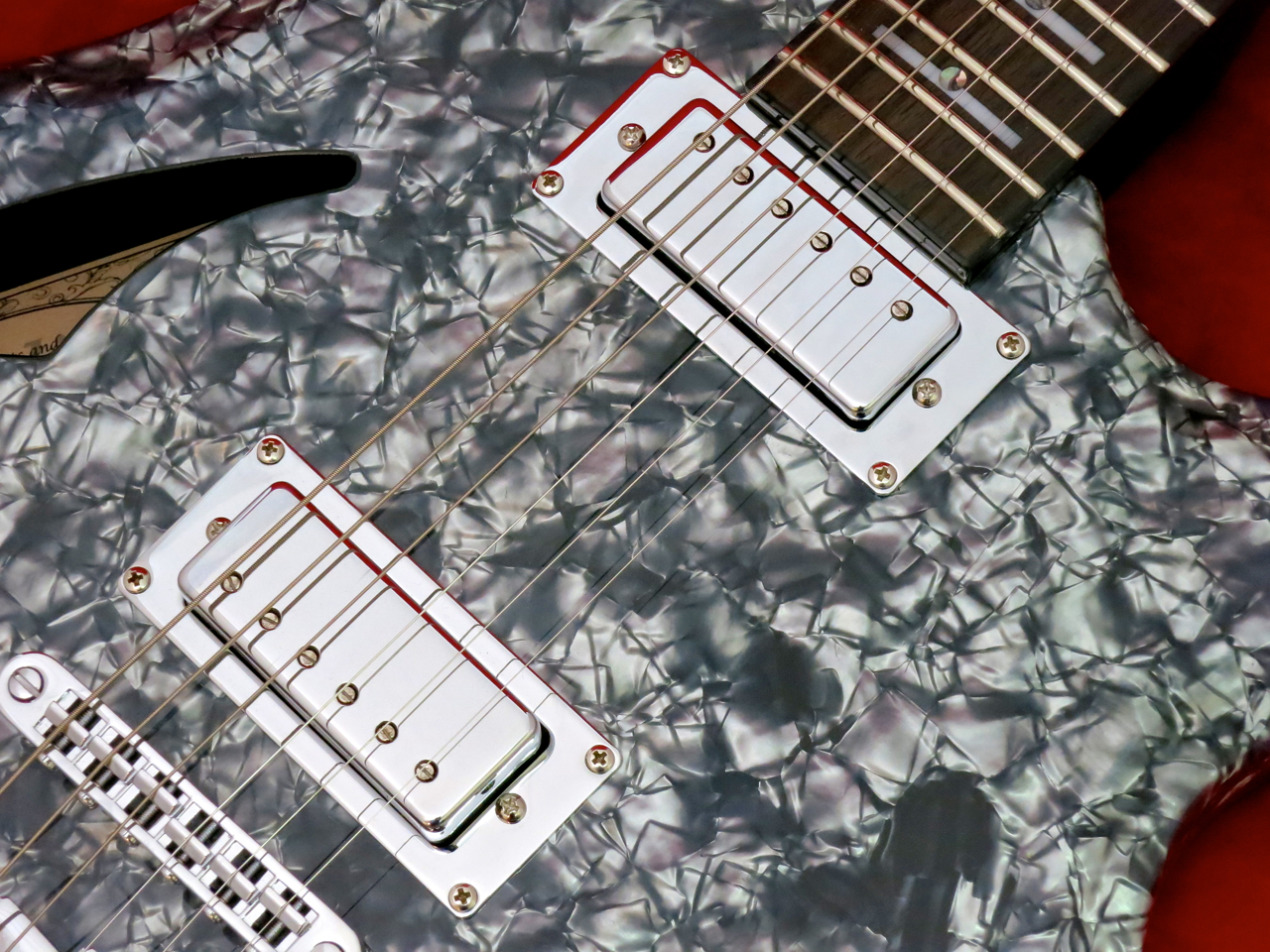
Duesenberg D-Bass – pickup

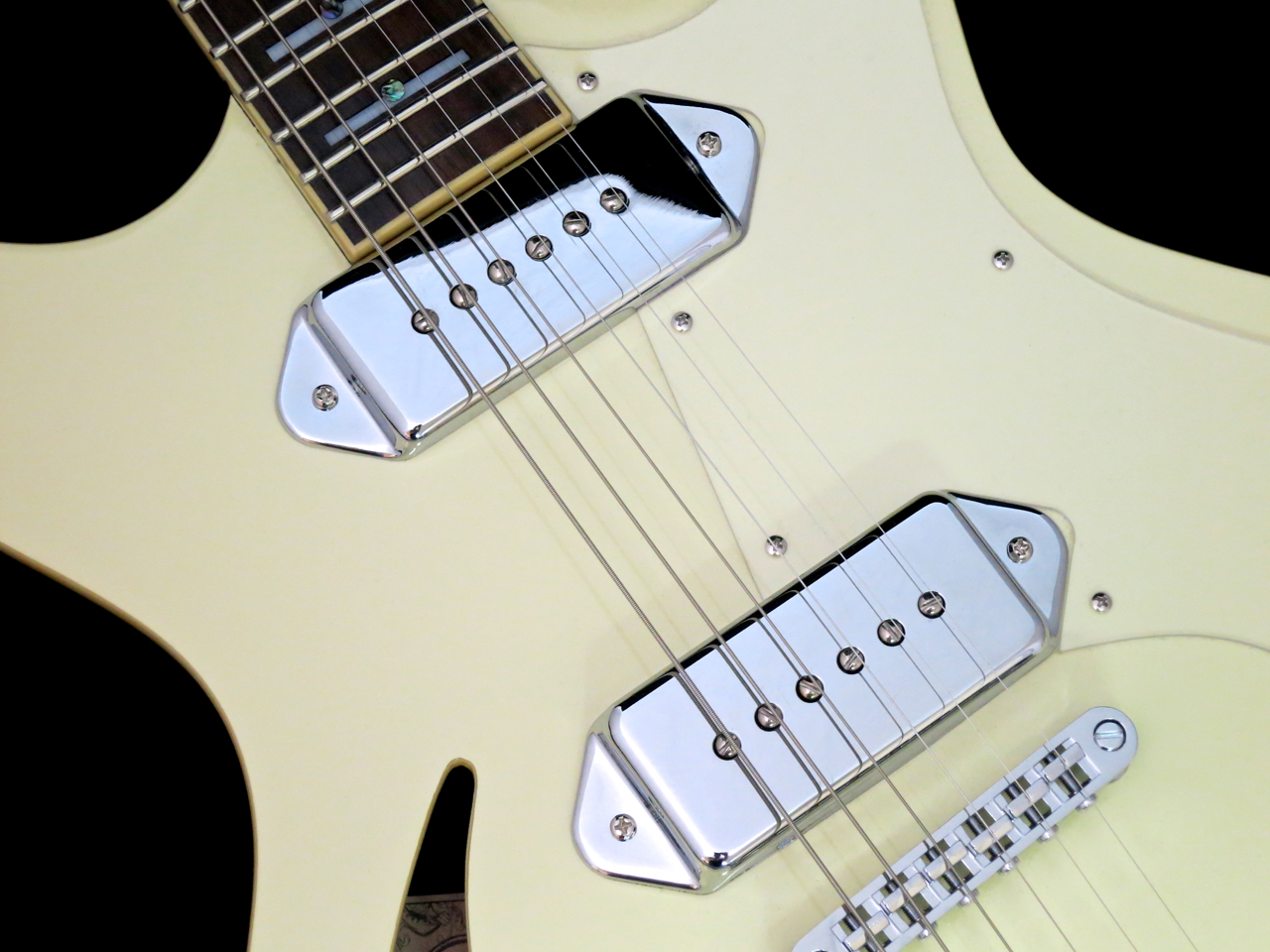
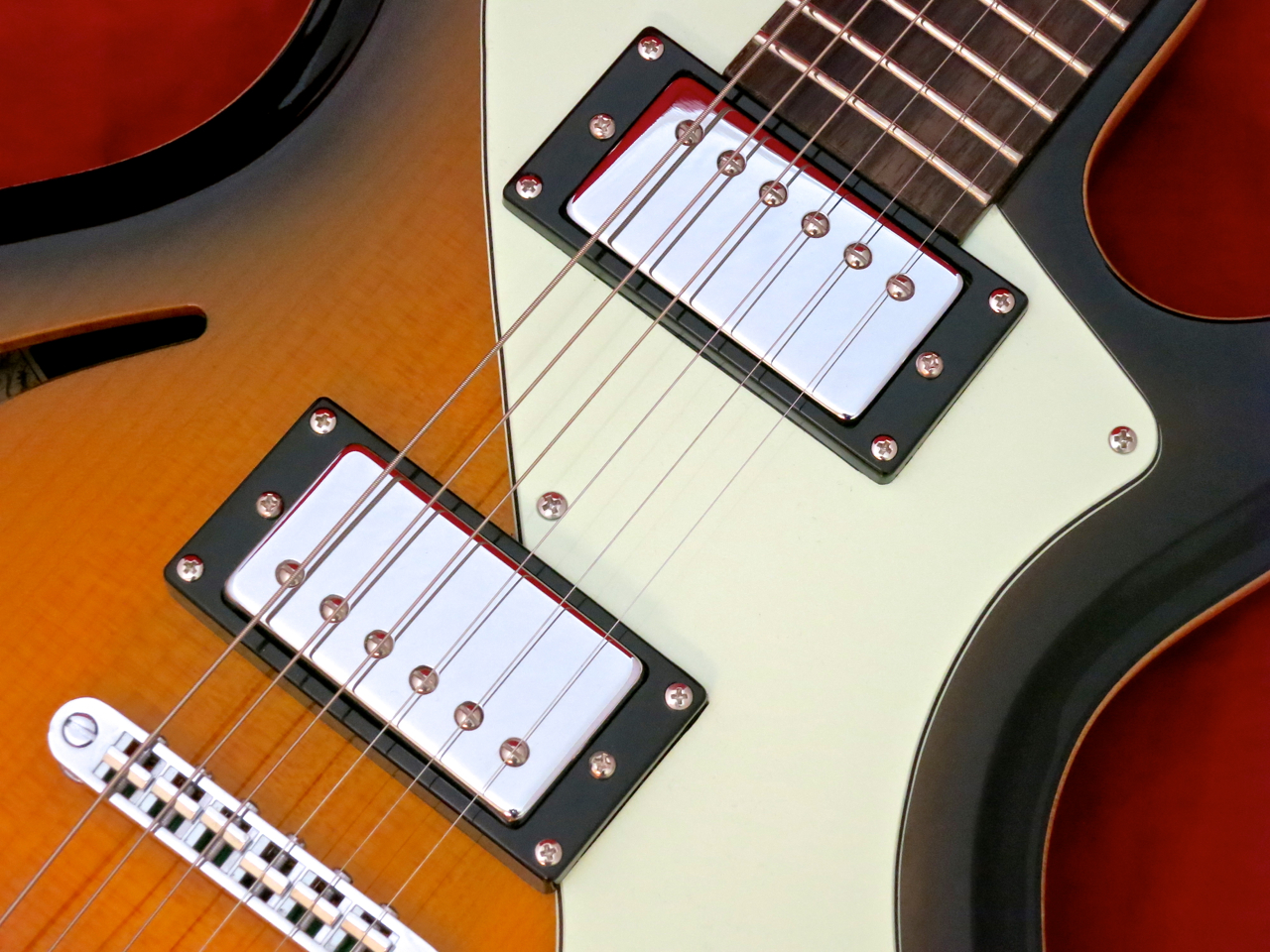
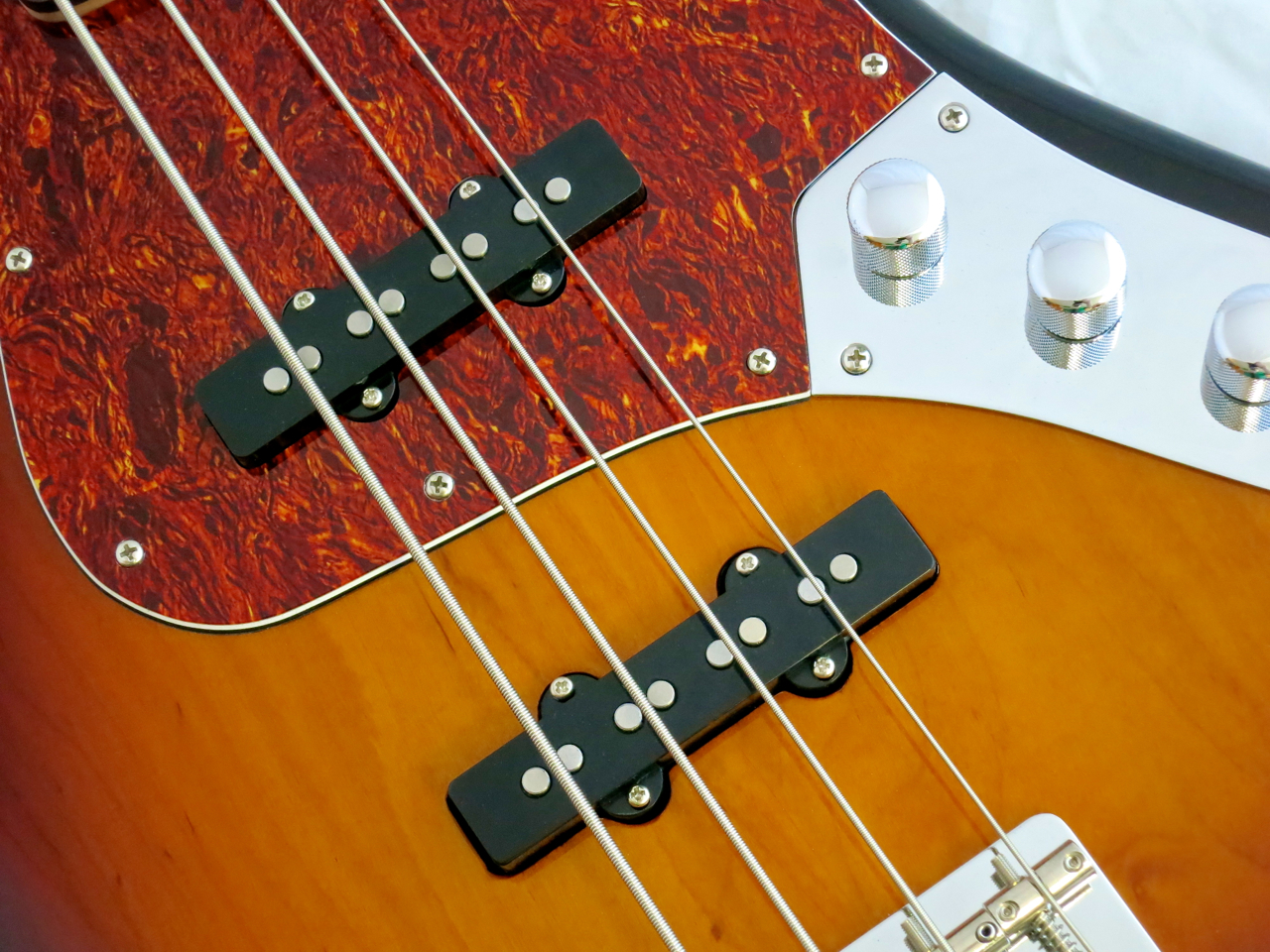
The D-Bass’ two-part pickup is situated on its own, oval pickguard.

Duesenberg’s Toaster-pickup may resemble a Fender Precision-pickup, but it really has its own thing going on in terms of construction. While the venerable P-Bass is equipped with two singlecoil pickups (one for each pair of strings), which are hooked up to form a humbucking unit, Duesenberg’s design uses two small humbuckers with open covers.

Duesenberg D-Bass – controls

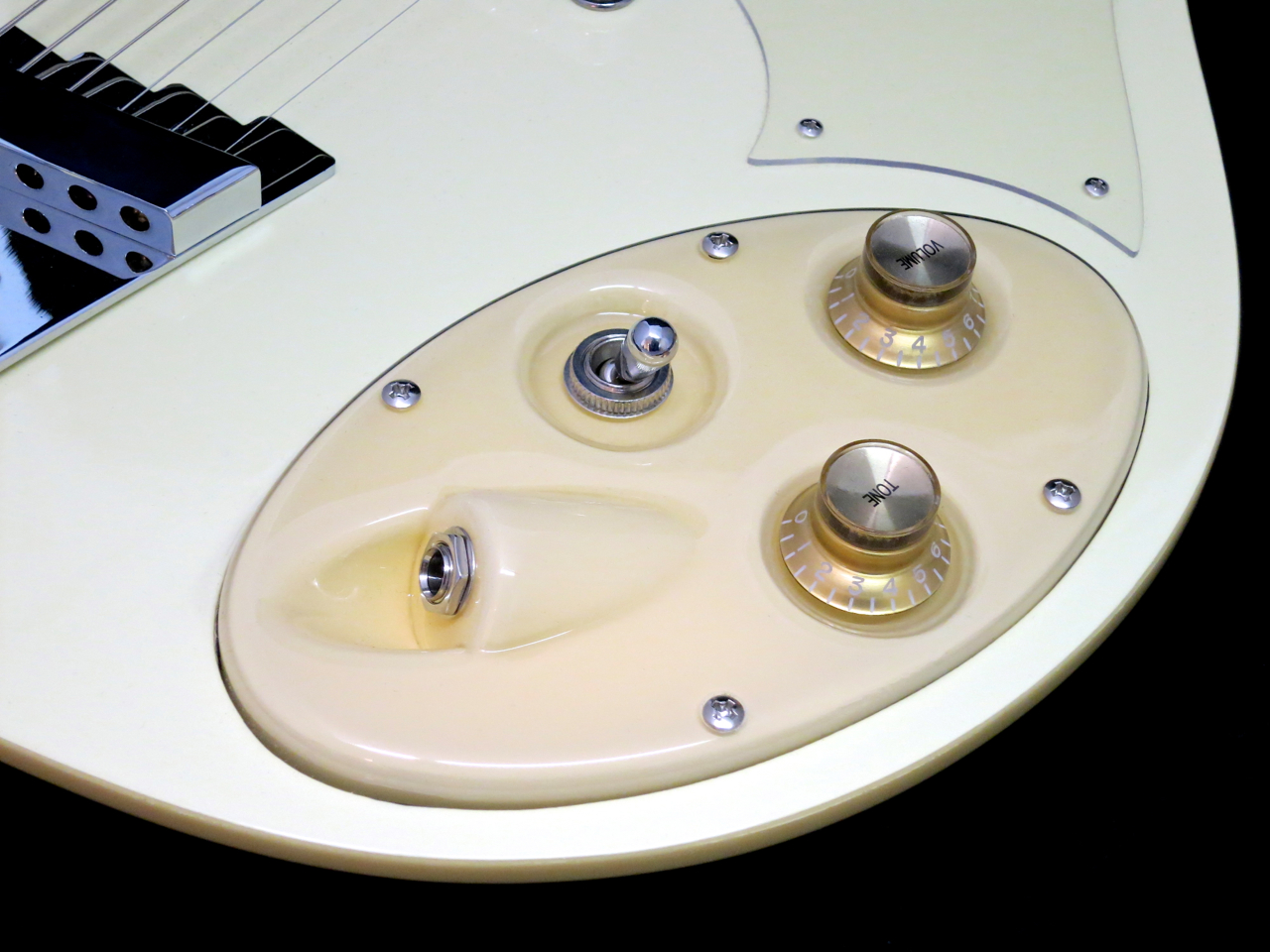
The passive controls are found on the bass’ larger pickguard and comprise a master volume, the Mid-Shift control and a master tone.

Duesenberg D-Bass – control cavity

The Mid-Shift control uses a nifty bit of wiring voodoo:

When Mid-Shift is fully turned up, both coils of each pickup are used fully, but some of the top end signal is filtered by a capacitor. This is how the D-Bass achieves a P-style sound.

Turning the potentiometer counterclockwise fades out the signal of one of each humbucker’s coils, while lessening the capacitor’s effect on the signal. Fully counterclockwise, this gives you a brighter and more focussed, J-type tone.

You can find a similar wiring trick on Seymour Duncan’s web page, showing you how to wire up a humbucker in such a way that you can use a control pot for going from humbucking to singlecoil by feeding one of the pickup coils to earth.

Duesenberg D-Bass – reverse angle

Duesenberg D-Bass – case

The Duesenberg D-Bass comes in its own quality hard case.

****

Duesenberg D-Bass – beauty shot 2

Duesenberg’s bass is a beautiful instrument with a nice, medium weight and a great balance, both in you lap or hanging on a strap.

The neck profile is a Precision-style wide ”D”, but combined with the D-Bass’ larger fingerboard radius and its jumbo frets the playing feel is decidedly more modern and slinky than vintage.

My only small gripe is a strictly cosmetic one: I would like to see one or two screws added to the larger control scratchplate, as the current layout doesn’t make the plate fit snugly on top of the body’s top contour, leaving a few edges standing proud of the body surface.

This Duesenberg has a very healthy acoustic ring, completely devoid of any of the quirks often associated with vintage basses (like an over-enthusiastic low G or a dead spot around the high c).

Amped up you’re in for a real treat, as long as you’re not after that type of extreme EQ, only achievable with active preamps. Duesenberg’s Mid-Shift control is a really ingenious addition to the D-Bass, resulting in a much more organic palette of sounds than a mere coil-split could provide. The volume drop going from the P- to the J-variant is negligible, which is another positive effect of not using a straight coil-split.

I always play the same motif twice in each sound clip – first with Mid-Shift full on (P), then with Mid-Shift turned down fully (J).

Duesenberg D-Bass – body beauty 1

****

Duesenberg D-Bass – full front   Duesenberg D-Bass – full back

I must say, I liked the Duesenberg D-Bass very much. It is a great instrument for connoisseurs of passive bass tones. The Mid-Shift control isn’t ”in your face”, but still manages to provide you with an ingenious way of tailoring the bass’ sound to your needs.

****

Duesenberg D-Bass

1.729,90 €

Finnish distributor: F-Musiikki

****

Pros:

+ workmanship

+ Mid-Shift control

+ playability

+ design

+ sound

Cons:

– pickguard fit (read the review)

****

Duesenberg D-Bass – body beauty 2

Testipenkissä: Boss OD-1X + DS-1X

od-1x + DS-1x

Bossin kuumimmat uutuudet NAMM 2014 -messuilta ovat kaksi erikoispainosta firman suosituimmista säröpedaaleista. Uusien mallien nimet ovat OD-1X Overdrive ja DS-1X Distortion, ja ne lupaavat entistä enemmän gainea, tiukempaa atakkia, sekä huomattavasti monipuolisempaa EQ-osastoa.

****

od-1x_back_angle_gal

Vaikka kaunis Suomen kieli tuntee laajan sanavalikoiman kuvaamaan eri luonnonilmiöitä, kuten metsiä tai niittyjä, käytetään audiosignaalin yliohjaamisesta johtuvista muutoksista ainoastaan yhtä sanaa – särö – kun taas englanninkielisissä maissa puhutaan overdrivesta, distortionista ja fuzzista.

Fuzz-särö on näistä kolmesta tyypeistä se vanhin, ja tietyllä tavalla myös rankin vaihtoehto. Perinteistä fuzz-säröä saadaan aikaiseksi ajamalla signaalia rankkaan transistoriklippaamiseen. Lopputulos on melko aggressiivinen ja raastava, ja se toimii usein parhaiten riffeissä ja soololinjoissa (hyvä esimerkki tästä on Rolling Stones -yhtiön biisi ”Satisfaction”).

Overdrive- ja distortion-säröjen tarkoitus taas on tuottaa putkivahvistimia muistuttavia särösoundeja. Alun perin molempia sanoja käytettiin särön yleistermeinä, mutta juuri Boss-pedaalissa käytetyn systeemin ansiosta overdrive- ja distortion-sanojen käyttö on nykyään standardisoitu: Overdrive-särö on miedompi ja huomattavasti dynaamisempi kuin selkeästi enemmän kompressiota tarjoava, purevampi distortion-särö.

od-1x_top_gal

Boss keksi aikoinaan myös sen, että eri efektityypejä voisi erottaa toisistaan kätevästi värijärjestelmällä – overdrive-säröpedaalit ovat esimerkiksi aina keltaisia.

Upouusi Boss OD-1X Overdrive (155 €) on uuden sukupolven säröpedaali, joka tarjoaa huomattavasti monipuolisempaa soundia kuin sen esi-isät. Drive- ja Level-säätimien lisäksi on tarjolla erittäin tehokas kaksikaistainen ekvalisointi.

****

ds-1x_back_angle_gal

Uudistuksien perusteena on molemmissa Special Edition -pedaaleissa ollut Bossin patentoima digitaaliteknologia nimeltään MDP (Multi-Dimension Processing). Vasta MDP-teknologia mahdollistaa kitarasignaalin huippunopeata, monikaistaista prosessointia, jonka ansiosta jokaisen nuotin atakki säilyy ehjänä ja soinnut eivät puuroudu. Samalla on saatu pedaalien kohina vähennettyä rutkasti myös gain-säätimien ääripäässä.

ds-1x_top_gal

Tummanoranssi Boss DS-1X Distortion -pedaali (155 €) tarjoaa neljä säädintä – Distortion, High, Low ja Level – ja sen soundi on optimoitu toimimaan myös nykyaikaisilla seitsen- tai kahdeksankielisillä sähkökitaroilla.

Molemmat pedaalit toimivat tutulla tavalla joko yhdeksän voltin paristolla (alkaaliparisto antaa noin yhdeksän tuntia soittoaikaa) tai virtalähteellä (ei kuulu hintaan).

****

od-1x_angle_3_gal

SD-1:stä ja OD-3:stä tuttu, legendaarinen Boss Overdrive -soundi on vahvasti esillä myös uudessa OD-1X-pedaalissa, mutta uusi erikoispainos tarjoaa huomattavasti enemmän säätövaraa EQ-osastossaan, sekä hieman enemmän gainea. Lopputuloksena syntyy erittäin maukas ja dynaaminen särösoundi, joka on selvästi laajempi kuin mikä sen keskiäänivoittoisemmat edeltäjänsä pystyvät tarjoamaan.

OD-1X:n erittäin lämmin bassorekisteri soi mielestäni kauniisti tässä klipissä (Vox Mark III, Drive klo 9, High klo 10, Low klo 2):

Tallahumbuckeriin saa lisättyä myös annoksen purevuutta (Hamer USA Studio Custom, Drive klo 9, High klo 11, Low klo 12):

Drive täysille, ja jopa pienen Marshallin puhdas kanava soi stäkin lailla. Tässä on Vox-kitaralla soitettu pätkä:

Ja tässä käytetään kahdella humbuckerilla varustettua Hameria (Drive täysillä):

****

ds-1x_angle_3_gal

Boss DS-1X laajentaa perinteisen DS-1-pedaalin soundivarastoa erittäin mehevällä tavalla. Uutuuspedaali kompressoi tutulla, maiskuttavalla tavalla ja sen perussoundikin on meille kaikille tuttu tuhansista biiseistä. On kuitenkin helppo havaita DS-1X:n syvempi bassokaista, parannettua erottelevuutta, selkeämpää atakkia ja monipuolisempaa EQ:ta.

Jo Distortion-säätimen alkumetreissä on hyvin selvää, että DS-1X-pedaali tarjoaa enemmän säröä kuin sen Overdrive-veli (Vox Mark III, Dist klo 9):

Humbuckereilla soitettuna astuu jo tässä vaiheessa kuvaan uutuuspedaalin kermainen kompressointi (Hamer, Dist klo 9):

Vaikka Distortion-säädin on avattu tässä klipissä täysille, kohisee tässä klipissä pienen kombon puhdas kanava enemmän kuin Boss-uutuus (Vox Mark III):

Ja Metal-kitaristit iloitsevat varmasti myös DS-1X:n isosta, mutta tiukasta bassorekisteristä (Hamer, Dist täysillä):

****

od-1x_ds-1x_boxes_gal

Kitaristeilla ei voi koskaan olla liian monta kitaraa tai liian monta säröpedaalia – se on yksinkertaisesti niin! Boss Special Edition -pedaalien ansiosta voisi kuitenkin vapautua hieman tilaa soittajien pedaalilaudoissa, koska OD-1X:llä ja DS-1X:llä saa katettua näin laajan spektrin erilaisia särösoundeja. Riippumatta siitä, etsitäänkö perinne-Bluesille sopivaa kevytsäröä tai jotain paljon rankempaa matalaa Thrash-riffailua varten, olen melko varma, että tällä kaksikolla homma hoituu laadukkaasti.

****

Boss OD-1X + DS-1X – Special Edition -säröpedaalit

OD-1X: 155 €

DS-1X: 155 €

Lisätiedot: Roland

****

Plussat (molemmat pedaalit):

+ soundi

+ enemmän gainea

+ kaksikaistainen EQ

+ erittäin tarkka atakki

+ alhainen kohinataso

Testipenkissä: Warwick LWA 1000

****

Warwick LWA 1000 – opener

Saksalainen Warwick tarjoaa sähköbassojensa lisäksi myös laajan valikoiman erilaisia bassovahvistimia.

Valmistajan uusin aluevaltaus on erittäin kompaktien ja ultrakevyeiden bassonuppien lajityyppi, josta Warwick LWA 1000 on firman ensimmäinen.

****

Warwick LWA 1000 – front

Warwick LWA 1000 (789 €) on niin pieni ja kevyt (2,75 kg), että se mahtuu tarvittaessa jopa moneen gigbägin etutaskuun. Lisävarusteena on toki saatavilla myös räkkirautoja tai nupille sopiva topattu olkalaukku.

Nimensä mukaisesti LWA 1000 -nuppi tarjoaa jopa 1.000 wattia tehoa neljään ohmiin tai 500 kahdeksan ohmiseen kaappiin. Näin suurta tehoa on saatu pieneen pakkaukseen käyttämällä D-luokan päätevahvistinta.

Warwick LWA 1000 – front panel inputs

Warwickin kaksikanavainen etuvahvistin taas on toteutettu mahdollisimman vähäsäröiseksi käyttämällä Hellborg-sarjasta lainattua A-luokan vahvistinpiiriä.

LWA 1000:n kanavat ovat täysin identtisiä ja niitä voi käyttää joko kahdella eri soittimella (kumpikin soitin menee silloin oman tulojakin kautta omalle kanavalle) tai sitten yhdellä bassolla pakettiin kuuluvalla jalkakytkimellä.

Warwick LWA 1000 – front panel EQs

Kummallekin kanavalle on oma nelialueinen taajuuskorjainten osasto, joka tarjoaa 12 desibeliä vahvistusta tai vaimennusta per taajuuskaista.

Warwick LWA 1000 – front panel comp + master

Helppokäyttöinen kompressori on signaaliketjun viimeinen lenkki, ennen kun bassosignaali lähetetään päätevahvistimelle.

Aux In -tuloon voi liittää esimerkiksi mp3-soittimen harjoittamista varten. Kuulokelähdöllä pystyy harjoittelemaan myös hiljaisesti, ilman kaappia.

Warwick LWA 1000 – angle 2

Warwick LWA 1000:n tyylikäs, pelkistetty ulkonäkö tuo mieleen high-end hifi-laitteitta. Nuppi on saatavilla sekä alumiinin hopeana että mustalla viimeistelyllä.

Warwick LWA 1000 – back

Pieni koko ei LWA:n tapauksessa tarkoita ”riisuttua versiota”, vaan takapaneelista löytyy kaikki tarvittava:

Neljästä jakkiliitimestä yksi on tarkoitettu viritysmittarille, kaksi on varattu ulkoista efektilenkkiä varten ja viimeinen on balansoimaton linjatasoinen lähtö. Warwick-nupilla on myös sisäänrakennettu DI-boksi Pre/Post-kytkimellä ja turvallisella maalenkin katkaisimella.

Warwick LWA 1000 – angle

Paketissa löytyy nupin (ja virtajohdon) lisäksi jalkakytkin ja erittäin laadukas, pitkä TRS-plugijohto (ns. stereojohto).

Warwick LWA 1000 – footswitch

Jalkakytkimen tuloon kytketään soittimesta tuleva johto, kun taas kytkimen lähdön ja LWA 1000:n tulon väliin laitetaan paketista löytyvä TRS-johto. Stereojohdon voi kytkeä kumpaan kanavaan vaan, nupin tulojakit tunnistavat mihin kanavaan signaali on menossa ja kytkevät kyseisen kanavan päälle.

Warwick LWA 1000 + WAC 410

Testasin Warwick LWA 1000 -vahvistinta saman valmistajan laadukkaan WCA 410 -kaapin kautta.

WCA 410 (436 €) on erittäin tuhti bassorefleksikaappi, joka on varustettu neljällä kymppituumaisella kaiuttimella, sekä neljätuumaisella diskanttitorvella.

****

Warwick LWA 1000 – glowing

Warwickin LWA 1000 tarjoaa valtavasti puhdasta voimaa erittäin kompaktissa formaatissa. Toisin kuin joidenkin muiden valmistajien bassovahvistimet, LWA välittää sähköbasson omaa soundia käytännössä täysin vääristämättä eteenpäin.

Jotkut basistit tykkäävät omia mausteita (särön tai omanlaisen taajuuskäyrän muodossa) lisäävistä vahvistimista, ja miksipä ei? Minä taas haen bassostyrkkarista juuri tällaista puhtautta, jota Warwick LWA 1000 -nuppi tarjoaa.

Kanavien EQ:t toimivat tehokkaasti ja sisäiset kompressorit toimivat mukavan musikaalisella tavalla.

Studiokäytössä arvostetaan varmasti myös tämän nupin prosessoriohjattua tuuletinta, joka toimii hiljaisesti, ja vain silloin, kun sitä tarvitaan.

Hyvän kuvan Warwickin voimasta saa, kun kuuntelee näitä ääninäytteitä läpi: taustalla treenikämpän kattovalaisimien ritilät sirisevät nimittäin mukana, vaikka LWA:n master-volyymi ei ole avattu edes puoleksi:

****

Warwick LWA 1000 – logo

Warwick LWA 1000 on bassovahvistin minun makuun. Soundi on puhdas ja dynaaminen, ja äänenpainetta riittää vaikkapa muillekin jaettavaksi.

****

Warwick LWA 1000

789 €

Maahantuoja: Musamaailma

****

Plussat:

+ teho

+ koko

+ paino

+ puhdas soundi

+ jalkakytkin kuuluu hintaan

Testipenkissä: Vox Mark III + Mark V

****

Vox Mark III – headstock logo

Voxin 1960-luvun Mark III- ja Mark V -kitarat – jotka tunnetaan myös nimillä Teardrop (Mark III) ja Phantom (Mark V) – ovat jälleen saatavissa musiikkikaupoista. Brittiboomi-mallien tunnetuimmat käyttäjät olivat 1960-luvulla Rolling Stonesien Brian Jones (Mark III) ja Hollies-yhtiön Tony Hicks (Mark V).

Todella ilahduttavaa on, että uusi Vox-kaksikko on saatavilla erittäin maltillisella hinnalla.

****

Vox Mark III – full front

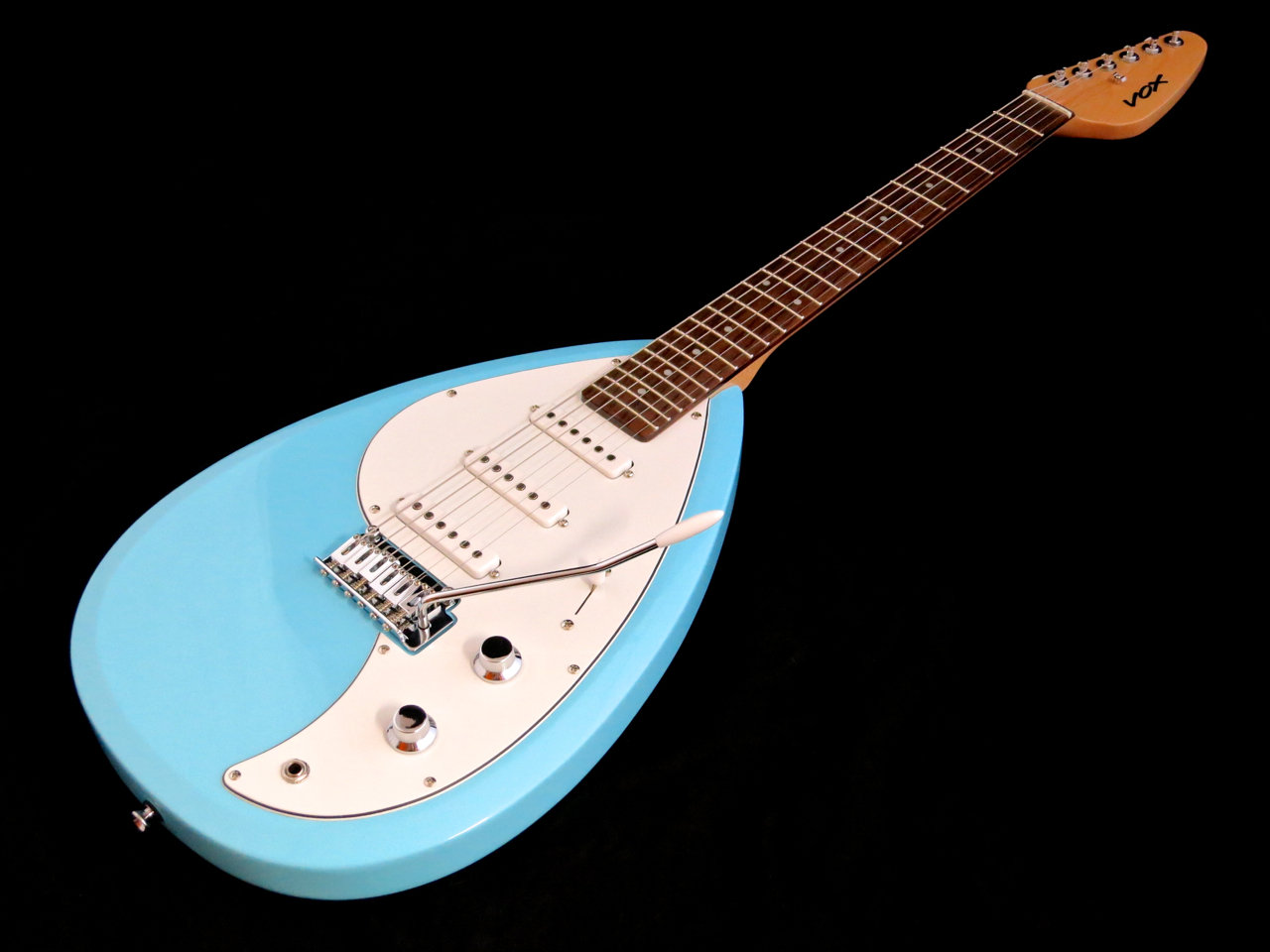
Vox Mark III (355 €) muistuttaa symmetrisellä rungollaan hieman kreikkalaista busukia.

Uusintapainos valmistetaan lyhyellä 22-tuuman (610 mm) mensuurilla, minkä ansiosta se sopii hyvin myös nuorten soittimeksi.

Vox Mark III – full back

Lehmusrunkoon ruuvattu kaula on veistetty vaahterasta, ja Teardropin otelauta on palisanteria.

Vox Mark III – headstock

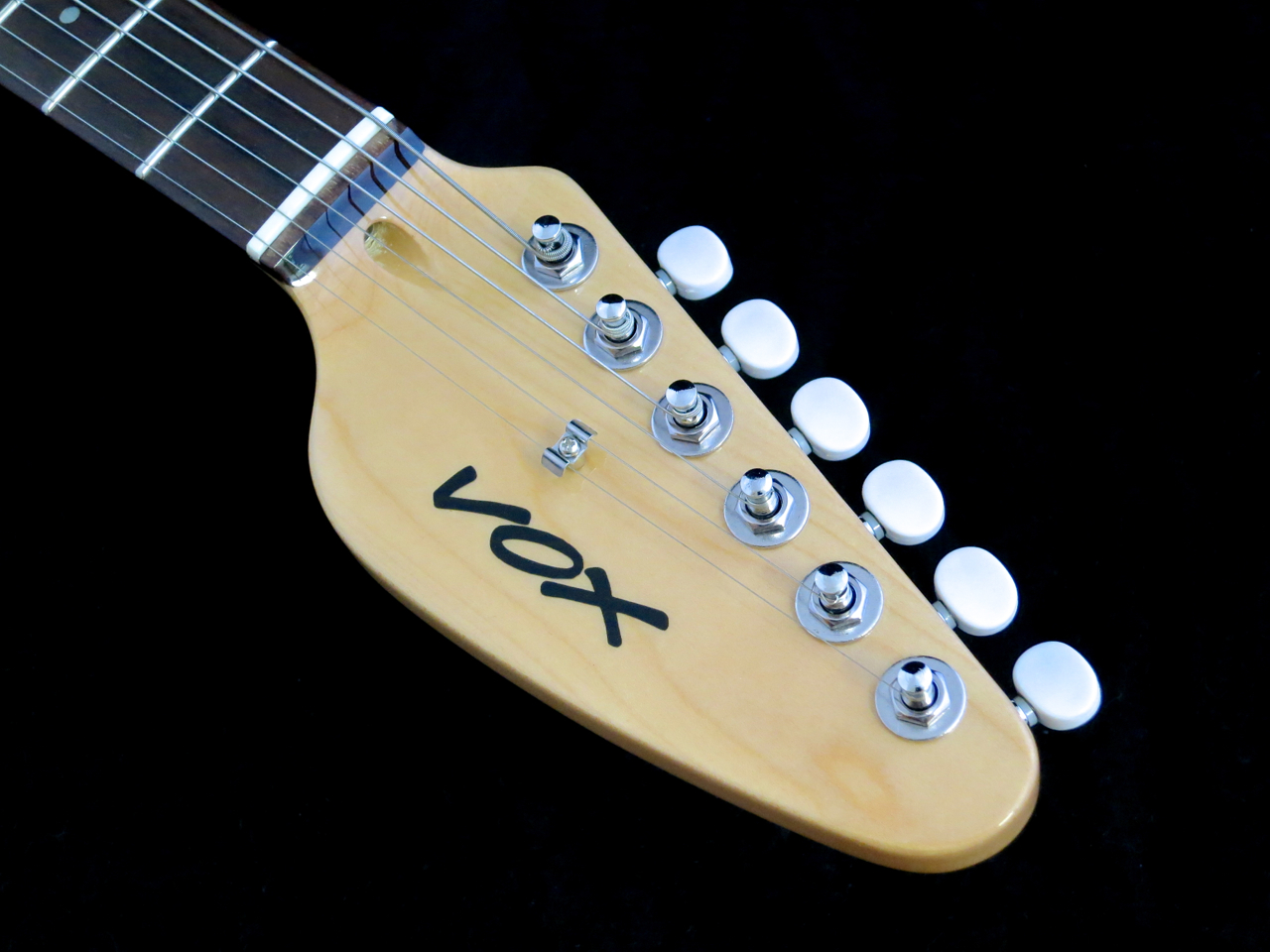
Legendaarinen Vox-lavan uusi versio on hieman pienempi kuin alkuperäinen ja mielestäni paljon alkuperäistä kätevämpi.

Vox Mark III – tuners

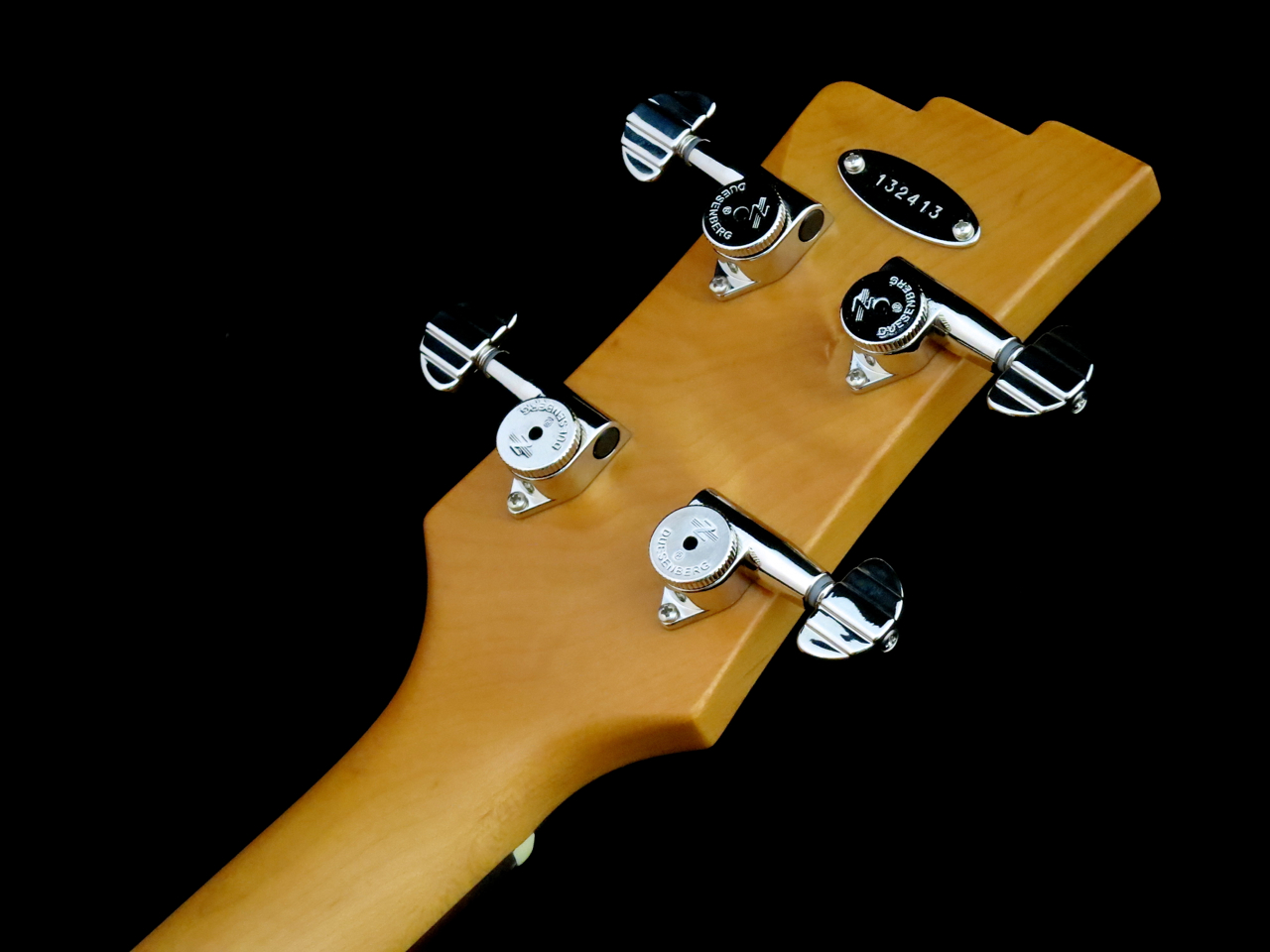
Nykyaikaisissa suljetuissa virittimissä on valkoisia muovinuppeja.

Vox Mark III – vibrato

Vox Mark III on varustettu nykyaikaisella vibratallalla.

Vox Mark III – vibrato springs

Tehtaalta Mark III ja Mark V lähtevät kolmella jousella varustettuina, mutta topatussa pussissa on pakattu vielä yksi jousi mukaan.

Vintage-snobit eivät luultavasti tykkää tämän vibran ohuesta blokista, koska sanotaan, että sustainin kannalta massiivisempi on parempi. Toisaalta myös Floyd Rose -vibroissa käytetään vintagea ohuempaa blokkia.

Vox Mark III – pickups

Vox-mallin kolmesta yksikelaisista voi varmasti odottaa raikasta soundia kuuskytluvun hengessä.

Vox Mark III – controls

Elektroniikka koostuu yhdestä viisipykäläisestä kytkimestä, sekä master tone- ja master volume -säätimistä.

****

Vox Mark V – full front

Kulmikkaan Vox Mark V:n (355 €) perusresepti on periaatteessa sama kuin Mark kolmosessa.

Vox Mark V – full back

Myös Fantomin lehmusrunkoon on lisätty mukavuusviiste soittajan kylkiluita/vatsaa varten.

Vox Mark V – headstock

Mark-mallien kaulat ovat samanlaisia, aina kiiltävää viimeistelyä myöten.

Vox Mark V – vibrato

Mark V:ssa kolmikerroksinen pleksi ympäröi kitaran vibratallaa.

Vox Mark V – frets

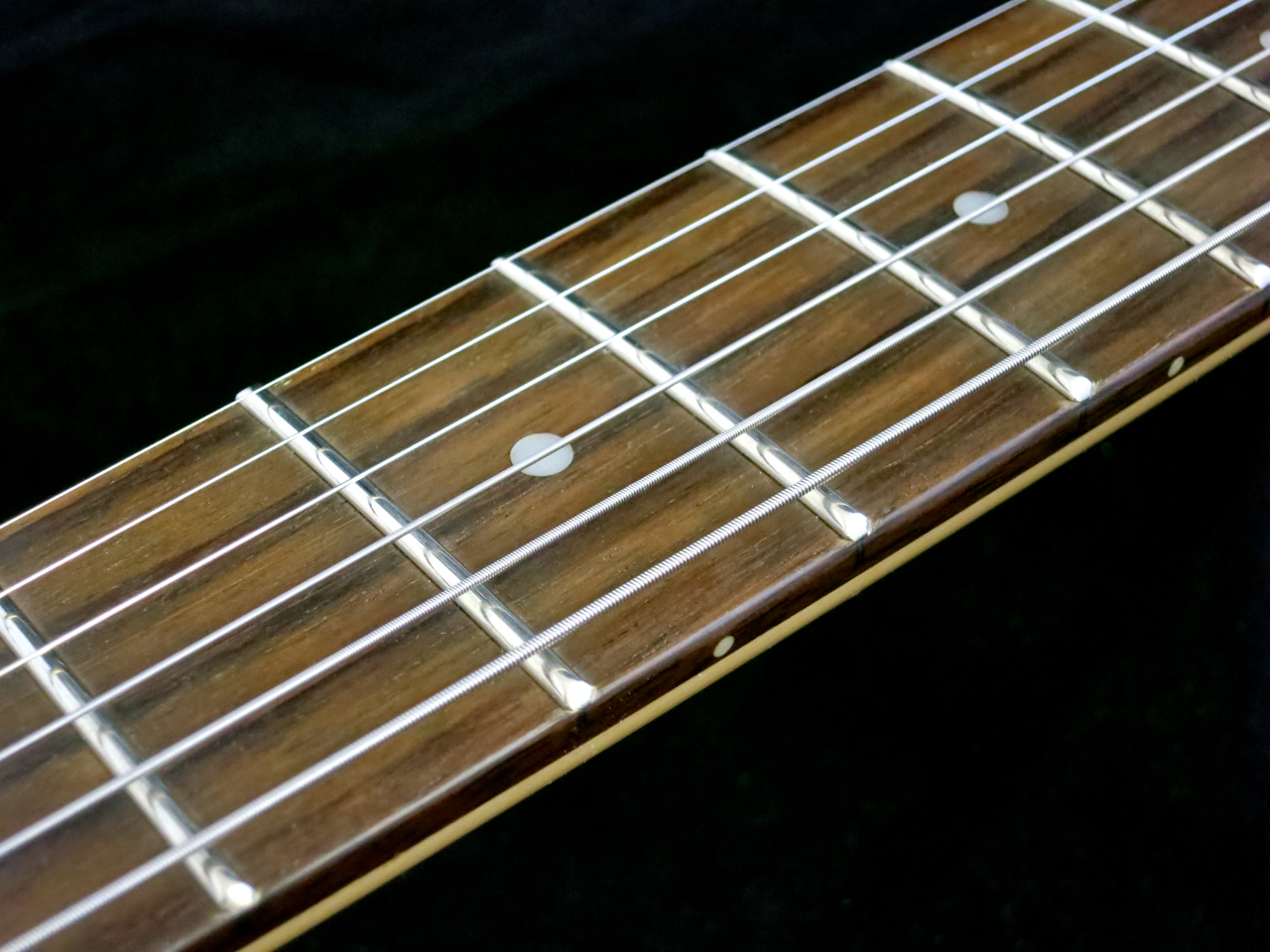
Vox-soittimien nauhatyö on yllättävän laadukasta, kun katsoo Mark-mallien hintalappuja. Nauhat on kiillotettu ja niidet päät on pyöristetty huolellisesti.

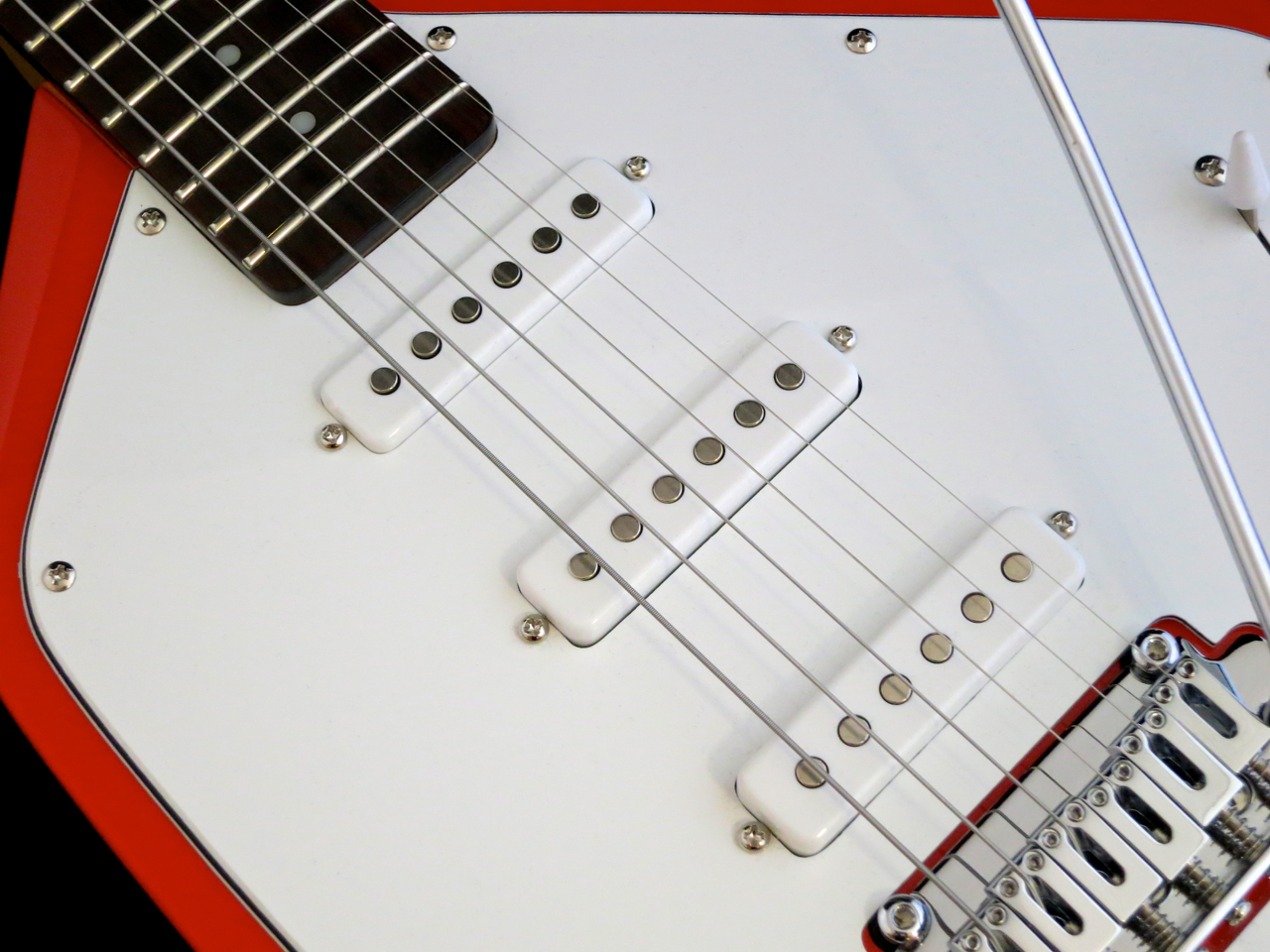
Vox Mark V – pickups

Vox Mark V Phantom -kitarassa käytetään samoja mikrofoneja…

Vox Mark V – controls

…sekä samaa elektroniikkaa kuin Mark III Teardropissa.

Vox Mark III – gigbag

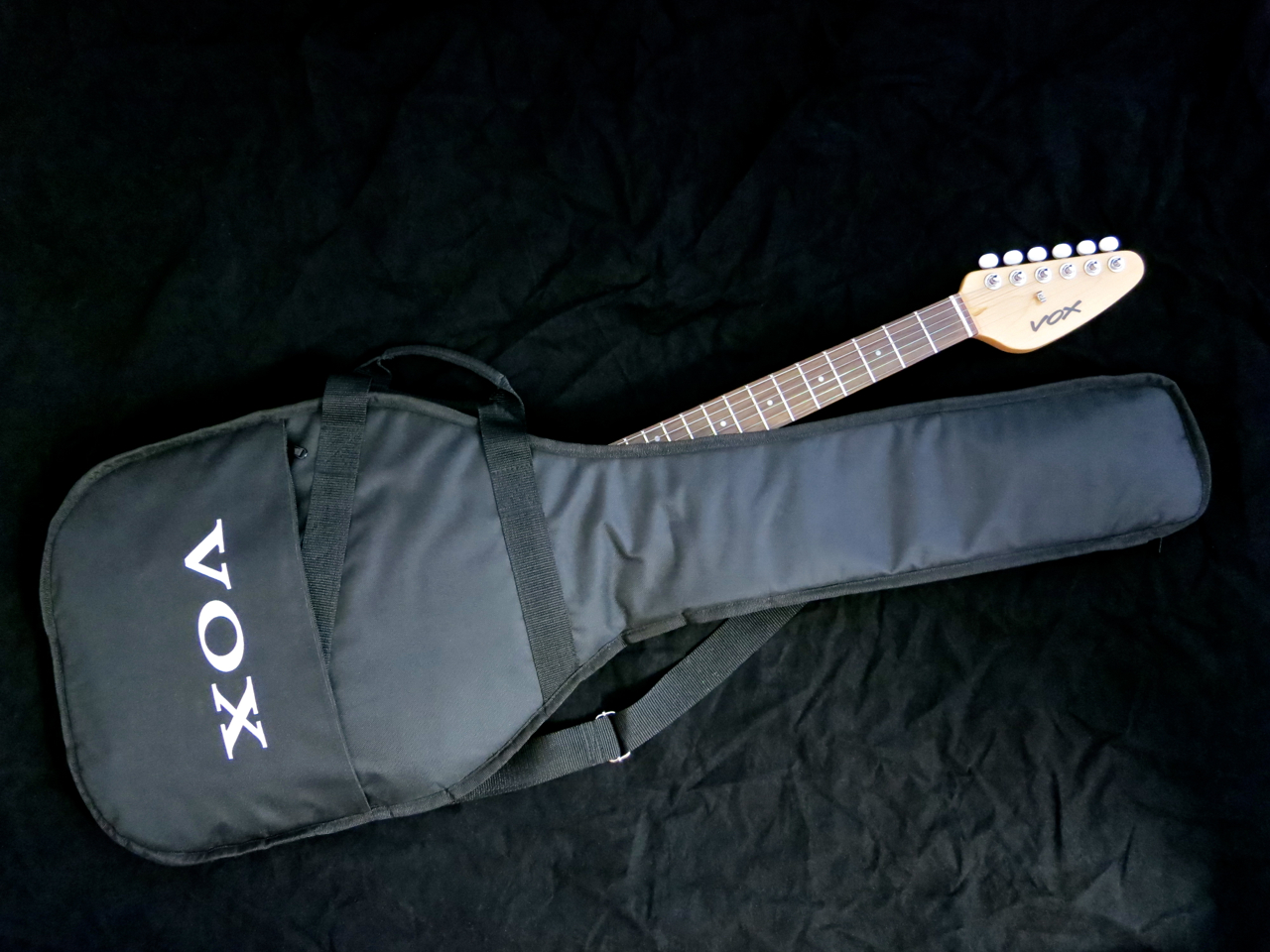
Topattu pussi kuuluu Mark-malleissa hintaan!

****

Vox Mark III – beauty shot 2

Vox Mark III on erittäin kompakti kitara, ja testissä käynyt yksilö mukavan kevyt. Rungon pyöreän muotoilun takia Teardrop ei ole ehkä maailman luontevin ”sohvakitara”, mutta hihnan varressa kitaraa on hyvin mukava kantaa.

Lyhyen skaalan ja kiiltäväksi lakatun, pyöreällä D-profiililla varustetun kaulan ansiosta tällä Voxilla on samantyyppiset vibat kuin esimerkiksi Fenderin Mustang-mallissa, ja tehdaskieliä (010-satsi) on erittäin helppoa venyttää. Vaikka kielet oli säädetty hyvin lähelle otelautaa (E: 1,6 mm/e: 1,3 mm), Mark III Teardrop soi puhtaasti ja rämisemättä. Vibratalla toimii maltillisesti käytettynä hyvin, mutta Floyd Rosen haastajaksi sitä ei tietenkään ole.

Vox Mark III:n akustinen ääni on hyvin Fender-mainen, mutta samalla kauniin lämmin.

Vox Teardrop -mallin puhdas soundi sopii vaikkapa rautalankaan tai funk-musiikkiin:

Säröpuolella homman nimi on Vintage Rock:

Vox Mark III – back beauty

****

Vox Mark V – beauty shot 2

Vox Mark V on sylissä hieman vastahakoinen tapaus, ja hyvän soittoasennon löytämiseen menee tovi. Kevyt testiyksilö roikkuu kuitenkin hihnassa todella hyvässä tasapainossa.

Phantomin soittotuntuma on erittäin lähellä Teardrop-mallia, nimittäin vintage-tyylinen ja mukava. Testiyksilössä intonaatio oli säädetty kahdelle kielelle hieman nuotin vierestä, mutta homma hoitui nopeasti ristiruuvarilla. Kitaran tatsi oli säädetty myös Vox Mark V:ssa hyvin kevyeksi (E: 1,6 mm/e: 1,1 mm). Jos haluaa soittotuntumasta vielä kiinteämmän, suosittelisin pykälän paksumman 011-satsin käyttämistä.

Molemmat Vox-kitarat kuulostavat miltei samalta, sekä akustisesti että vahvistimen kautta soitettuina.

Tällainen on Mark V Phantomin puhdas soundi pienen Marshall-kombon kautta soitettuna:

Mark V:n Rock-soundista löytyy mukavasti karkeutta ja asennetta:

Vox Mark V – back beauty

****

Vox Mark III – beauty shot 1

Vox Mark -mallien erikoisten runkomuotojen takia voisi helposti erehtyä lokeroimaan Teardrop- ja Phantom-kitarat pelkiksi ”musiikkivideo-kitaroiksi”.

Totuus on kuitenkin, että sekä Mark III että Mark V toimivat ilahduttavan hyvin Pop-, Beat-, Blues- ja Classic Rock -genreissä. Uudet Voxit tarjoavat roimasti vastinetta rahalle, koska niiden soitettavuus ja soundi ovat enemmän kuin kohdillaan. Suosittelen!

Vox Mark V – beauty shot 1

****

Vox Mark -sarjan kitarat

Vox Mark III Teardrop – 355 €

Vox Mark V Phantom – 355 €

Maahantuoja: EM Nordic

Suuri kiitos DLX Musiikille testisoittimien lainaamisesta!

****

Plussat (molemmat mallit):

+ ulkonäkö

+ työnjälki

+ soitettavuus

+ soundi

+ topattu pussi kuuluu hintaan

Miinukset (molemmat mallit):

– eivät istu kovin luontevasti sylissä

Vox Mark III – Vox crest

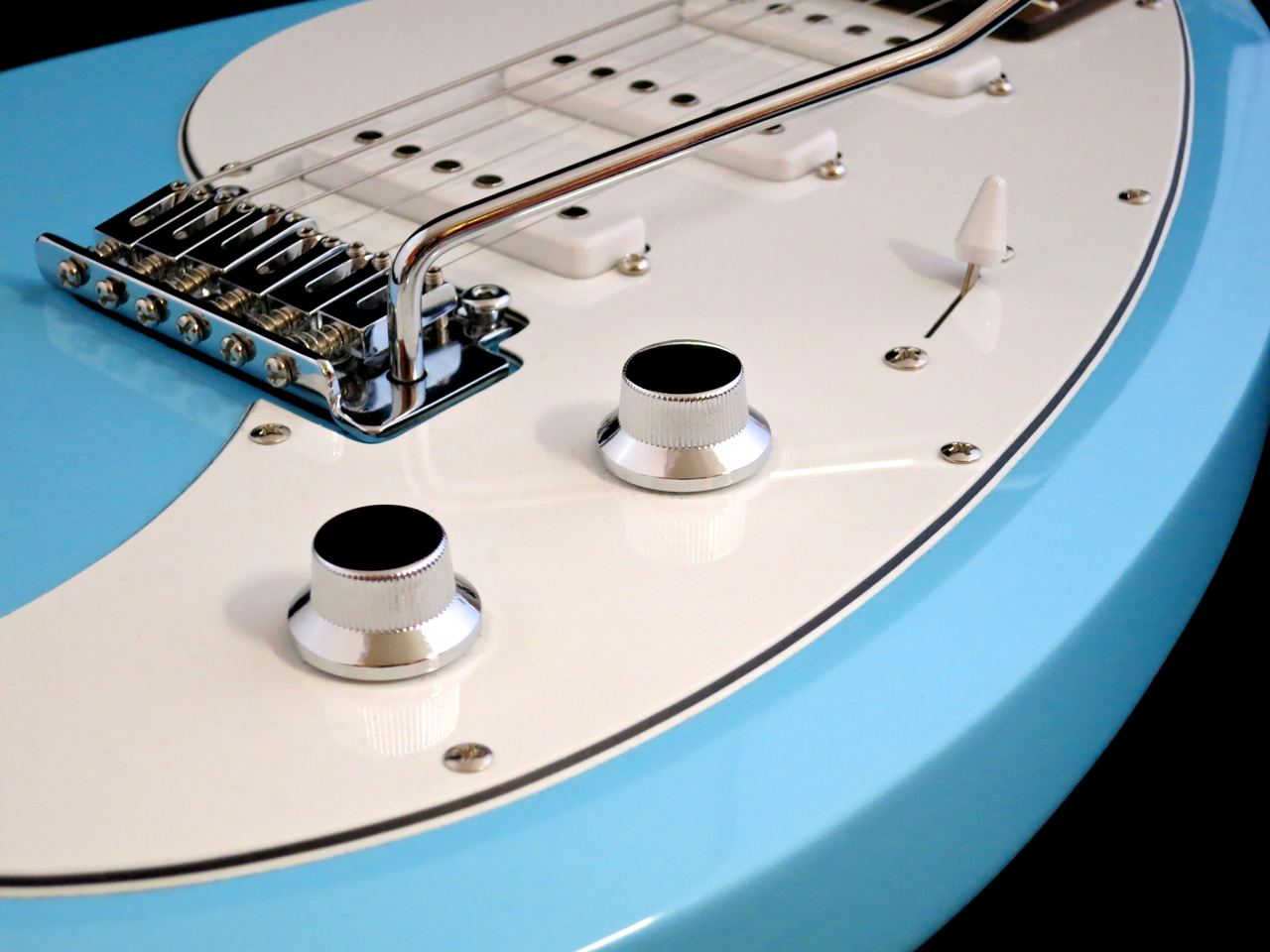
Testipenkissä: EBS FuzzMo

EBS FuzzMo – top

EBS Swedenin uusin mausterasia tuo maukasta fuzzia basistin elämään.

****

EBS FuzzMo – angle 1

EBS FuzzMo (169,90 €) on sähköbassoille suunniteltu fuzz-tyyppinen säröpedaali.

Kiinassa rakennettu efektiloota edustaa EBS:lle tyypillistä vankkaa tekoa, sen jämäkän oloisella jalkakytkimellä ja sulavasti toimivilla potikoilla.

Elektroniikan sähköntarpeen voi tyydyttää kolmella eri tavalla:

Jos on käytössä EBS:n Drome-, Gorm-, HD- tai TD-mallinen vahvistin, voi käyttää vahvistimen tarjoamaa phantom-syöttöä TRS-plugijohdon kautta. TRS-johto tulee silloin kytkeä FuzzMo:n lähdön ja vahvistimen tulon väliin.

EBS FuzzMo – battery

FuzzMo-pedaali toimii toki myös perinteisesti yhdeksän voltin paristolla, mutta pariston vaihtamiseen tarvitaan ruuvimeisseliä, koska pohjalevy on ensin irrotettava.

EBS FuzzMo – angle 2

Kolmas vaihtoehto on käyttää Boss-standardin mukaista virtalähdettä (9 V DC, miinus keskellä).

****

EBS FuzzMo – controls

Vaikka EBS:n FuzzMo muistuttaa ulkoisesti firman Billy Sheehan -pedaalia, vaikuttavat fuzz-pedaalin säätimet kuitenkin hieman toisella tavalla soundiin.

”Mieto” ei ole FuzzMo:ssa homman nimi, sillä Gain-säätimen vaikutusalue menee keskivahvasta erittäin rankkaan fuzziin. Shape-nupilla säädetään säröefektin sointia, mutta kyseessä ei ole perinteinen tone-potikka, vaan yliohjauksessa syntyvän aaltomuodon säädin. Vasemmalla äärilaidalla on tarjolla orgaanisempi ja lämpimämpi kanttiaalto, kun taas toisessa ääripäässä lootasta lähtee kirkkaampi ja purevampi kolmioaalto.

Lopulliseen särösoundiin vaikuttaa vielä FuzzMo-logon alle sijoitettu minikokoinen vipukytkin:

Kun kytkin on vasemmassa asennossa, säröpedaalin EQ-osasto on pois päältä (FLAT). Keskiasennossa särösignaalissa vaimennetaan hieman keskialueen taajuuksia, kun taas oikealla laidalla (SCOOP) syntyy Trash-tyylinen, pureva särösoundi.

Nykyaikaisissa bassoefekteissä jaetaan bassosignaali usein heti tulon jälkeen kahteen. Puolet signaalista menee efektin läpi, kun taas toinen puoli miksataan ennen pedaalin lähtöä kuivana efektoituun signaaliin. Tämän menetelmän suuri etu on, että basson alkuperäinen dynamiikka ja pyöreys säilyy miltei ehjänä efektityypistä huolimatta.

Juuri tällä tavalla toimii myös EBS FuzzMo:

Volume-säätimellä asetetaan särösignaalin voimakkuutta ja Blendillä lisätään siihen sitten oman tarpeen mukaan basson puhdasta signaalia. Etenkin bassoille tarkoitetussa fuzz-pedaalissa tällainen ominaisuus on erittäin tervetullut, koska fuzz-piirit leikkaavat toimintaperiaatteensa takia etenkin soittodynamiikkaa melko rankasti. FuzzMo-pedaalilla ei synny ongelmia puuroutumisen kanssa, jollei juuri sitä halua.

Tässä on lyhyt esimerkkipätkä sormilla soitetusta Jazz-bassosta (molemmat mikrofonit täysille avattuna) ja hyvin miedolla fuzzilla:

Plektralla soitetuille Rickenbackerille lisäsin hieman enemmän, ja hieman purevampaa, säröä:

Puhtaan signaalin annostelun ansiosta EBS:n FuzzMo toimii myös mainiosti viisikielisen basson kanssa (EMG-mikrofoneilla varustettu Yamaha BB-malli):

On muuten syytä huomauttaa, että kaikissa esimerkkipätkissä Gain-säädin pysyi alle puoleksi avattuna. EBS-pedaalista lähtee tarvittaessa vielä huomattavasti rankempia soundeja!

EBS FuzzMo – angle 3

FuzzMo on tyypillinen EBS-pedaali – se on kestävän oloinen laite laadukkaalla soundilla, joka sopii mainiosti likaisten bassosoundien ystäville.

****

EBS Sweden FuzzMo

169,90 €

Maahantuoja: F-Musiikki

****

Plussat:

+ vankka rakenne

+ toimii sekä paristolla, phantom-syötöllä ja virtalähteellä

+ bassolle optimoitu soundi

+ kolmiasentoinen EQ-kytkin

+ Blend-säädin

+ tarjoaa runsaasti fuzzia

Miinukset:

– pariston vaihtaminen vain ruuvimeisselillä

Review: Tanglewood TU-1CE, TU-3, TU-3E & TU-5

Tanglewood TU-3E – headstock VID

The humble ukulele’s popularity has been on the rise over the last few years, not least because these instruments are easy to carry around and plenty of fun to play.

This fact hasn’t gone unnoticed by British brand Tanglewood, who have recently broadened their range of ukes.

****

Tanglewood ukuleles – teaser

The quartet of ukes we’ve received for testing – the TU-1CE, the TU-3, the TU-3E and the TU-5 – are all part of Tanglewood’s mahogany-bodied Union-series.

Tanglewood TU-1CE – headstock

All Union-series ukuleles have mahogany necks with glued-on neck heels and headstocks.

The fingerboards have been crafted from rosewood.

Tanglewood – uke tuners VID

Tanglewood’s geared, open tuners work very well.

Tanglewood TU-3 – bridge

Ukuleles come with one of several different bridge designs, depending on the manufacturer.

Tanglewood has chosen the most practical ukulele bridge, which anchors the knotted string ends in little slots cut into the top of the bridge.

Tanglewood TU-3 – body beauty 2

All Union-series ukuleles have a sound box made from laminated mahogany.

The instruments have received a clear satin finish.

****

Tanglewood TU-1CE – beauty shot

Tanglewood’s TU-1CE (current price in Finland 116 €) is a soprano ukulele with a deep cutaway. It comes with a pickup and preamp installed.

The soprano is the smallest of the common four ukulele sizes. The TU-1CE has a scale of only 34.5 cm.

Tanglewood TU-1CE – cutaway

The workmanship on this Tanglewood (built in the Far East) is very good in relation to its low price. Look at that clean neck joint!

Tanglewood TU-1CE – frets

The TU-1CE sports 16 small frets, as well as dot position markers.

Tanglewood TU-1CE – back beauty 2

This soprano comes factory-equipped with top quality Aquila Nylgut strings.

Tanglewood TU-1CE – preamp + tuner

The Tanglewood’s preamplifier is powered by a button cell and offers controls for volume and tone, as well as a chromatic tuner.

****

Tanglewood TU-3 – case

The Tanglewood TU-3 (119 €) is a concert-sized uke. A stylish hardcase is included in the price.

Tanglewood TU-3 – soundhole

A Concert-ukulele is the next bigger size to a soprano.

This model has a 37.5 cm scale.

Tanglewood TU-3 – beauty shot

This TU-3 has an exceptionally nicely grained body…

Tanglewood TU-3 – back beauty

…with a highly figured back.

****

Tanglewood TU-3E – preamp

The TU-3’s electroacoustic version – the Tanglewood TU-3E (129 €) – comes equipped with the same preamp model we’ve already seen on the TU-1CE.

Tanglewood TU-3E – body angle VID

The TU-3E’s fingerboard offers you 18 small frets.

Tanglewood TU-3E – rosette VID

The simple rosette found on all Union-series ukuleles complements the organic, woody look of the instruments very well.

Tanglewood TU-3E – body back angle VID

The output jack is situated on the lower rim.

****

Tanglewood TU-5 – case vs2

Just like the two Union concert-ukuleles, Tanglewood’s baritone uke, the TU-5-ukulelessa (149 €), also comes in its sturdy case.

Tanglewood TU-5 – beauty 2 VID

The baritone is the largest traditional ukulele size, with the TU-5’s scale length measuring 51.2 cm.

Tanglewood TU-5 – bridge + rosette VID

The TU-5is equipped with 20 small frets. Our test sample came with a set of black nylon strings tuned to High-g-tuning (d4-g3-h3-e4), meaning that the fourth string is one octave above a regular guitar string.

Tanglewood TU-5 – back beauty 2 VID

****

Tanglewood TU-1CE – full front

This is what the TU-1CE sounds like when recorded with a condenser microphone:

The built-in piezo system results in a very decent direct sound:

This clips mixes the microphone with the piezo output:

Tanglewood TU-1CE – full back

****

Tanglewood TU-3 – full front

I recorded the concert-sized Tanglewoodin TU-3 with an AKG C3000 and a Shure SM57:

Tanglewood TU-3 – full back

****

Tanglewood TU-3E – full front

Acoustically, the piezo-equipped TU-3E sounds virtually indentical to the all-acoustic TU-3:

Sadly, our test sample displayed some sort of trouble with its under-saddle transducer (probably an uneven bridge slot), which rendered the pickup sound rather useless, because the middle pair of strings was much louder than the two outermost strings:

Here’s a mix of the TU-3E’s electric and acoustic signals:

Tanglewood TU-3E – full back

****

Tanglewood TU-5 – full front

I recorded Tanglewood’s TU-5 baritone uke using an AKG C3000 condenser microphone and Shure’s dynamic model SM57:

Tanglewood TU-5 – full back

****

Tanglewood TU-1CE – beauty shot 2

Tanglewood’s Union-series ukes are well-made, lightweight instruments with a very down-to-earth charm.

Regardless of their low price tags these ukes are decent musical instruments, not toys!

I must say I enjoyed Tanglewood’s fat neck profiles a lot. These are neck a grown-up man can hold on to!

Judging by the fine performance of the TU-1CE’s pickup system, I’m willing to believe that the TU-3E’s underwhelming pickup sound is just a one-off oversight in quality control.

Still, the whole picture is really very positive, both in terms of workmanship and sound. The inclusion on classy-looking hard cases in the price of the three ”bigger” models on test makes these Tanglewoods even more enticing. In my view, Tanglewood’s Union-series ukuleles are a great, and affordable, way to get to know the Hawaiian cousin of the guitar.

Tanglewood TU-5 – beauty shot VID

****

Tanglewood Union-sarja ukuleles

Finnish distributor: Musamaailma

TU-1CE – 116 €

TU-3 – 119 €

TU-3E – 129 €

TU-5 – 149 €

****

Pros (all models):

+ workmanship

+ satin finish

+ fretwork

+ Aquila-strings (except for TU-5)

+ case included (not with TU-1CE)

+ TU-1CE: good-sounding piezo system

Cons:

– TU-3E: piezo system’s performance in review sample

– TU-5: spongy feel of factory-installed strings

****

Tanglewood TU-3 – body back angle

Review: Zoom H6

Zoom H6 – perspective 1

Zoom have released their new handy recorder flagship:

The Zoom H6 is a six-track mobile recorder with exchangeable microphone modules.

****

Zoom H6 – package and case

Zoom’s H6 (rrp in Finland: 398 €) comes in its own carrying case.

Zoom H6 – the set

The package includes the H6 itself, two mic modules – the XYH-6 offering XY-stereo and the MSH-6 with an MS-stereo capsule – a foam windscreen, a USB-cable, four AA-size batteries and a 2 GB SD-card.

Also included is Steinberg’s Cubase LE audio-sequencer software.

h6n

At the moment the H6 is the only field recorder offering you different exchangeable mic and preamp modules.

In addition to the supplied XY- and MS-modules you can also buy Zoom’s shotgun module (SGH-6) or a module with an additional pair of XLR-/TRS-inputs (EXH-6).

Zoom H6 – accessory pack

For this review we were also supplied with Zoom’s accessory pack for the H6 (APH-6), which contains a furry windshield for outdoor recording, as well a USB-power supply and a remote control.

****

Zoom H6 – XY-module

Except for its control panel the Zoom H6 is entirely covered in a non-slip rubbery coating, which also cuts down on handling noise during recording.

Zoom H6 – XY 90 deg

A typical Zoom-feature has been carried over into the recorder’s XY-module:

You can switch the stereo width of the XY-setup by turning the capsules. The options are the slightly narrower 90 degrees angle…

Zoom H6 – XY 120 deg

…and the wider pickup pattern of 120 degrees.

Zoom H6 – left side view

The combined XLR/TRS-connectors have been placed on both sides of the H6. The Zoom offers switchable phantom power for condenser mics.

On the left side you’ll find the access to the SD-card, as well as the headphones output and the volume control.

Zoom H6 – right side view

In addition to the recorder’s mini-USB-port the right side is home to the Menu-button and the device’s nifty navigation toggle.

Zoom H6 – back view

This recorder runs on four AA-size batteries, and will run for approximately 20 hours on a fresh set of alkalines.

You can place the Zoom on most camera tripods, thanks to its standardised thread. There’s also the HS-1 hot shoe adapter available, which makes it possible to mount the recorder straight onto a camera.

The small monitor speaker isn’t particularly Hi-Fi, but it’s good to have it for quick checks.

Zoom H6 – line + remote

The unit’s line level output, as well as the connector for the optional remote control, has been placed on the bottom rim of the Zoom.

****

The Zoom H6 can handle two audio formats:

Linear WAV-files offer you sample rates of 44.1, 48 or 96 kHz with 16 or 24 bits of resolution. When you choose WAV as your recording format the H6 works as a multitrack recorder, which makes it possible to do overdubs, and which allows you to mix the recorded tracks afterwards. You can do your mixdown internally, using the Zoom’s own Project Mixer, or by exporting the separate tracks to an audio-sequencer.

Another function that only works when you’ve chosen WAV as your recording format is called Backup Record. This nifty function records the input signal from the exchangeable module twice – one set of tracks uses your input gain settings and is routed to the L/R-track, as usual, while the second set is recorded with 12 dB of attenuation as the so-called Backup-track. The Backup-track is your safety in case your own settings were too hot.

The big advantage of using the H6 in MP3-mode is, of course, this mode’s greatly extended recording time, made possible by data reduction. The recorder lets you choose from many different recording quality settings between 48 and 320 kbps. When in MP3-mode you use the Zoom’s Monitor Mixer to mix all of the six inputs into one stereo file, which is the recorded. This means that, when recording using the MP3-format, the end result is always a single stereo file, instead of the separate tracks you get when running in WAV-mode.

Zoom H6 – MS-module

When you’re using the MS-module you can adjust the side-mic level, either before recording (WAV and MP3) or afterwards if you’ve recorded the module’s input signal using the Zoom’s MS-Raw-mode (WAV only).

More information on MS-stereo can be found HERE.

****

Zoom H6 – level knobs

The Zoom H6 is very easy to use, because the signal routing is fixed:

The module’s output always goes to the L/R-track (stereo), while inputs one to four are routed to their corresponding mono tracks (1-4).

Zoom H6 – display

Beneath the Gain-controls there’s a row of track status buttons, as well as the recorder’s ”transport” buttons.

Zoom H6 – monitor mixer

The Zoom’s Monitor Mixer is where you adjust the signal levels and pan positions of all the signals for monitoring.

The Monitor Mixer window also shows you the status of each channel’s bass cut, compressor/limiter and phantom power.

Zoom H6 – menu view

This is what the Menu-view looks like.

Zoom H6 – project mixer

To mix down recorded tracks you use a different internal mixer, called the Project Mixer.

The Project Mixer allows you to adjust each track’s volume and pan position, as well as the playback pitch for each track (without changing the playback speed).

****

Zoom H6 – top view

In my opinion Zoom’s H6 hits the bull’s eye:

The exchangeable mic modules give you an enormous amount of flexibility to tailor the recorder quickly to the recording situation you find yourself in. The H6 is easy to use, and the recorder’s sound quality is very, very good. Thanks to the built-in metronome and chromatic tuner it’s easy to make sure you play in time and in tune. I’ve also enjoyed the Zoom’s nice compressors and limiters, which work very musically.

To demonstrate the H6’s performance and sound I recorded a short song using the recorder’s overdub function. I used the X/Y-module (at 90 deg) to record the steel-string acoustic, and recorded two mandolin tracks and two vocals with my trusty Shure SM57.

First, I mixed the song using the Zoom’s internal mixer, after which I exported the stereo file to Garageband, where I cut off the count-in and added a little bit of reverb:

I also tried taking the other route by exporting all the separate files from the H6 into Garageband, where I remixed the song using the original tracks:

****

I used a series of sine-wave sweeps to give you an idea of the effect the side-mic level has on the stereo-width of the recorded material. The lower the side-mic level is, the narrower your stereo image gets.

Side-mic +6dB:

Side-mic -2 dB:

Side-mic -9 dB:

Side-mic -22 dB:

Side-mic off:

****

Zoom H6 – perspective 2

I think Zoom’s H6 is a great field recorder and portable multi-track studio. The H6 works great to capture your song ideas or to for quality recordings of your band rehearsals or live gigs. The Zoom makes pro-quality recording on the road possible.

****

Zoom H6

Finnish distributor: Studiotec

Zoom H6 – 398 €

APH-6 – 48 €

EXH-6 – 58 €

SGH-6 – 118 €

****

Pros:

+ exchangeable L/R-modules

+ rugged build

+ colour display

+ Overdub-, Pre Record- ja Backup Record -functions

+ quality compressor/limiter-section

****

Review: Tokai ATE-33N Thinline

****

Tokai ATE-33N Thinline – beauty shot 2

Tokai Guitars are known for their well-made copies of classic guitar and bass models.

The brand-new Tokai ATE-33N Thinline is part of Tokai’s more affordable Chinese-made range, and represents their version of a Thinline Tele-type guitar.

****

Tokai ATE-33N Thinline – full front

The Tokai ATE-33N Thinline (current price in Finland 437 €) is a real looker and will delight fans of the natural look, despite its moderate price tag.

Tokai ATE-33N Thinline – f-hole

Roger Rossmeisl – known for his classic Rickenbacker designs – hit upon the concept of the Thinline Telecaster in the late 1960s when working for Fender. The original version was made with a body which featured three large pockets routed out from the back. A separate, glued-on solid piece of wood served as the body’s back.

Tokai approaches the construction of the ATE-33N Thinline the other way around: the pockets are routed into the front of the alder body, which then receives a beautiful, five millimetre thick swamp ash top. This solid ash top was made from three side-by-side pieces on our test sample, with the nicely matched grain efficiently disguising the glue lines.

Tokai ATE-33N Thinline – full back

The body of Tokai’s ATE-33N Thinline sports a gloss finish, while the neck has received a thin satin finish.

Tokai ATE-33N Thinline – headstock

This Tokai is no slave to vintage fashion – truss rod adjustment is at the headstock end of the neck, which is a far more practical solution.

Tokai ATE-33N Thinline – tuners

These nice Kluson-copies work fine.

Tokai ATE-33N Thinline – fretboard

The maple fingerboard has a larger radius (meaning it’s flatter) and fatter frets than its Sixties counterpart, making the ATE-33N easier to play. Especially string bending is far more comfortable with this type of neck.

Tokai ATE-33N Thinline – neck joint

The neck joint is a traditional four screw affair.

Tokai ATE-33N Thinline – body beauty 1

Tokai ATE-33N Thinline – bridge

From a sonic standpoint, the traditional three-saddle, bent sheet-metal bridge that doubles as a pickup frame is probably a Tele-style guitar’s most important ingredient.

With these bridges octave compensation is always a matter of compromise, but most guitarists learn to live with the design’s limitations.

Tokai ATE-33N Thinline – pickups

The ATE-33N Thinline is equipped with two singlecoil pickups that use soft steel slugs as polepieces and bar magnets stuck to the bottom of the bobbin.

Tokai ATE-33N Thinline – controls

Here’s a look at Tokai’s three-position switch and the guitar’s master volume and tone controls.

****

Tokai ATE-33N Thinline – beauty shot 1

Now seems to be the perfect time to buy an electric guitar, judging by the sheer quality displayed by the very favourably priced Tokai ATE-33N Thinline.

The ATE-33N Thinline seems to tick all the right boxes with ease:

The satin-finished maple neck feels great. It’s rounded D-profile provides a sturdy fundament for tone and sustain, and it is comfortable to play, too. This model’s well-dressed frets and the fretboard’s flatter radius make a slinky set-up possible. Our test sample measured 1.4 mm for the low E and 1.2 mm for the high e (at the 12th fret), and it played well and without string rattles all across the neck.

Played acoustically you can clearly hear the open character of the hollowed out thinline body. Naturally, a T-style thinline won’t win a shouting match over a ES-335, but the hollowed out pockets do still make a discernible difference in this Tokai.

There’s lots of talk on guitar forums about the nastiness of many budget Tele-pickups, but I can only state that Tokai’s set of Mk3-pickups perform rather well. The neck pickup is war and round, but never muddy or one-dimensional. The bridge unit dishes out the Country twang with the right amount of bite and conviction. And the Tokai also nails my favourite Tele tone – the chimey middle setting with both pickups on. This means that changing the Tokai pickups for some aftermarket brand wouldn’t be my first priority, at least…

Here’s a taste of the ATE-33N Thinline’s clean tones, starting with the neck pickup and moving on from there:

And here’s a bit of Rock riffing:

****

Tokai ATE-33N Thinline – body beauty 2

In my opinion the Tokai ATE-33N Thinline scores high in the value-for-money stakes. It is a beautiful-looking instrument that plays very well indeed.

I have to admit having some reservations about the pickups before plugging in, but the sound of the Mk3-units has really won me over. This Tokai dishes out all the T-style tones we’ve come to expect from a traditionally styled and built example.

And should you decide to upgrade the pickups, regardless, the ATE-33N Thinline will prove to be a great starting point for any such ventures.

****

Tokai ATE-33N Thinline

437 €

Finnish distributor: Musamaailma

****

Pros:

+ outstanding value for money

+ workmanship and finishing

+ playability 

+ sound

****

Tokai ATE-33N Thinline – logo

Review: Bluetone Amps Princeton Reverb

****

Bluetone Princeton Reverb – opener

Finnish boutique amp company Bluetone is yet to become a household word. Nevertheless, Bluetone’s dynamic duo of Harry Kneckt and Matti Vauhkonen have already garnered lots of praise with their all-valve designs, and the word keeps on spreading steadily.

Custom Sounds in Helsinki have recently started to stock Bluetone-amplifiers, and they were kind enough to supply Kitarablogi with a Bluetone Princeton Reverb combo for testing.

****

Bluetone Princeton Reverb – full front

The Bluetone Princeton Reverb (current price in Finland approx. 1,600 €) is Bluetone’s handwired – and slightly updated – version of a 1960s Fender Princeton Reverb (in its AA1164 guise). Bluetone’s improvements over the original issue include a post phase-inverter master volume (PPIMV), a larger speaker, as well as an external bias point. The Bluetone Princeton Reverb is rated at 15 Watts.

Bluetone’s Princeton is factory-equipped with a 12-inch WGS Black Hawk Alnico speaker, but you can order yours with a different speaker, if you wish.

Bluetone Princeton Reverb – side view

Bluetone’s cabinets are made from 15 millimetres thick Finnish birch plywood, resulting in a very sturdy, yet lightweight combo.

The level of workmanship displayed on the Princeton Reverb really doesn’t leave anything to be desired – this combo is the real boutique deal!

Bluetone Princeton Reverb – full back

True to form the cabinet is open-backed.

Bluetone Princeton Reverb – valves + transformers

Bluetone’s Princeton uses three 12AX7-valves and one 12AT7 in its preamp.

A 5AR4-valve deals with the combo’s tube rectification, while the output section employs two 6V6s.

Bluetone Princeton Reverb – spring reverb

The amp’s full-length spring reverb comes from MOD Kits.

Bluetone Princeton Reverb – Warehouse Blackhawk speaker

The 50 W WGS Black Hawk speaker has originally been designed with Vox AC30-type tones in mind, and seems like a strange choice for a small Fender-style combo.

****

Bluetone Princeton Reverb – control panel

This Bluetone is a single-channel combo equipped with a three-band EQ-section, reverb and tremolo. Thanks to its master volume control you can drive the combo’s preamp hard while keeping the volume levels down.

Our test sample was one of the last pre-production models; the final series has all the front panel lettering placed below the controls for improved visibility.

Bluetone Princeton Reverb – back panel

On the back panel you’ll find two speaker outputs, plus a jack for the footswitch.

Bluetone Princeton Reverb – footswitch

This rugged footswitch comes included with the amp.

****

Bluetone Princeton Reverb – pilot light

For a mid-sized valve amp Bluetone’s Princeton Reverb is quite lightweight, yet it feels very sturdy.

Switch the combo on, and you’ll be surprised at the absence of mains hum and noise in general. This beauty is really quiet – great!

Many original Blackface and Silverface Fender Princetons have been modified along the way with a larger speaker. The original 10-inch Jensen sounds OK, but many find the tone to be a little too thin for their taste.

The Bluetone Princeton sounds much bigger and fatter from the get-go, thanks to its larger, 12-inch speaker.

This is what my Fender Telecaster sounds played through the Bluetone with clean amp settings:

Bluetone’s tremolo circuit sounds very tasty:

If you use the Low input there’s plenty of headroom to be had from the Princeton Reverb for clean humbucker tones (played on a Hamer USA Studio Custom):

But this little combo can also bare its fangs if you add some gain. Soundwise you’ll get just the type of distortion you’d expect from a low-powered, Fender-style amp. There’s plenty of bite with a healthy dose of compression and an open-sounding mid-range. Don’t expect oodles of cream from this combo, but if you’re after a gritty Sixties and early Seventies Blues- and Rock-vibe, the Bluetone Princeton Reverb is just the ticket.

Here’s the Telecaster, plugged into the High input, with Gain turned up all the way:

Plugging the double-humbucker Hamer into the combo’s Low input resulted in these sounds:

The Bluetone reacts very nicely to your guitar’s volume control, allowing you to turn down for clean-ish tones and turn up for overdrive:

Bluetone Princeton Reverb – front panel angle

****

Bluetone Princeton Reverb – Telecaster

In my view Bluetone’s Princeton Reverb offers genuine Finnish boutique quality at a very fair price. The workmanship is outstanding and the combo sounds fantastic. The Bluetone Princeton Reverb could be described as the ultimate Blackface-combo.

****

Bluetone Amps Princeton Reverb

Current price in Finland approximately 1,600 € (Bluetone amp cover: 50 €)

Contact: Custom Sounds Finland

****

Pros:

+ genuine custom shop quality

+ point-to-point-wiring

+ Master Volume control

+ high-quality, 12-inch speaker

+ fine reverb and tremolo-effect

+ footswitch included

Bluetone Princeton Reverb – logo

Testipenkissä: Zoom MS-60B + MS-100BT

1600-MS60B_detail1

1600-MS100BT_detail1

Kitarablogilla oli mahdollisuus tutustua bassolle tarkoitettuun Zoom MS-60B -multiefektiin, sekä kitaralle tarkoitettuun MS-100BT:hen. Zoomin Bluetooth-teknologia hyödyntävällä StompShare-appsilla (vain iOS) pystyy kokeilemaan ja ostamaan lisää efektejä MS-100BT:lle.

****

Zoom MS-60B – main view

Zoom MS-60B (hinta alle 100 €) on MultiStomp-malliston sähköbassoille kehitetty malli. Punaisesta rasiasta löytyy 50 vapaasti editoitavaa ohjelmapaikkaa, ja jokaisessa efektiohjelmassa (patch) voi ketjuttaa maksimissaan neljä efektiä peräkkäin. Tarjolla on 58 eri efektityyppiä kompressoreista modulaatioefekteihin ja viiveistä vahvistinmallinnuksiin.

Zoom MS-60B – front view

MS-60B:n metallinen kotelo ja jalkakytkin tuntuvat hyvin kestäviltä. Säätimet on asennettu kynnyksen taakse, siten ettei niihin vahingossa osu kengänpohjalla.

Pedaalissa on kaksi lähtöä, koska sitä voi käyttää joko mono- tai stereofonisena. MultiStompissa ei ole lainkaan kuulokelähtöä, sillä se on tarkoitettu puhtaasti lattiaefektiksi livekäytössä tai kytkettäväksi äänikorttiin tai mikseriin studiokäyttöä varten.

MultiStompin etureunasta löytyy myös USB-portti, joka mahdollistaa laitteen firmwaren päivittämistä.

Zoom MS-60B – effect menu

Zoom MS-60B:n efektiohjelmia voi käyttää kahdella eri tavalla:

Ensimmäinen tapa on valita yksi haluttu efektiohjelma (patch), jonka jälkeen pystyy valitsemaan navigointinäppäimillä ohjelman efektiketjun yksittäisistä efekteistä sen, jonka haluaa laittaa soiton aikana päälle ja pois MultiStompin jalkakytkimellä (esimerkiksi efektiketjun filtteri tai chorus). Laite muistaa omatoimisesti jokaisen efektiohjelman kohdalla, mikä yksittäinen efekti oli viimeiseksi valittu päälle/pois-kytkettäväksi, ja tuo efektiketjun seuraavalla kerralla jälleen samalla tavalla näkyviin.

Toinen tapa on käyttää Zoomia A/B-tilassa. A/B-tilassa valitaan ohjelmalistalta niitä efektiohjelmia, joita halutaan käyttää, asettamalla niille järjestyksen kirjaimilla (esimerkiksi: “SynthStar: A”, “AsiaPalace: B”, “PitchDist: C” jne.). Valinnan jälkeen jalkakytkimen polkaisu vaihtaa yhdestä ohjelmasta seuraavaan järjestyskirjainten aakkosjärjestyksessä. Viimeisen efektiohjelman kohdalla hypitään kytkinpolkaisulla takaisin valittujen ohjelmien alkuun.

text_img_3777

Tällaisessa, hyvin kompaktissa efektilaitteessa täytyy aina ensin oppia laitteen käyttölogiikka, koska yleensä runsaat ominaisuudet ja parametrit ovat ohjailtavia rajoitetulla määrällä painikkeita ja säätimiä. Lyhyen tutustumisajan jälkeen Zoomin MultiStompilla tulee kuitenkin erittäin hyvin toimeen, sen loogisen käyttöliittimen ja hyvän graafisen toteutuksen ansiosta.

Erinomainen Effect Chain -näkymä auttaa suuresti hahmottamaan jokaisen efektiohjelman signaalitietä. Virtuaalisen magneetin avulla voi muuttaa yksittäisten efektien järjestystä “nostamalla” niitä ja siirtämällä niitä yhdestä paikasta toiseen.

****

Zoom MS-100BT – selecting next effect

Kitaramultiefekti Zoom MS-100BT (hinta alle 150 €) on MS-50G:n isoveli, ja se tarjoaa peräti 100 erilaista efektiä.

Muistipaikkoja patcheille löytyy 50, ja jokaisessa patchissa voi käyttää maksimissaan kuusi peräkkäistä efektiä.

text_img_3562

Zoom MS-100BT – parameter page

MS-100BT:n käyttölogiikka on täysin sama kuin kaikissa muissa MultiStomp-sarjan laitteissa.

Zoom MS-100BT – battery compartment

Kaikki Zoom MultiStompit saavat käyttövirtansa kahdesta AA-paristosta, joilla luvataan noin seitsemän tunnin yhtäjaksoista soittoaikaa (monokäytössä). Virtalähteen käyttö (ei kuulu hintaan) on kuitenkin ympäristöystävällisempi vaihtoehto, ja kun kerran laite on sähkösyötössään Boss-standardiin yhteensopiva, ei tule myöskään ongelmia pedaalilautojen virtalähteiden kanssa.

Zoom MS-100BT – front view

Myös MS-100BT:n firmware-päivitykset hoituvat kätevästi Bluetoothin kautta iPhonelta tai iPadilta.

Zoom MS-100BT – Amp Store

Zoomin ilmainen StompShare-appsi on erittäin helppokäytöinen ohjelma. Sen perusnäkymässä kaikki ladattavissa olevat efektit ja vahvistinmallinnukset näkyy virtuaalisella varastohyllyllä. Efektejä ja vahvistimia pystyy kuitenkin myös selailla efektiryhmien mukaan.

Zoom MS-100BT – Tangerine main

Valitun efektin tai vahvistimen sivulla kerrotaan sen käyttötarkoituksesta, ja sitä millaisia parametreja se tarjoaa.

Efektiä/vahvistinmallia voi esikuunnella ääninäytteeltä, mutta paljon hauskempi on kokeilla sitä itse tositoimissa MS-100BT:n valitussa patchissa.

Zoom MS-100BT – Tangerine try

Kun täppää StompSharen Try-painiketta, efekti/vahvistin lähetetään kokeiltavaksi MultiStomp-pedaaliin. Kokeiluaika on 15 minuuttia. Kokeiltava efekti/vahvistin korvaa kokeilun ajaksi sillä hetkellä näkyvissä olevan efektin.

Lähettäminen kestää pari-kolme sekuntia, jonka jälkeen voi kokeilla vapaasti StompSharessa lähetettyä efektiä/vahvistinta. Kaikkia parametrejä pystyy säätämään, mutta asetuksia ei pysty luonnollisesti tallentamaan, ennen kun uusi efekti tai vahvistinmalli on ostettu.

Ostotapahtuma hoituu kätevästi Applen iTunes Storen kautta, samalla tavalla kuin median tai appsin ostaminen yleensä iLaitteissa. Tällä hetkellä efektit maksavat 0,89 € ja vahvistimet 1,79 €.

****

1600-MS60B_detail3

Zoom MultiStomp -sarjan konsepti on kyllä todella toimiva, ja sarjan laajentaminen näillä kahdella malleilla (sekä choruksiin, viive- ja kaikuefekteihin erikoistuneella MS-70CDR-pedaalilla) kertoo näiden multiefektien suosiosta.

Zoomin MS-60B ja MS-100BT tarjoavat erittäin laajan valikoiman laadukkaita basso- (MS-60B) ja kitaraefektejä (MS-100BT).

Esimerkkikappaleessa on rumpu- ja perkussioraitojen lisäksi ainoastaan MS-60B- ja MS-100BT-pedaalien kautta äänitettyjä basso- (Jazz Bass) ja kitararaitoja (Telecaster):

MultiStompien hyvän käyttöliitymän kanssa tulee nopeasti toimeen. Vaikka yhdellä jalkakytkimellä varustettua multiefektiä ei luonnollisesti pysty käyttämään livenä yhtä sujuvasti kuin isoa pedaalilautaa, tarjoavat nämä Zoomit sopivia ratkaisuja moneen tilanteeseen.

Kokeilemisen arvoisia tapauksia siis!

1600-MS100BT_detail3

****

Zoom MultiStomp -pedaaleja

MS-60B – hinta alle 100 €

MS-100BT – hinta alle 150 €

Maahantuoja: Studiotec

****

Plussat (molemmat laitteet):

+ hinta-laatu-suhde

+ soundi

+ pieni koko

+ helppokäyttöinen

+ monipuolinen

+ vain MS-100BT: laajennettavissa StompShare-appsilla

Pidä blogia WordPress.comissa.

Ylös ↑