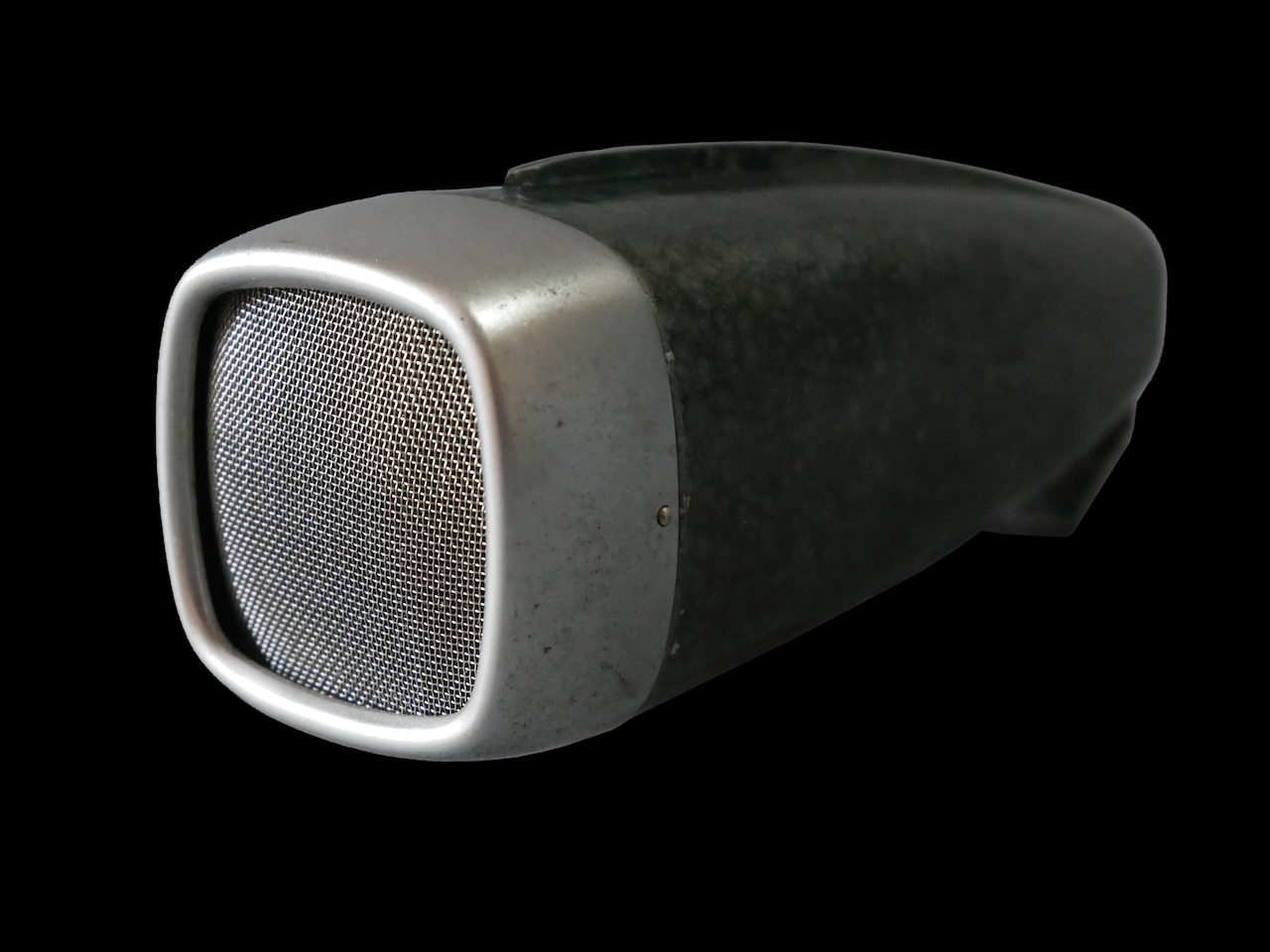
When you think about classic Sennheiser microphones from the past, most of us will surely think of the MD421 or the ProfiPower. Actually, there’s a mic model that precedes the MD421 by almost a decade, and it’s still in production today – the Sennheiser MD21.
****
The story of the Sennheiser MD21 actually begins a few years before the Sennheiser-brand was even introduced.
Right after the end of the devastating Second World War, German electrical engineer Fritz Sennheiser founded Labor W – which was short for Laboratorium Wennebostel (named after the small village it was situated in).
After manufacturing a couple of microphones under license for Siemens, Labor W quickly turned to developing their own products.
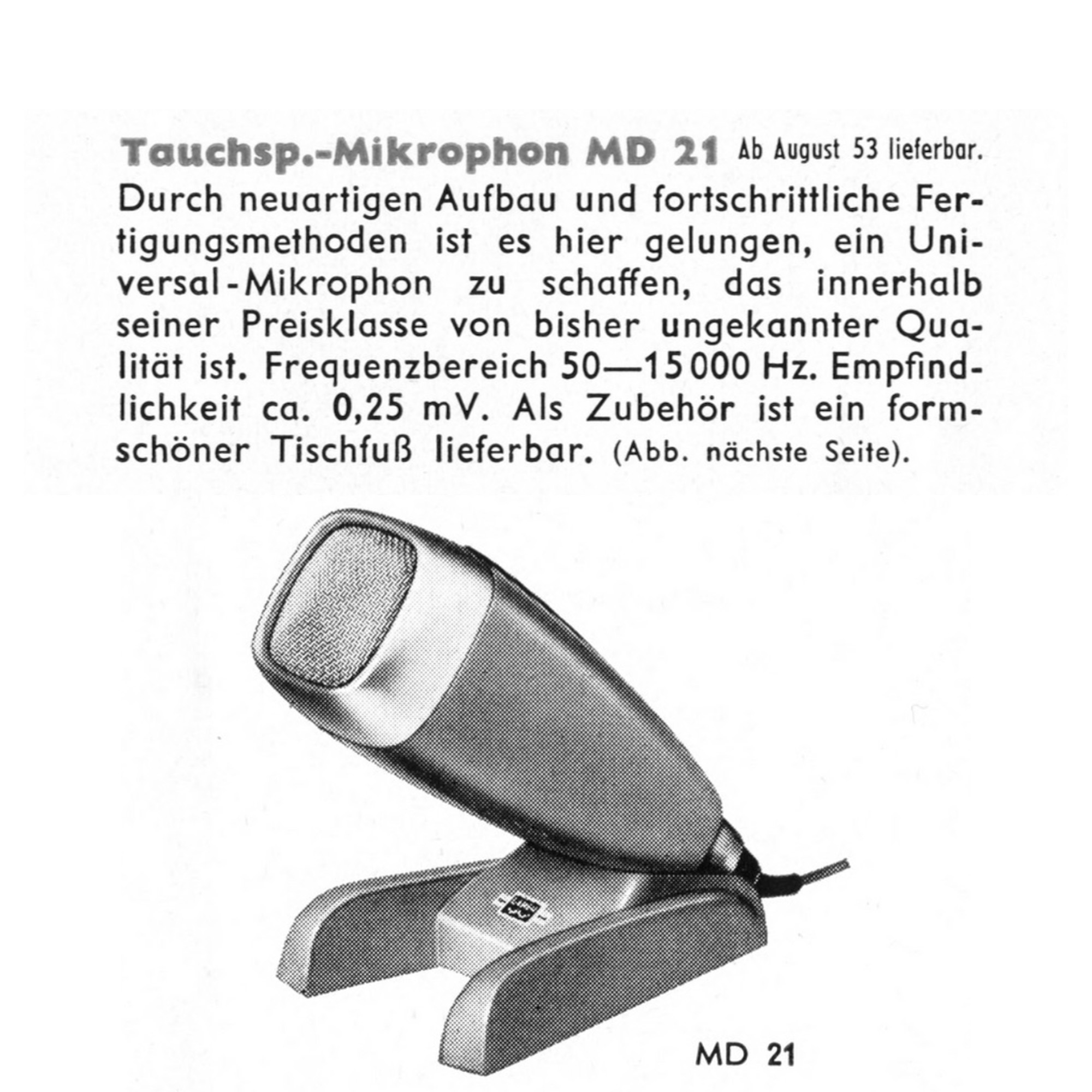
In 1953 Labor W hit the first of many highpoints in their history by introducing a sturdy, handheld dynamic microphone specifically meant for broadcast, news gathering and concert hall use. This new microphone was called the MD21, and it looked like this:
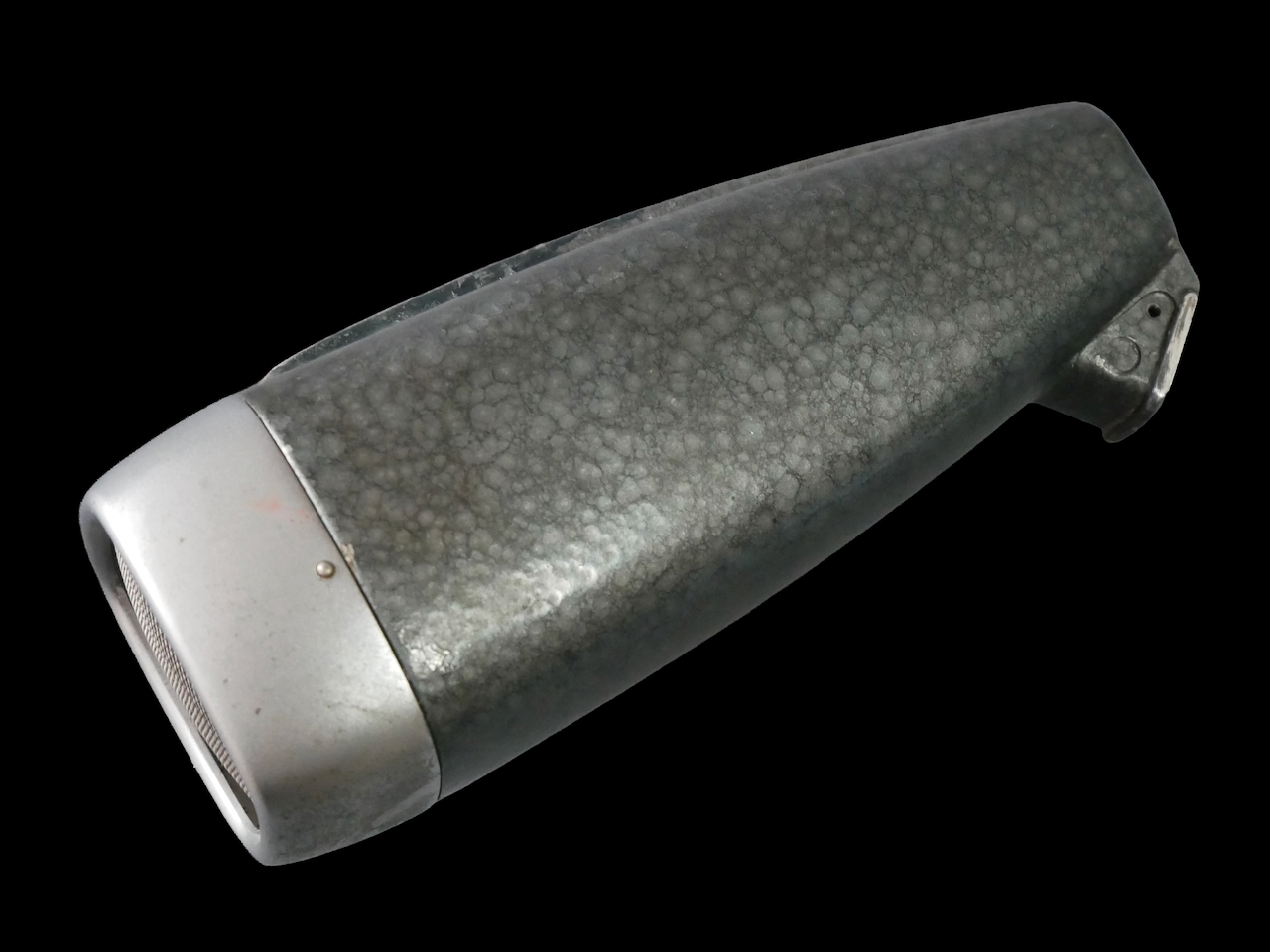
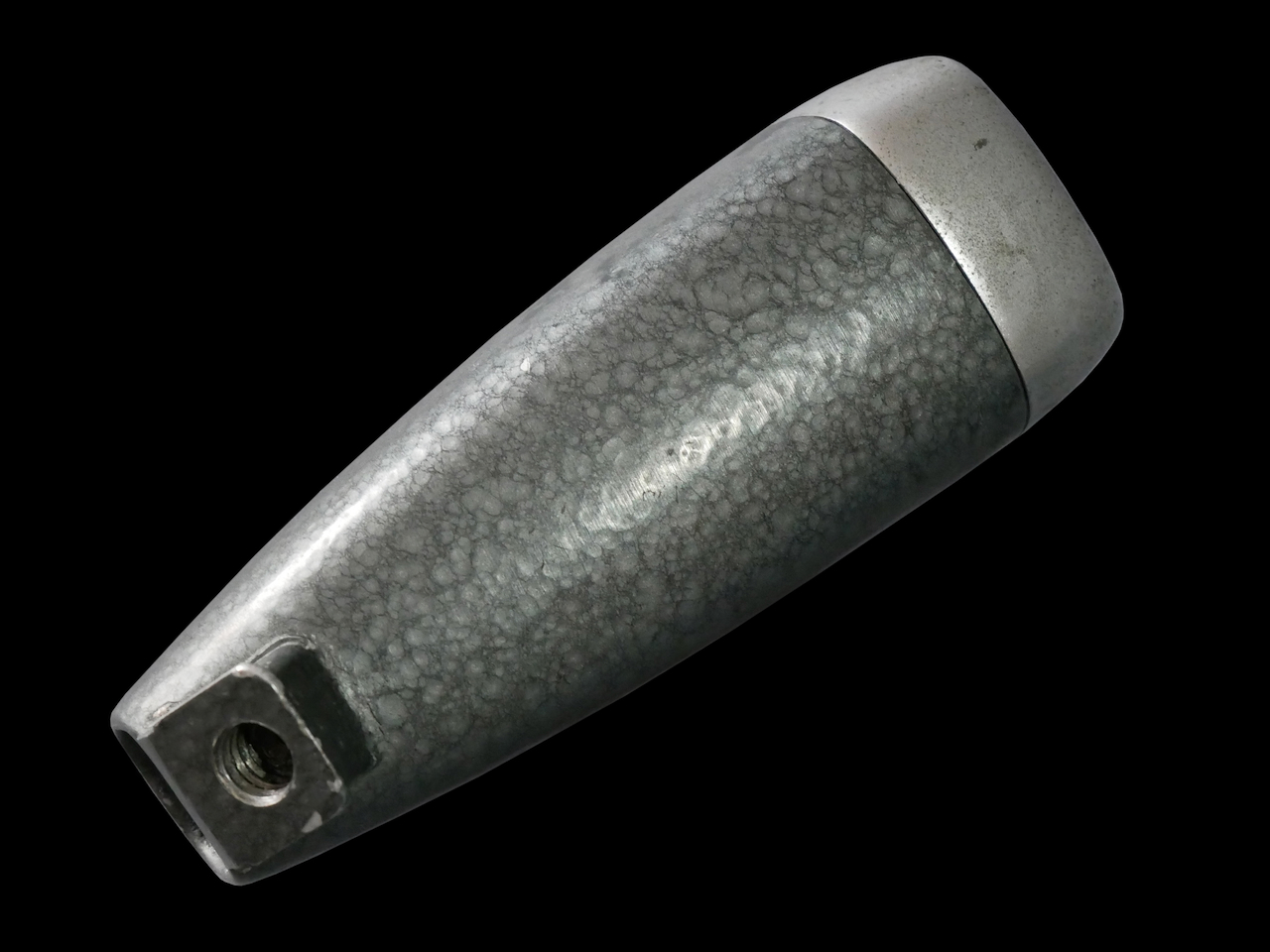
The MD21 is a sturdy, lightweight and compact mic, based on a die-cast outer shell with an integral stand adapter. The grey hammer paint finish was chosen to make the microphone stand up well to regular handling in all types of circumstances.
Early Labor W- and (from 1958) Sennheiser-branded MD21s sport a front grille made of fine steel mesh, that’s sitting inside the front metal ring.
The MD21 has an omni pickup pattern, meaning it doesn’t offer the bass boost at close proximity that you tend to get from most cardioid mics.
At first the MD21 was only available with low impedance (MD21-N), but the burgeoning home recording market was catered to – from the late Fifties – with a dual impedance model (MD21-HN). Both versions came equipped with a Kleintuchel-connector sunk relatively deep into the mic’s butt end.
****
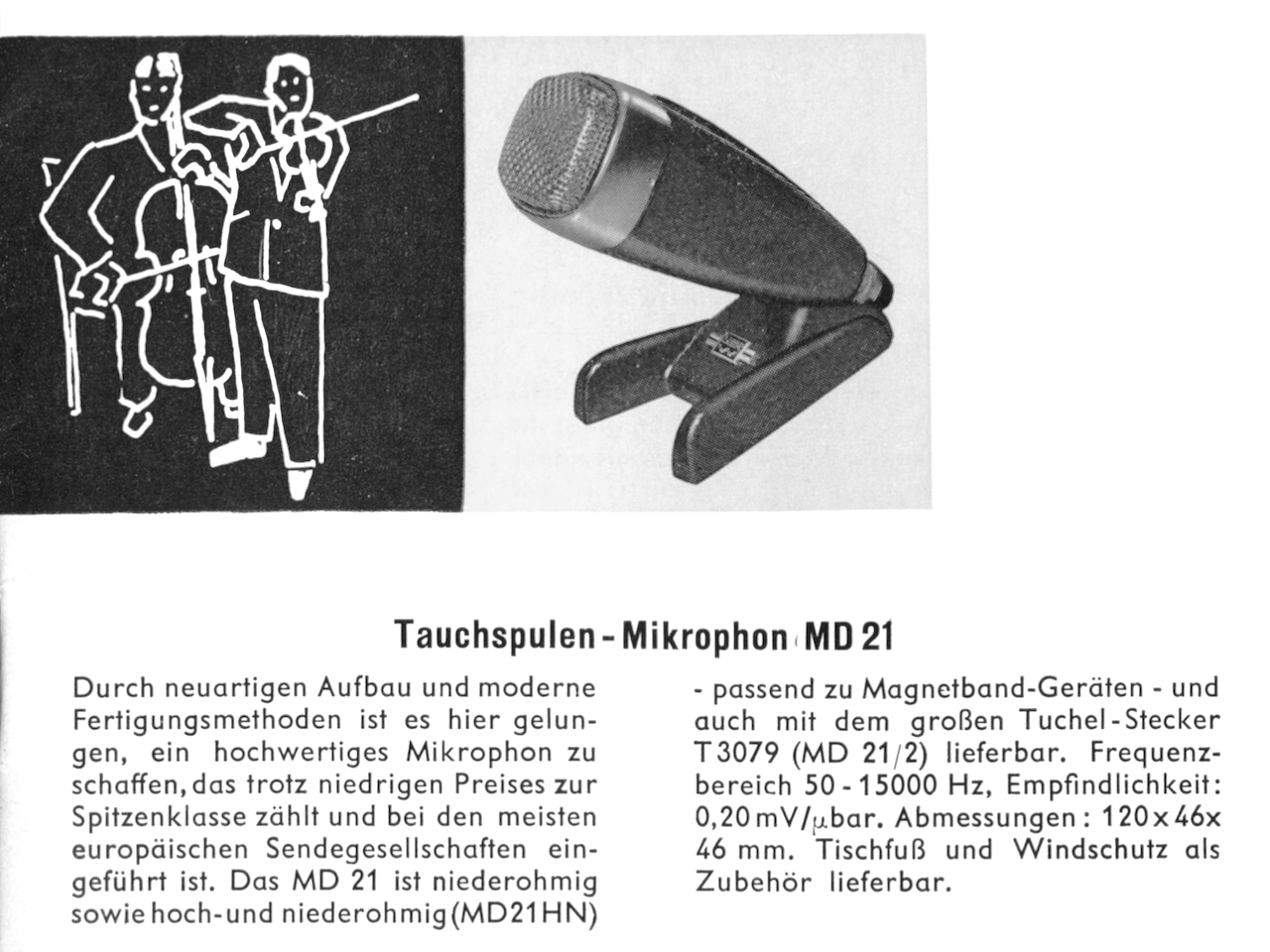
By 1959/60 the Sennheiser MD21 had gained a sturdier front grill that was domed and stood proud of the front ring (see picture from 1960 catalogue).
The company also started to produce a slightly longer version, called the MD21/2, with a Großtuchel-connector standing proud of the casing.
****
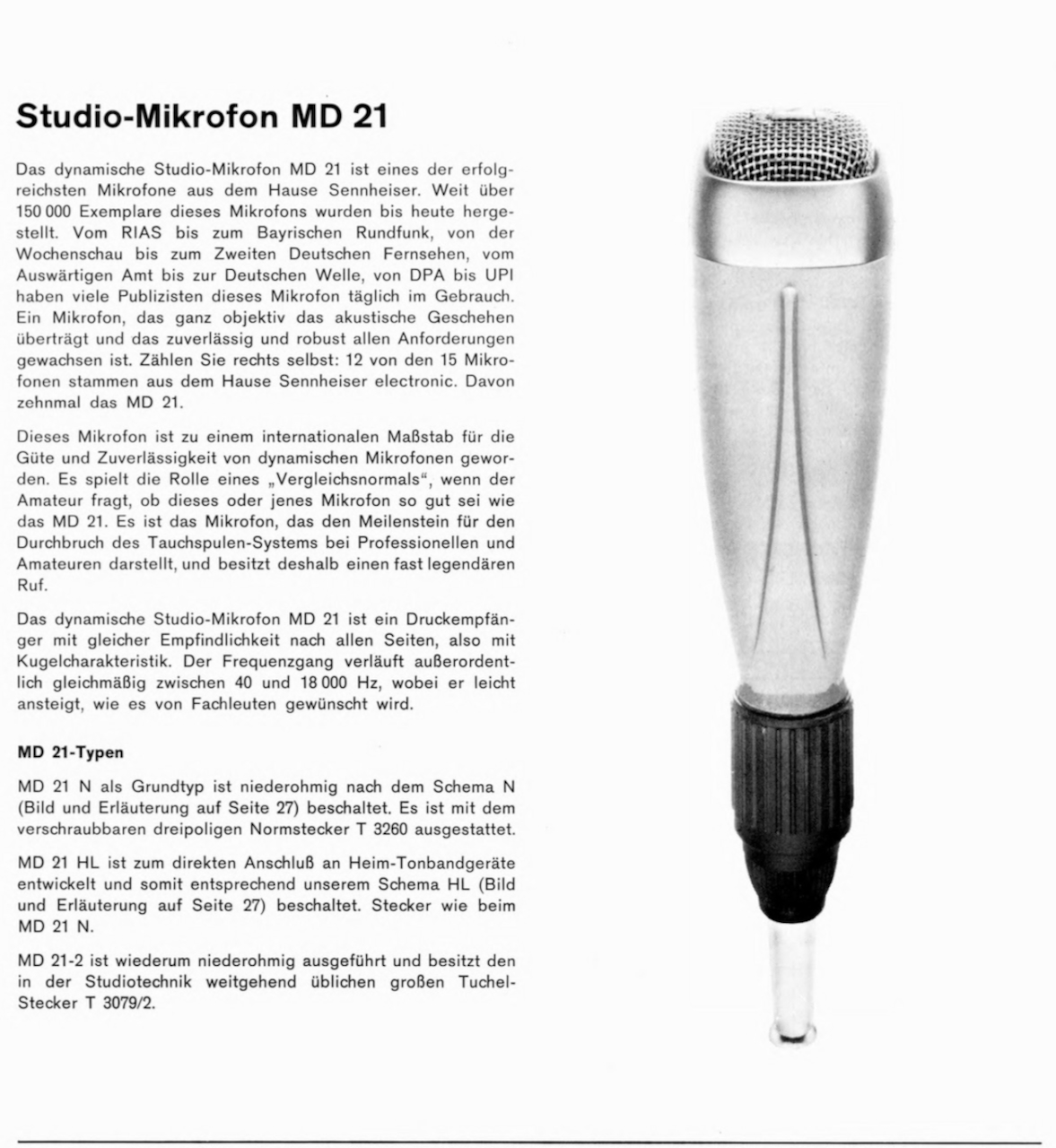
By the late 1960s the Sennheiser MD21 was offered in a fetching and slightly structured off-white finish. Additionally, the front grille now sported the firm’s famous ”waves-and-a-square” S-logo.
The mic’s frequency response was also improved from the 50–15,000 hertz range of the earlier examples to a 40–18,000 hertz response.
****
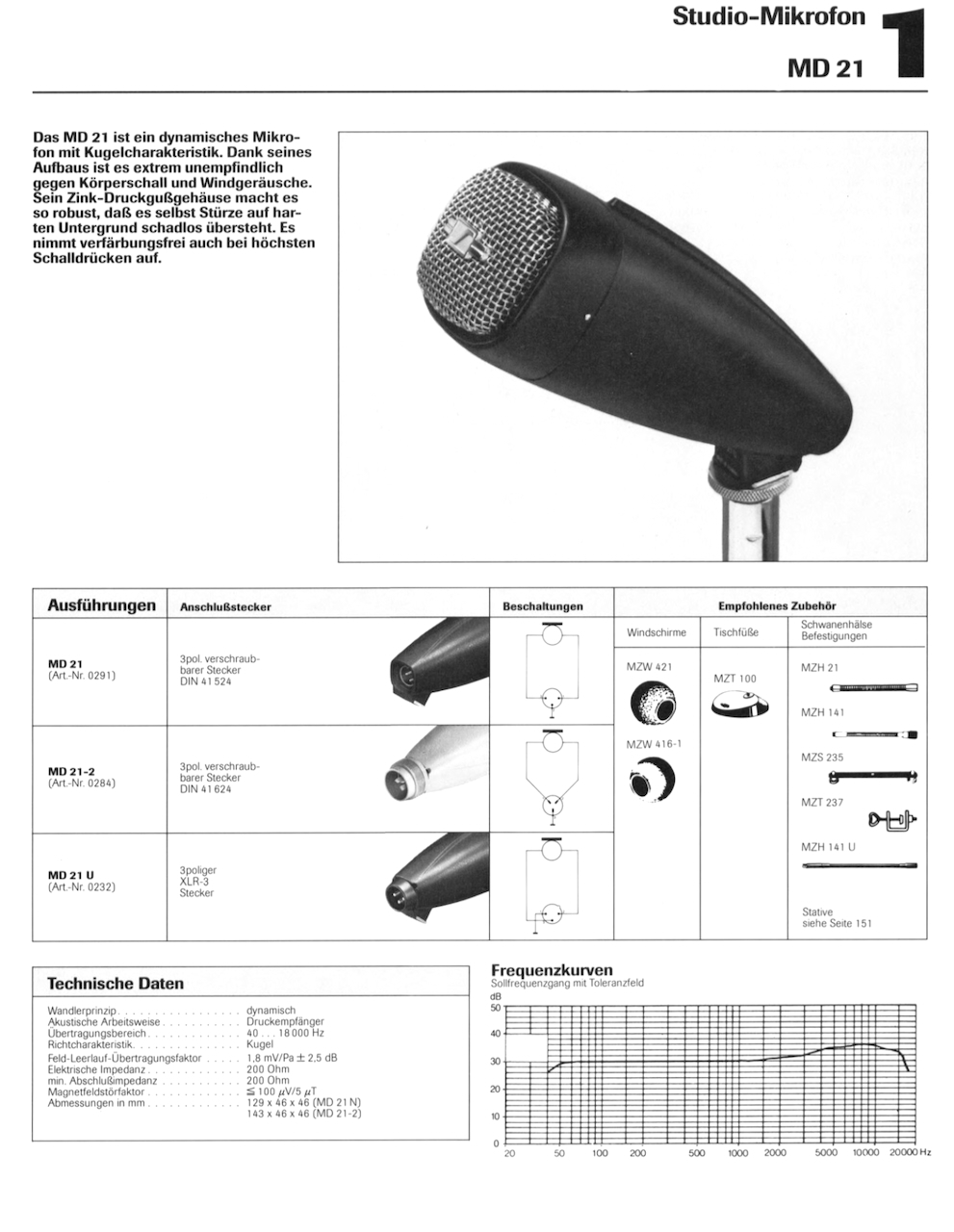
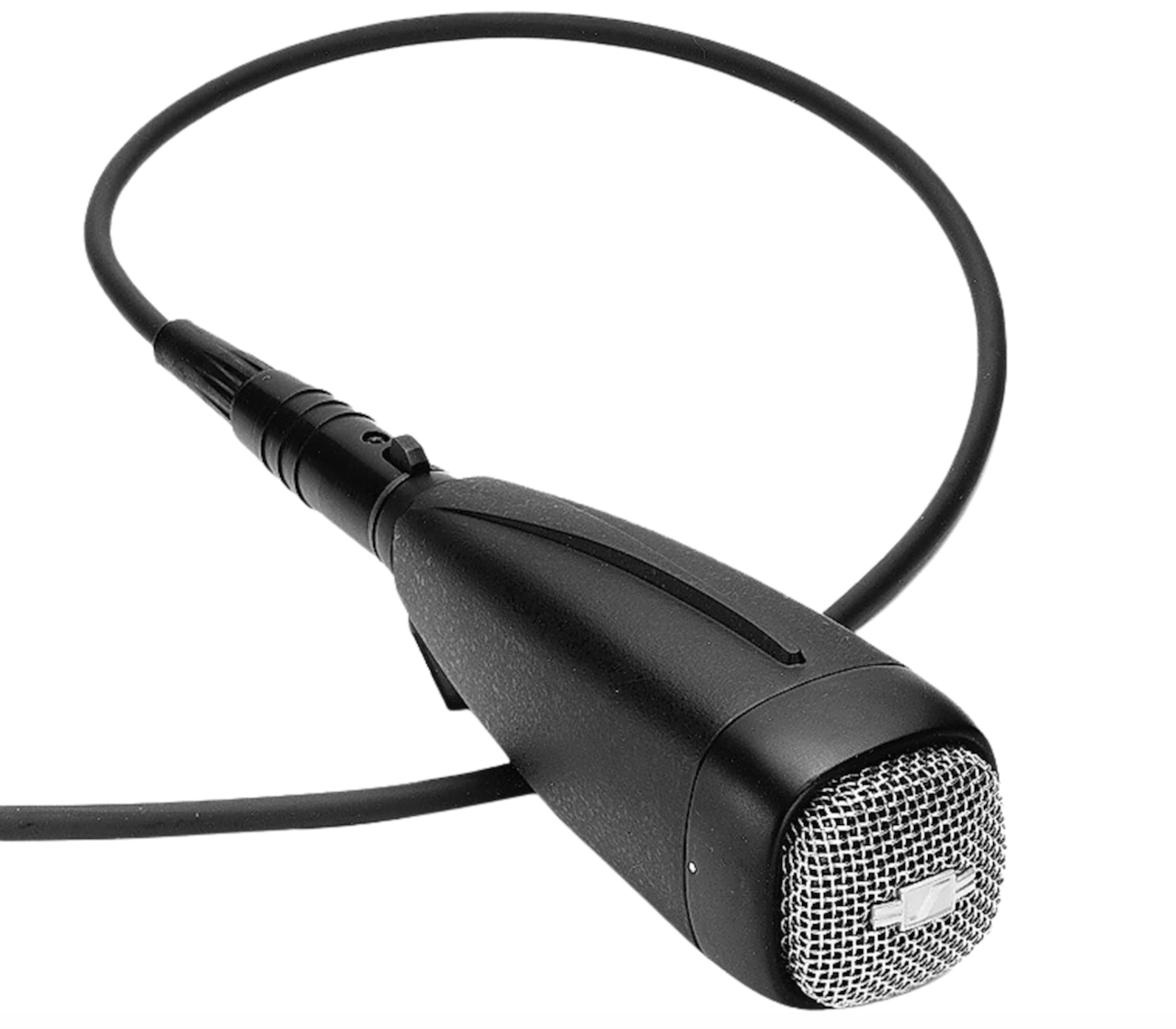
By the early 1980s Sennheiser had arrived at the current look of the MD21, a structured matte-black finish.
Additionally, a Sennheiser MD21-U version was added to the product range. This is the iteration that is still in production, an MD21 with an XLR-connector (originally called ”Cannon” after its inventor).
****
In the early 1970s the MD21 had already been largely superseded by the more versatile, cardioid MD421 in reporting and on lecterns, but it still is use in recording studios, mostly for drums and percussion, as well as in front of guitar amplifiers.
Recently, I had the great fortune of acquiring a refurbished mid-Fifties example of a Labor W MD21 from German used microphone specialists Micster-Lab.
Here are two clips I’ve recorded with the MD21. The first one is vocals only, while the second one features the MD21 on all guitar tracks. In both instances the microphone ran through a Cranborne Audio Camden EC2 preamp.
****


Vastaa