****
In the 1970s, a cooperative called Brooklyn Woodworkers operated in Brooklyn, New York, where several smaller carpenters, artisans, and instrument makers shared the premises of a former factory. The advantages of the cooperative include that larger and more expensive machines can be purchased and used together, and that different people can also develop new ideas together.
In 1977, young instrument maker Stuart Spector and industrial designer Ned Steinberger began to design an electric bass that was as ergonomic as possible. Ned Steinberger asked the crucial question: “Why does the body of a solid-body bass have to be straight when the player’s body is curved?”
The pair began to design a body in which the front of the body is convex in cross-section and the back concave. However, the thickness of the body remains more or less the same throughout. The new body was smaller in outline than, for example, Fender basses, but a longer upper horn was added to improve the balance of the instrument.
The fruits of this collaboration were already presented at the end of 1977 – the Spector NS-1 with one pickup, and the Spector NS-2 with two pickups. These first NS series instruments were neck-through-body basses, but a couple of years later versions with a bolt-on neck were also made.
Spector’s NS series instruments were very widely used boutique class basses in the 1980s, thanks to their excellent playability and flexible active bass sound. The most famous user is certainly the British bassist Guy Pratt, who has played a see-through red NS-2 in the late period of Pink Floyd, and as a studio bassist on albums by Madonna (e.g. on the song “Like a Prayer”) and Michael Jackson (“Earth Song”). In the United States, studio legend Chuck Rainey has used Spector basses regularly.
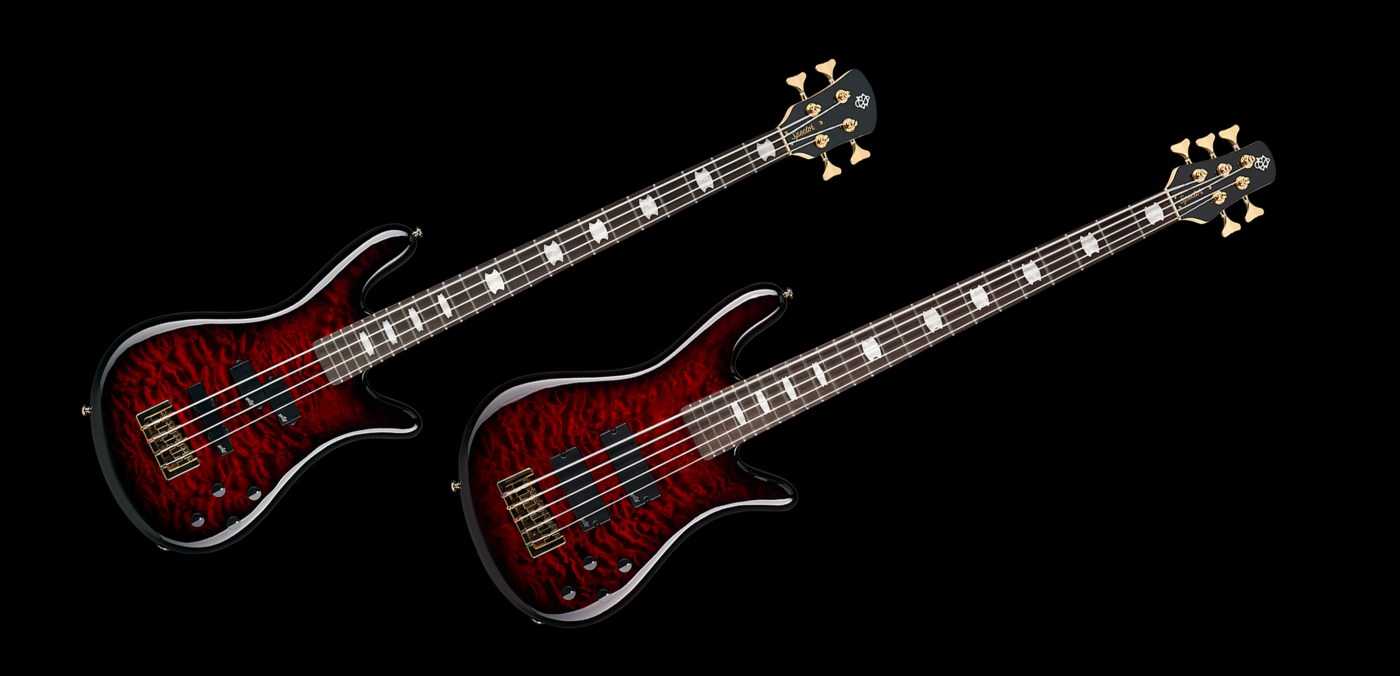
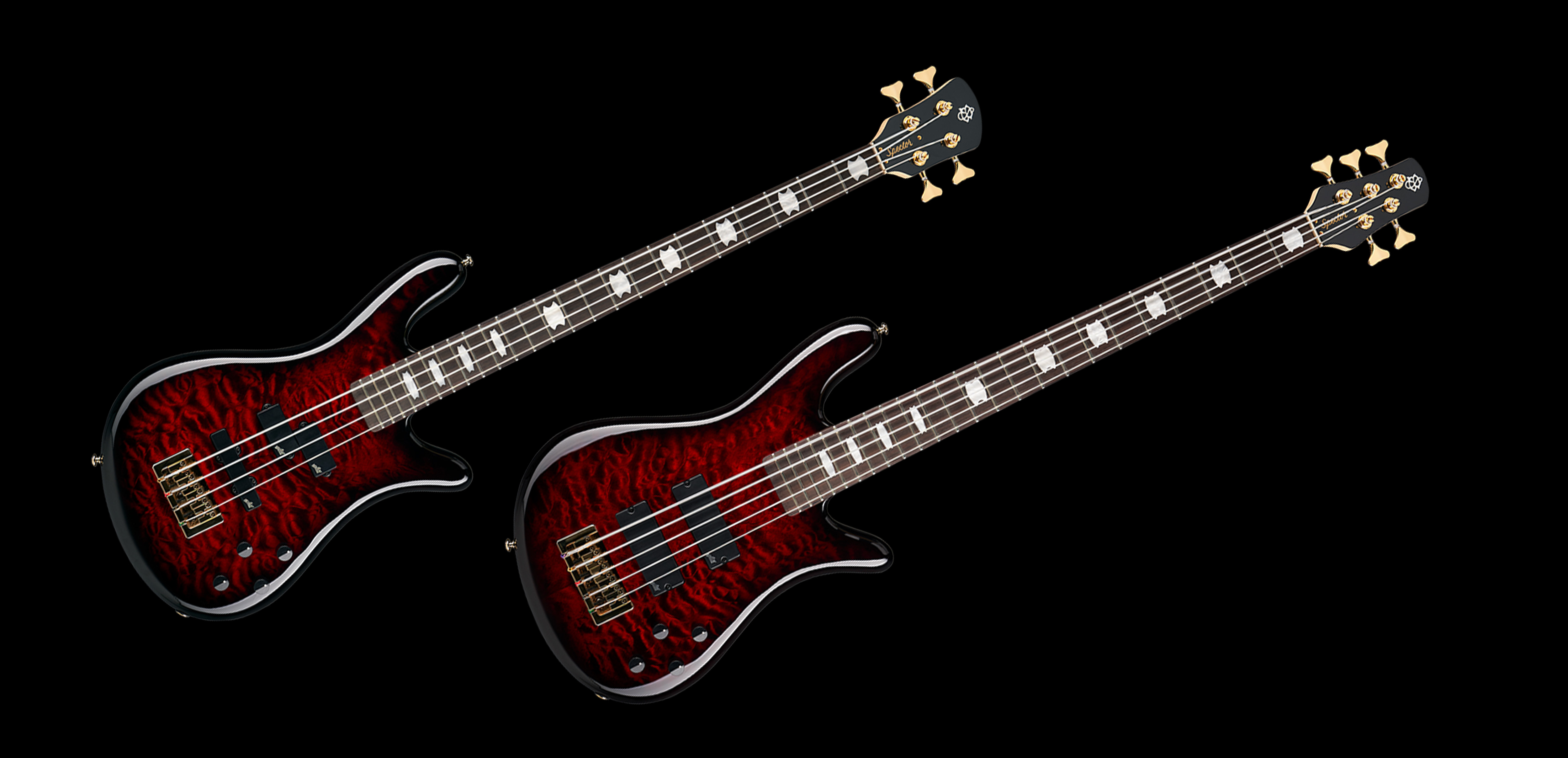
Today, Spector basses are manufactured in different countries and in different price ranges. The new Icon series comes from Indonesia and is the brand’s most affordable collection, which nevertheless remains very faithful to Spector and Steinberger’s original design.
****
Spector Icon NS-2 Bolt-on (€936; Musamaailma)
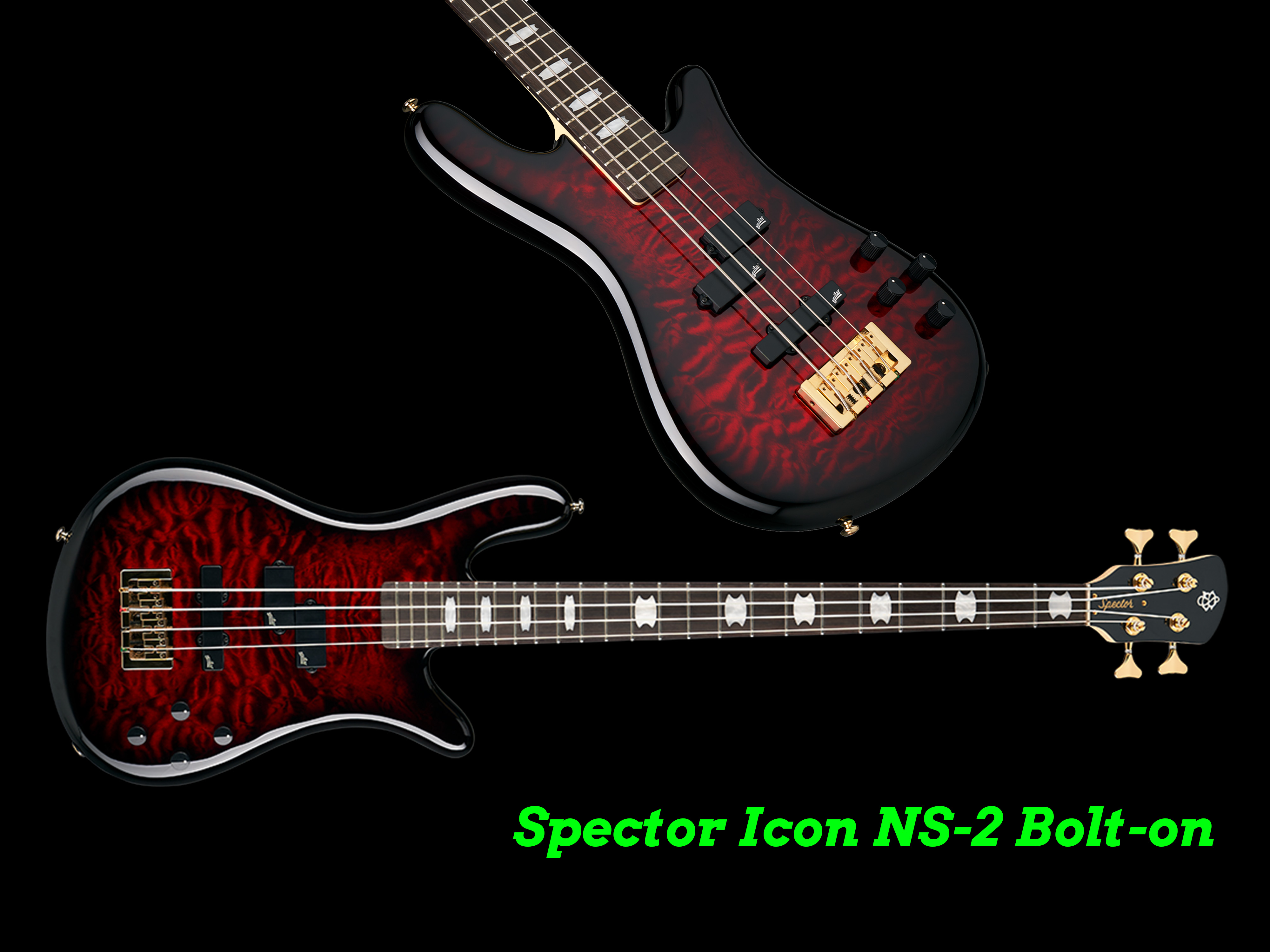
The NS-2 from the Icon series is a four-string active electric bass with a bolt-on neck.
The Icon NS-2’s curved body is carved from alder and has a flamed maple veneer glued to the front. The neck is made of three adjacent pieces of maple, while the fingerboard is made of rosewood. The neck joint is very smooth, and is implemented with four screws with their own washers.
The scale length of the Spector Icon NS-2 bass is 34 inches (i.e.: 86.4 cm). The fingerboard has the company’s large position markers embedded in it. The bass’s 24 jumbo-sized frets have been carefully installed and finished. The instrument has a brass saddle, as well as gold-colored tuners and a bridge. The bridge is Spector’s famous locking design with massive bridge saddles, with the strings anchored to the back wall of the bridge.
The new Icon series features pickups and an active preamp from Aguilar’s high-quality range. In the case of the NS-2, the pickups are the P-sized DCB P (center) and the J-shaped DCB J. The Aguilar OBP-2 preamp offers, in addition to master volume, controls for pickup balance, as well as bass and treble EQs (boost and cut).
The electronics compartment is shielded with graphite paint to prevent external interference, and the plastic cover is lined with aluminum foil. There is a special metal clip in the compartment for the nine-volt battery. The cover is screwed into place with machine screws, for which threaded sleeves are recessed in the body.
****
****
Spector Icon NS-2 Bolt-on (1,029,– €; Musamaailma)
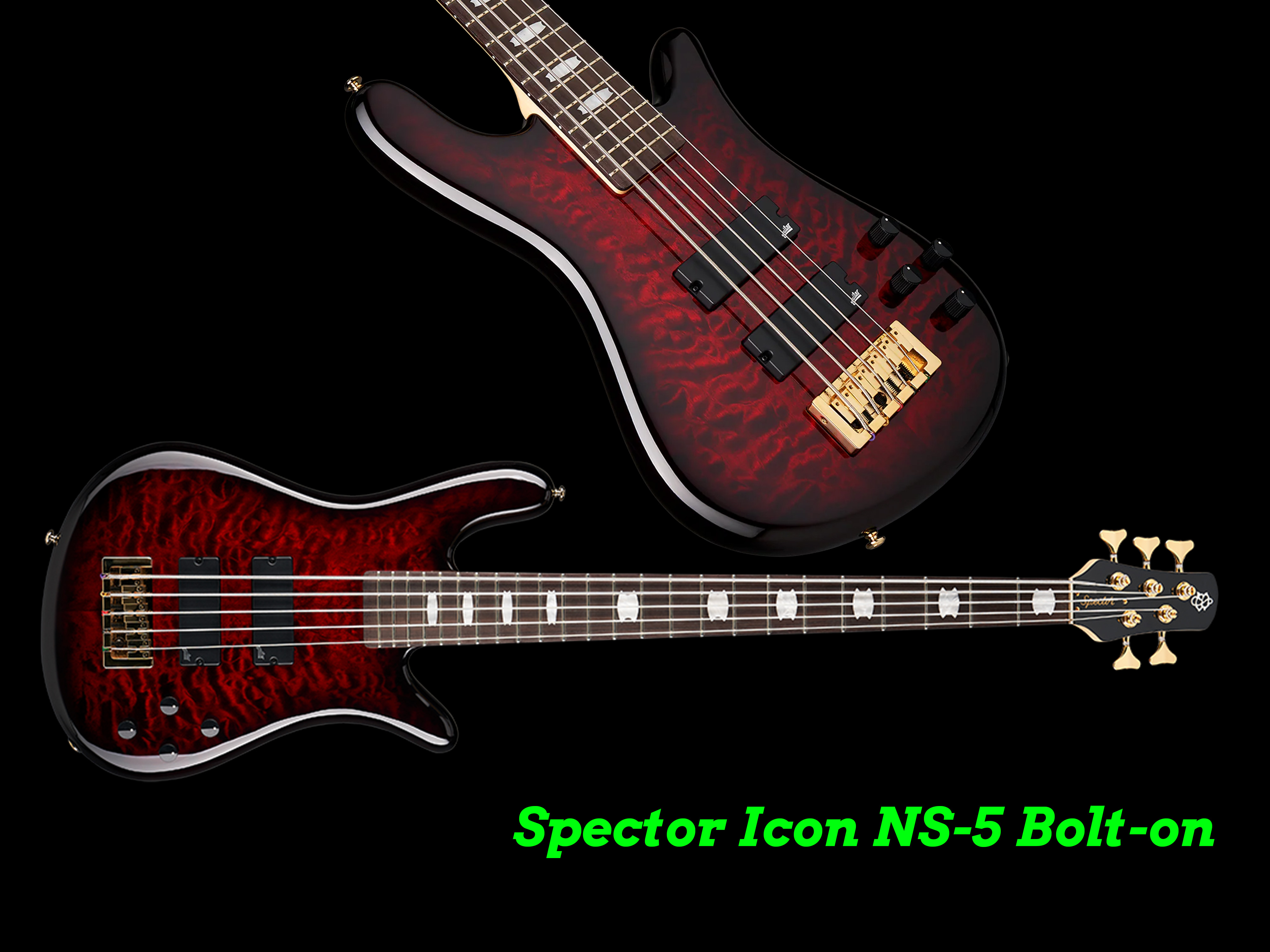
The Spector Icon NS-5 Bolt-on is a five-string version of the NS-2 model. Its main features are the same as those of the four-string bass – an alder body with flame maple veneer, a three-piece bolt-on neck, a smooth neck joint, a rosewood fingerboard with 24 frets, a brass saddle, gold tuners and a very sturdy bridge.
However, there is one crucial difference compared to the NS-2 – the Spector Icon NS-5 has a longer scale length (35 inches/88.9 cm). Thanks to the longer scale length, the low B-string has a more precise response and sound than on a regular 34-inch bass.
In addition to the scale, another difference is found in the pickup selection:
Instead of the NS-2’s PJ combination, the NS-5 has Aguilar DCB Soapbar pickups installed, which have a slightly bigger and more solid basic sound. The pickups are connected to the same Aguilar OBP-2 preamp, and here too the controls are master volume, microphone balance, bass cut/boost and treble cut/boost.
****
Excellent playability and sound
I don’t know who Stuart Spector has chosen as his Indonesian subcontractor, but the choice is a bill’s eye. The workmanship on both Icon series NS basses is excellent and super clean, and both feel like genuine Spectors in your hands.
The satin-finished neck of the Spector Icon NS-2 Bolt-on model has a very nice full C-profile, which feels like a slightly thicker Fender Jazz Bass neck. The test unit came with a fantastic setup – low without any extra string rattling.
The neck profile of the five-string Icon NS-5 model is naturally slightly wider and shallower than the four-string instrument. The one-inch difference in scale is only really noticeable when playing larger intervals near the nut. The playing feel of this bass is also very fast and light.
To my ears, the Spector Icon NS-4 Bolt-on sounds a bit fresher and more flexible, while the wider pickups on the NS-5 model produce a slightly darker, fatter sound. Both options are very tasty, and the basic tones can be easily modified with Aguilar’s high-quality preamp.
Based on the review samples, I can only say that Spector’s new Icon series offers genuine Spector ergonomics and sounds at a player-friendly mid-range price.


Jätä kommentti