

The Gibson EB-2 was the company’s bass counterpart to its classic ES-335/345/355-range of semiacoustic guitars. This short-scale bass was built with the same body as the guitars: steam-pressed maple plywood (4-ply) with a maple centre block to suppress feedback. The neck was crafted from mahogany and rosewood was used for the unbound fingerboard.
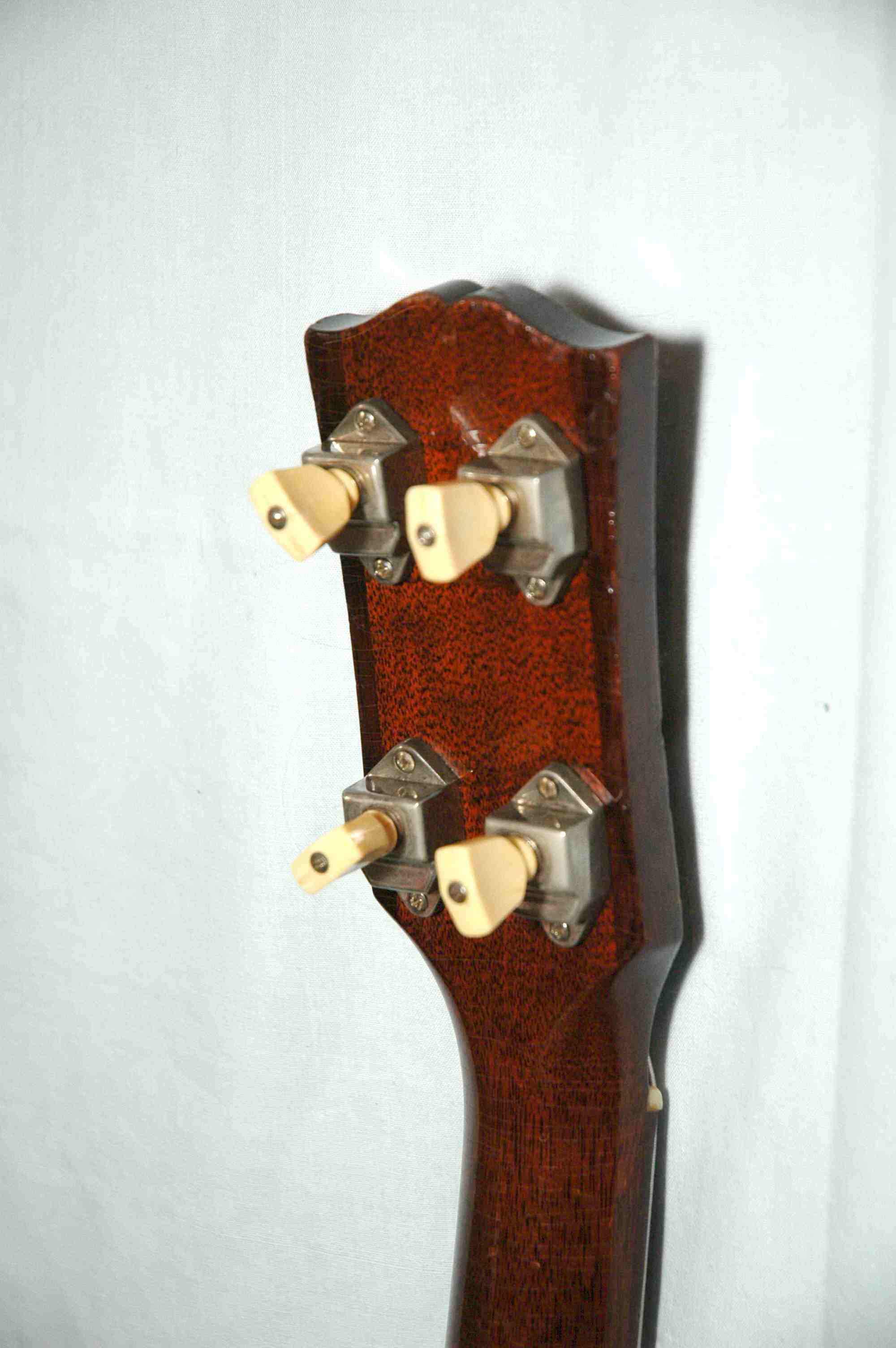
The first run of EB-2-basses (1958–’61) was equipped with back-facing, banjo-style tuning machines (until 1960), as well as a large neck humbucker with a black plastic (Bakelite) cover. A pushbutton next to the pre-compensated one-piece stud bridge engaged the ”baritone”-filter.
****
After a short break in production the EB-2 was reintroduced in 1964, now with the same metal-covered pickup as used on the EB-0/EB-3 solid-body bass.
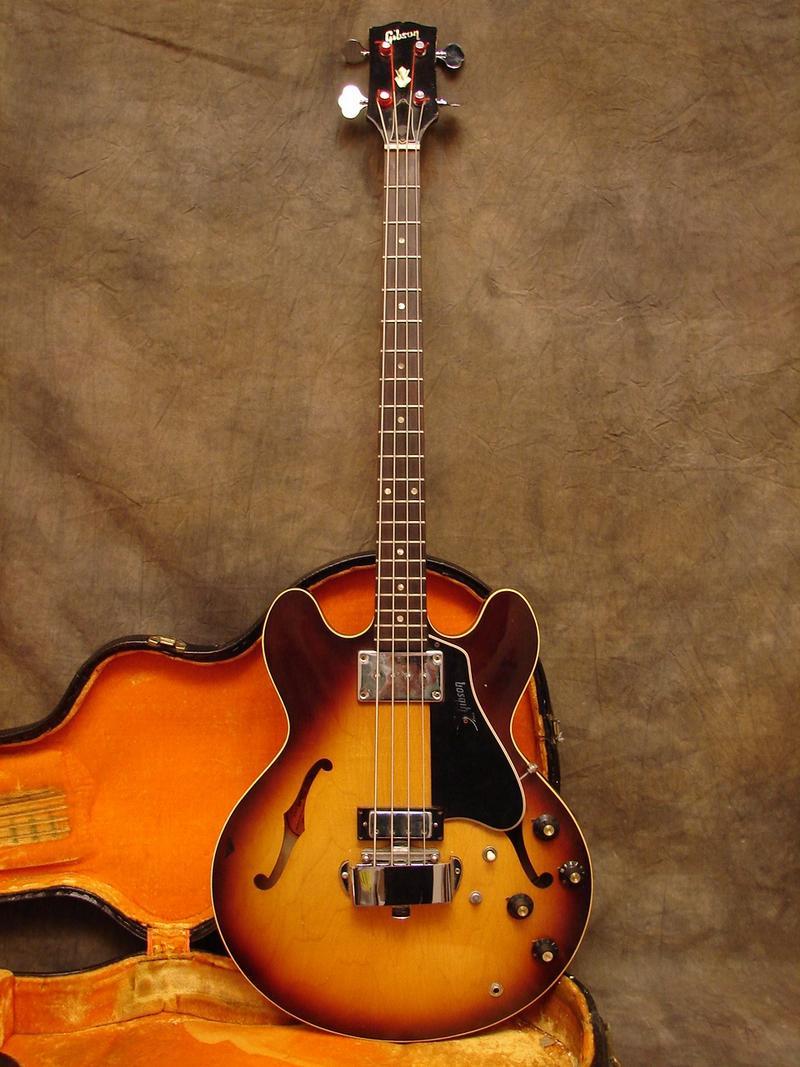
In 1966 Gibson came out with the EB-2D – a version equipped with two pickups.
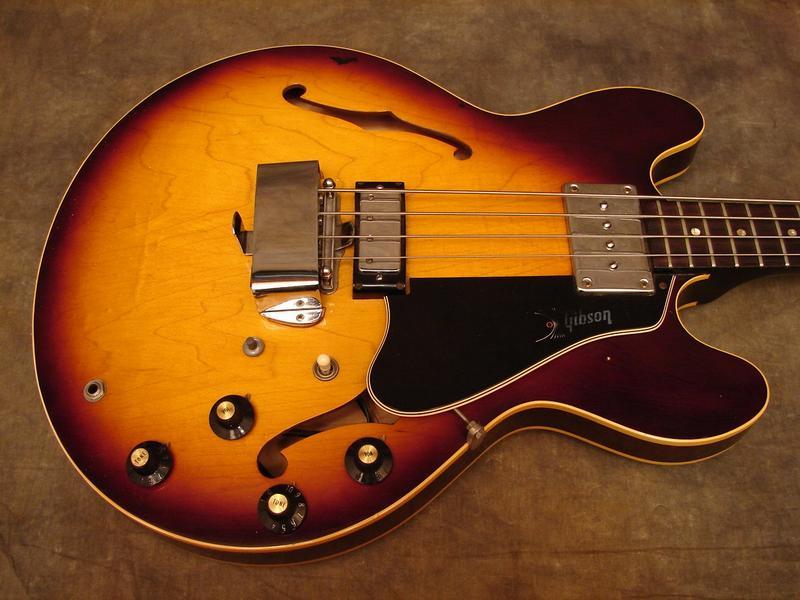
Starting in 1960, all Gibson-basses had a (detachable) mute attached to their bridges (on the photo below you can see the mute between the bridge and the bridge pickup).
Production of the Gibson EB-2 was phased out at the end of 1970, while the EB-2D stayed in production until 1972.
****
Between 1960 and 1970 Gibson also produced an alternative version of the EB-2 – the Epiphone Rivoli EBV-232.
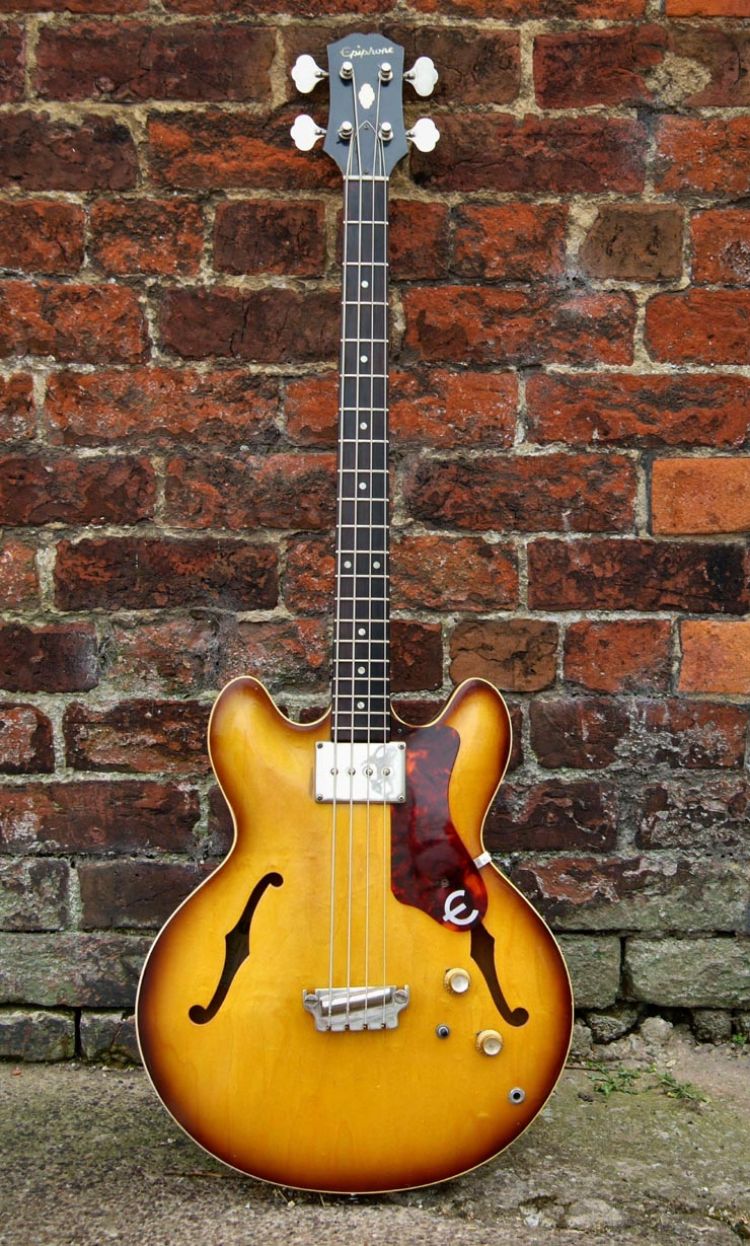
Both the Gibson EB-2 as well as the Epiphone Rivoli were especially popular among British Blues Boom bands in the Sixties (famous users include the Yardbirds’ Paul Samwell-Smith, as well as the Animals’ Chas Chandler).
 Kitarablogi.com – Finland's premier Guitar and Bass blog
Jätä kommentti